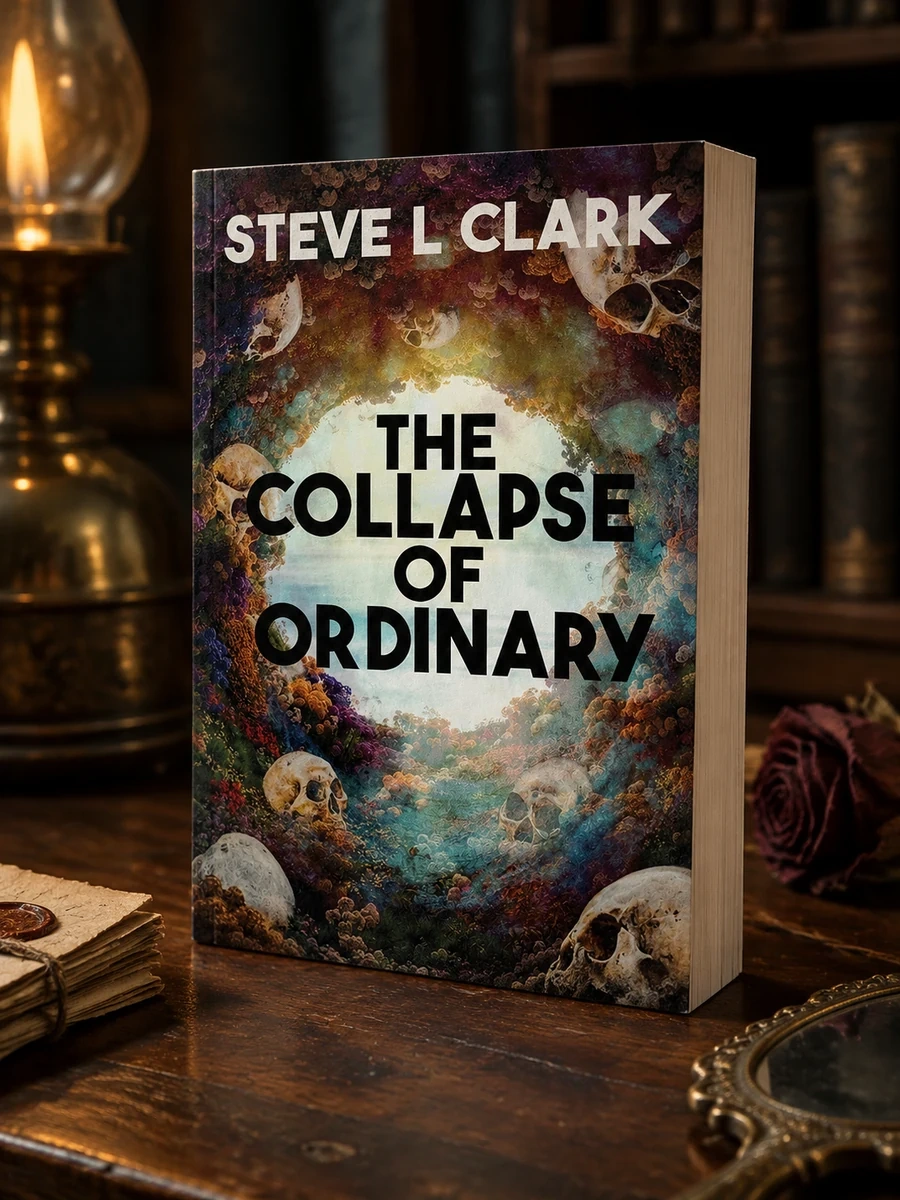
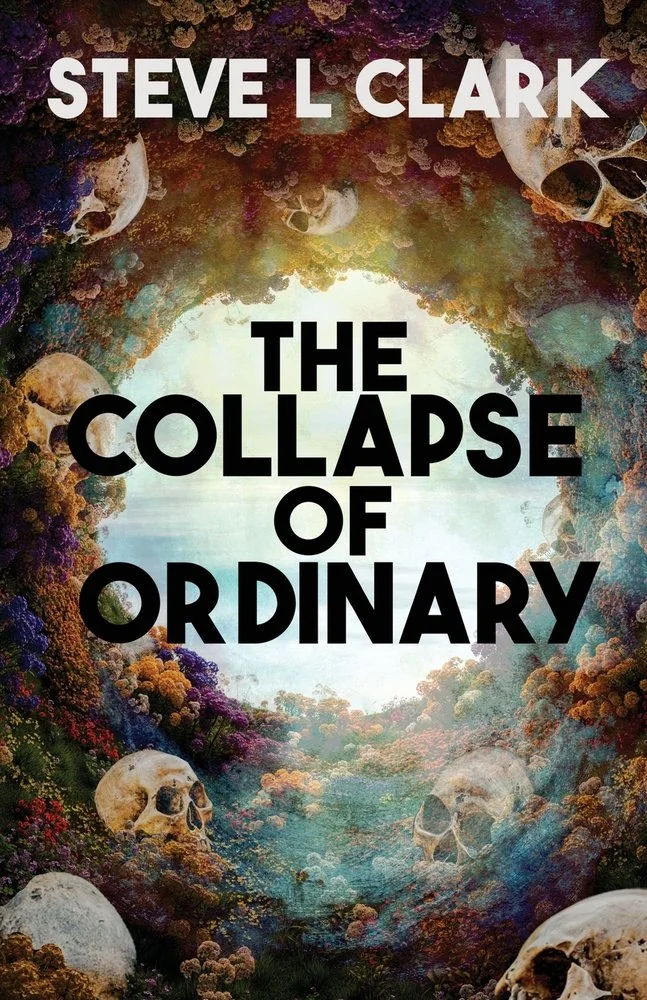
The Collapse of Ordinary
A collection of short horror stories about reality breaking down.
Clark’s anthology focuses on specific moments where daily routines collapse under supernatural pressure. The narrative structure relies on isolated incidents rather than a continuous plot. One tale involves a podcast listener facing consequences beyond his screen. Another centers on gambling risks that turn deadly. A third follows a funeral that reveals hidden truths. These stories share a common thread of ordinary individuals confronting the unknown. The pacing is deliberate, building tension through familiar settings like hotels and casinos. Clark avoids complex world-building in favor of immediate emotional impact. The horror stems from the violation of safe spaces. This approach creates a sense of vulnerability for the reader. The collection does not offer resolution but rather immersion into fear.
Published in September 2024 by Orange Octave Print, this work sits within contemporary American horror fiction. It reflects modern anxieties about losing control over daily life. The stories draw on gothic traditions of isolation and dread. Clark uses familiar settings to ground the supernatural elements.


📝 Description: The Collapse of Ordinary
💎 Our verdict on The Collapse of Ordinary
📖 Why choose it
Why this book is worth reading
This collection is ideal for readers who prefer short fiction that disrupts daily life with eerie events rather than lengthy epics. It appeals to those who appreciate sudden shifts in tone and the tradition of psychological unease over overt gore. Readers seeking immediate, visceral horror within familiar settings like hotels or casinos will find value here. The book offers immersion into fear without resolution, allowing the sense of vulnerability to linger. It is suitable for fans of gothic themes who enjoy watching ordinary individuals confront the unknown in isolated incidents.
⭐ Reader reviews
Reader rating
Clark effectively strips away the comfort of predictability by focusing on specific moments where reality fractures under supernatural pressure. The deliberate pacing builds tension through familiar environments, creating a profound sense of vulnerability for the reader. By avoiding complex world-building, the anthology achieves immediate emotional impact, making the horror feel personal and intrusive. This approach suits those who enjoy short fiction that disrupts daily life with eerie events. It is best appreciated by readers who value psychological unease and sudden tonal shifts over historical realism or extensive narrative arcs, offering a lingering sense of dread.