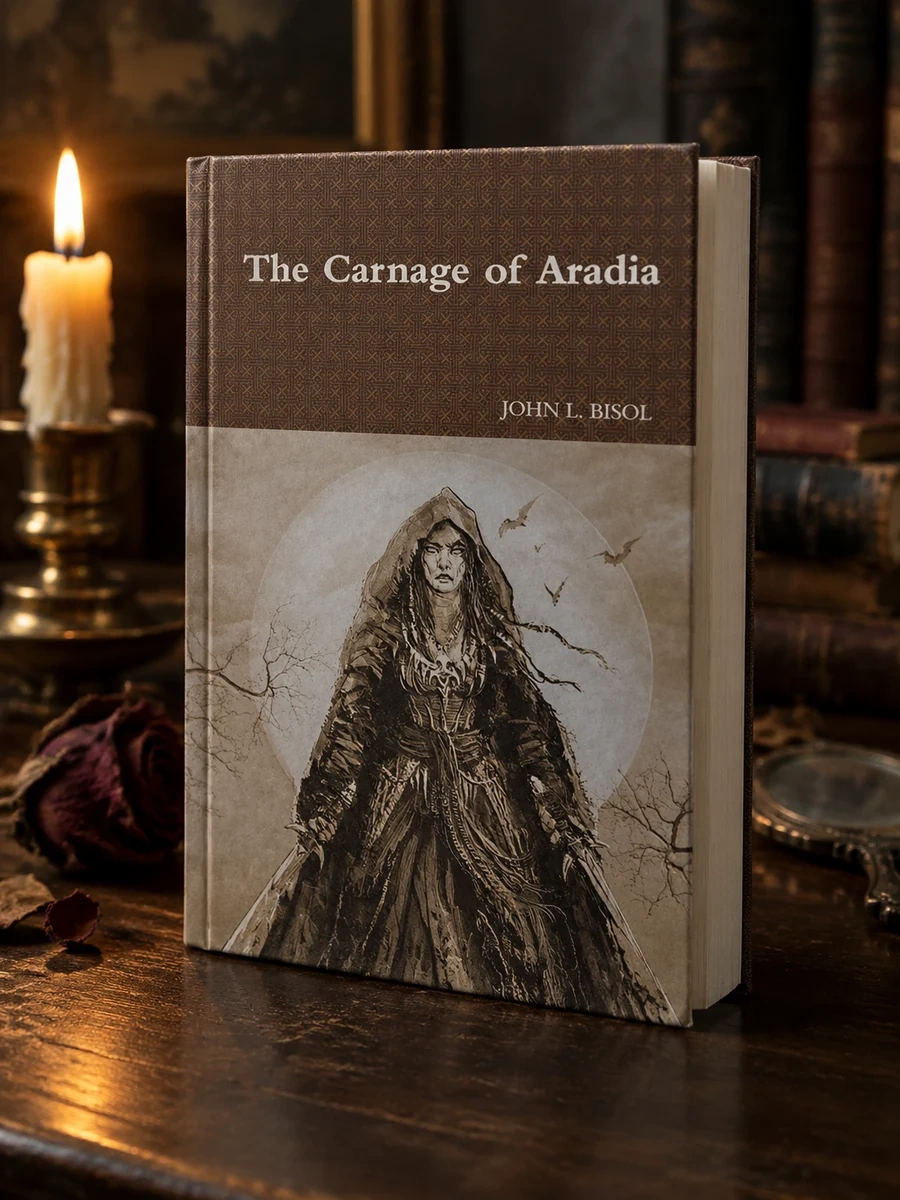

The Carnage of Aradia
A philosophical look at witches as potential heroes rather than inherent villains
Bisol questions whether societal labels dictate moral character, using witches as a primary example. He posits that minority groups contain both beneficial and harmful individuals, much like the general population. The narrative suggests that a witch could perform heroic acts, while a religious figure might commit heinous crimes such as child molestation. This comparison serves to dismantle preconceived notions about who holds moral authority. The author refuses to judge based on labels alone, urging a more nuanced view of good and evil within these specific social contexts.
The work addresses modern perceptions of witchcraft in Western society, specifically challenging the stereotype that all practitioners are malevolent. It reflects a contemporary debate on how minority groups are judged by the majority, focusing on the potential for witches to be seen as heroes rather than villains.


📝 Description: The Carnage of Aradia
💎 Our verdict on The Carnage of Aradia
📖 Why choose it
Why this book is worth reading
Readers interested in the intersection of sociology and supernatural fiction will find value in this philosophical exploration of witchcraft. It appeals to those who prefer ethical debates and identity politics over traditional frights or suspense. The book is ideal for individuals seeking to dismantle preconceived notions about moral authority held by religious figures versus marginalized groups. It offers a contemporary inquiry into good and evil, urging a view based on actions rather than labels. Those weary of one-dimensional villains will appreciate the argument that minority groups contain both beneficial and harmful individuals. It provides a conceptual framework for understanding witchcraft as a potential source of heroism rather than inherent wickedness.
⭐ Reader reviews
Reader rating
Bisol delivers a thought-provoking examination of moral character, using witches to question societal labels. The book excels in its abstract approach, avoiding historical case studies to focus on broader ethical implications. It is best suited for readers comfortable with non-traditional horror narratives that prioritize intellectual engagement over visceral terror. While it lacks the suspense of classic ghost stories or the detail of occult practices, it succeeds as a philosophical argument. The text invites reconsideration of moral judgments based on supernatural identities. Readers seeking detailed coven activities may find it too abstract, but those interested in the duality of human nature will appreciate its nuanced perspective on identity and societal structures.
📖 Read on the blog
✍️ More books by this author John L Bisol


🏛 Books from this publisher Lulu.com


You might also like
See more →

Have a question about this item?
Ask about the edition, condition, delivery or anything else — we reply by email or phone, usually within a day.
