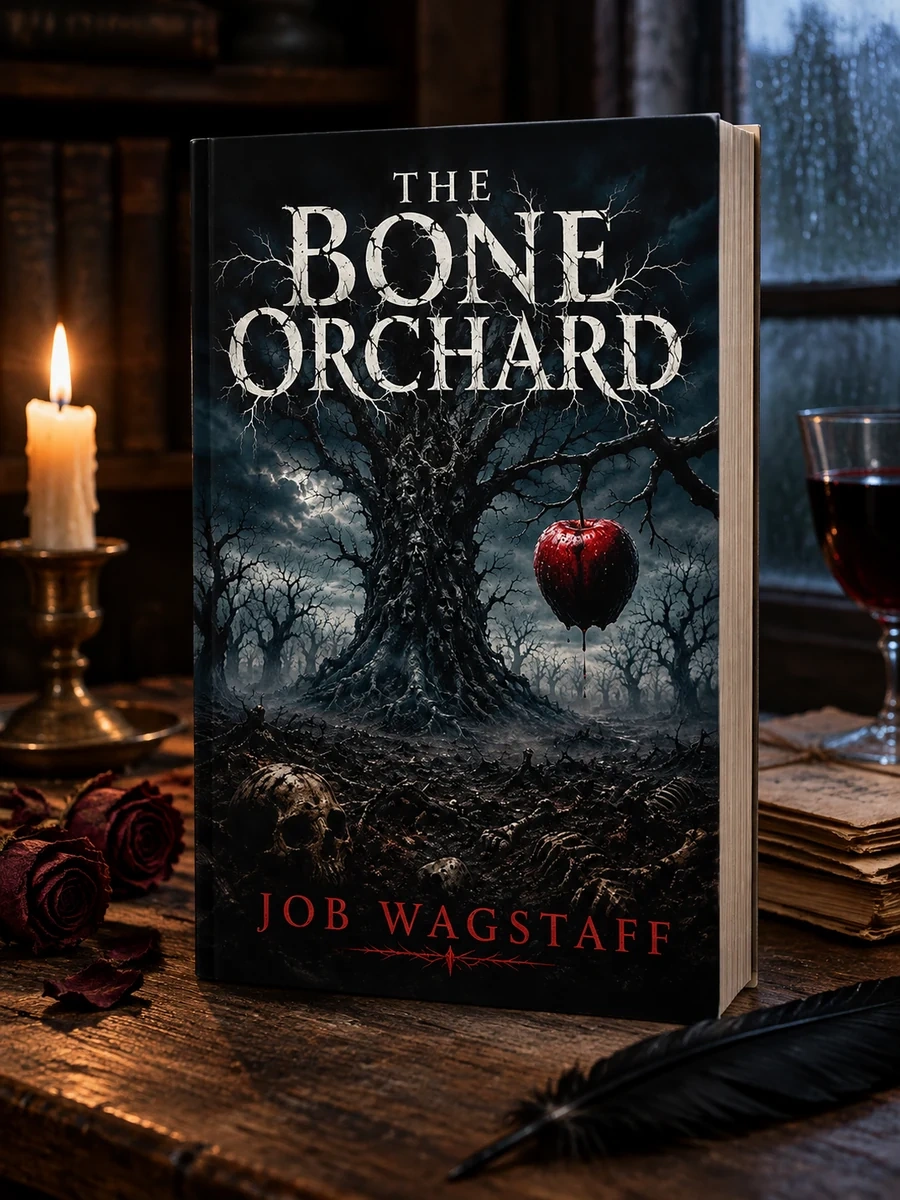
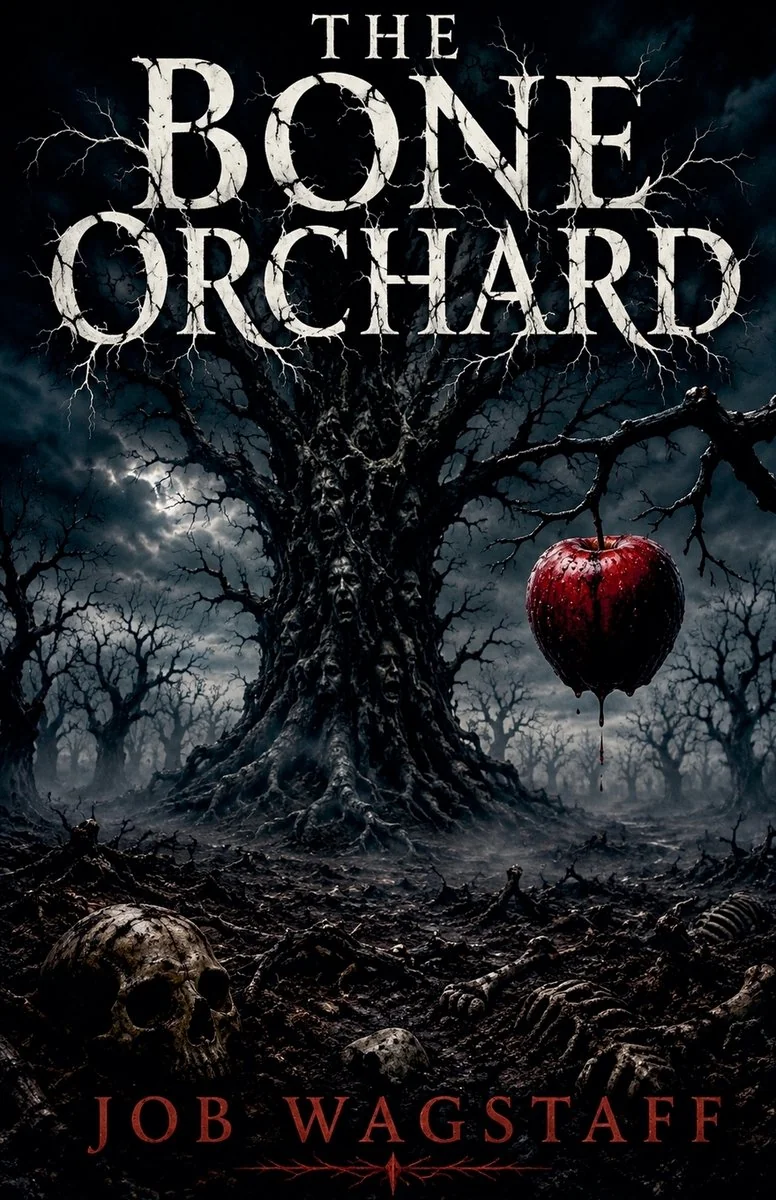
The Bone Orchard
A father uncovers a hungry orchard beneath his inherited farm.
Guy Hallon moves to Briar Hollow Farm to rebuild his life, but the surrounding blackened trees hide a grim history. The text details how fresh fruit appears on dead branches, signaling that the land is active and dangerous. Sophie’s auditory experiences with voices from below suggest a deep connection to the buried dead. Wagstaff constructs a plot where the environment itself feels predatory. The story draws on traditions of folk horror and rural isolation. It examines the weight of family secrets and the fear of the unknown. The atmosphere remains relentless, focusing on the dread of what lies beneath the ground rather than traditional ghostly apparitions.
The novel sits within the dark folk horror genre, drawing on traditions of rural isolation and ancient evil. It references periods tied to famine and historical disappearances in a remote northern valley setting.


📝 Description: The Bone Orchard
💎 Our verdict on The Bone Orchard
📖 Why choose it
Why this book is worth reading
Readers who crave atmospheric dread and psychological tension will find deep satisfaction in this narrative. The book excels for those interested in the subgenre of underground terror, offering a relentless exploration of family secrets and the weight of inherited guilt. It is ideal for fans of dark folk horror who appreciate when the setting acts as an active antagonist rather than mere backdrop. Those seeking to understand the intersection of rural isolation and cosmic or psychological horror will gain much from its intense focus on what lies beneath the surface. However, individuals preferring lighthearted supernatural tales should avoid it, as the tone is grim and unrelenting.
⭐ Reader reviews
Reader rating
Wagstaff constructs a compelling narrative where the land itself feels predatory, utilizing fresh fruit on dead branches to signal active danger. The story effectively blends folk horror with psychological unease, particularly through Sophie’s auditory experiences that hint at a deep connection to buried dead. This approach creates a relentless atmosphere of dread, focusing on environmental hostility rather than traditional ghostly apparitions. The work succeeds in examining family secrets and the fear of the unknown through a lens of underground terror. It is best suited for readers who enjoy dark, atmospheric horror that prioritizes tension over spectacle. Those looking for intense, isolation-driven narratives will find this a potent addition to their collection.
You might also like
See more →







Have a question about this item?
Ask about the edition, condition, delivery or anything else — we reply by email or phone, usually within a day.
