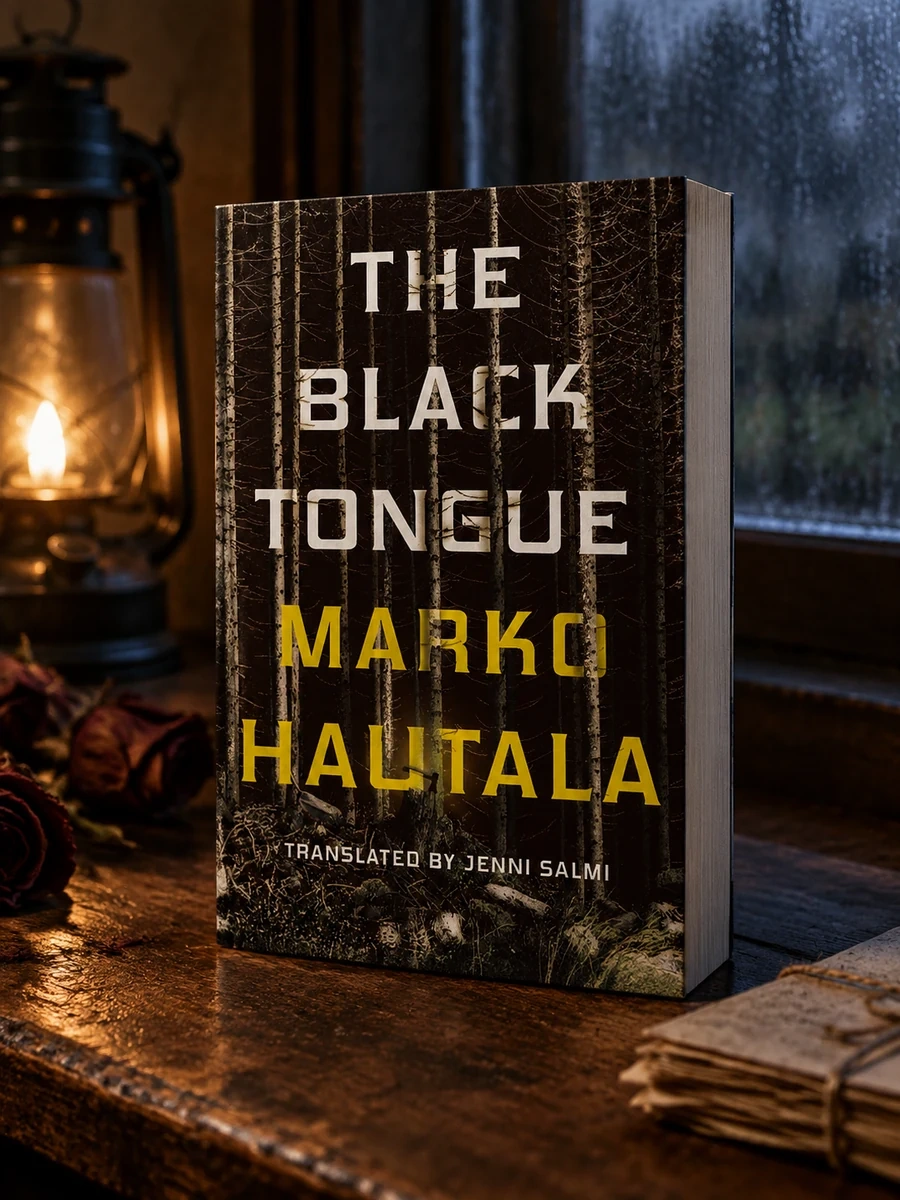

The Black Tongue
A Finnish novel about an immortal killer and the folklore that sustains her terror.
Hautala, a Finnish author, presents a narrative deeply rooted in the specific geography and cultural anxieties of northern Finland. The text focuses on the intersection of personal grief and collective superstition. Maisa’s academic pursuit of urban folklore clashes with Samuel’s practical need to arrange a funeral, yet both are drawn into the same terrifying mystery. The story does not rely on generic horror tropes but instead grounds its fear in the specific ritual of burying hearts in potato fields. This approach highlights how local legends can become self-fulfilling prophecies that dictate behavior and silence dissent within a closed community.
The story is set in Suvikyla, a residential area in northern Finland. It draws on Finnish traditions of urban legends and the specific cultural practice of burying hearts in potato fields as part of the Granny Hatchet mythos.


📝 Description: The Black Tongue
💎 Our verdict on The Black Tongue
📖 Why choose it
Why this book is worth reading
Readers seeking a horror experience that transcends generic tropes will find value in this text's deep immersion into local superstition and collective fear. It appeals to those interested in how urban legends function as social control mechanisms within closed communities. The narrative offers a compelling exploration of personal grief intersecting with myth, making it ideal for fans of psychological horror who appreciate atmospheric dread over jump scares. By examining the self-fulfilling nature of terror, the book provides intellectual engagement alongside visceral unease.
⭐ Reader reviews
Reader rating
Marko Hautala crafts a chilling atmosphere by rooting his narrative in the specific rituals and geography of northern Finland. The story effectively blurs the line between myth and reality, demonstrating how local legends can silence dissent and dictate behavior. Rather than relying on standard horror clichés, the text builds tension through the intersection of academic inquiry and personal loss. This approach makes it particularly suitable for readers who enjoy folklore-based horror and psychological suspense. The novel succeeds in creating a sense of inevitable dread, where the community's fear becomes a tangible threat to anyone investigating the truth.