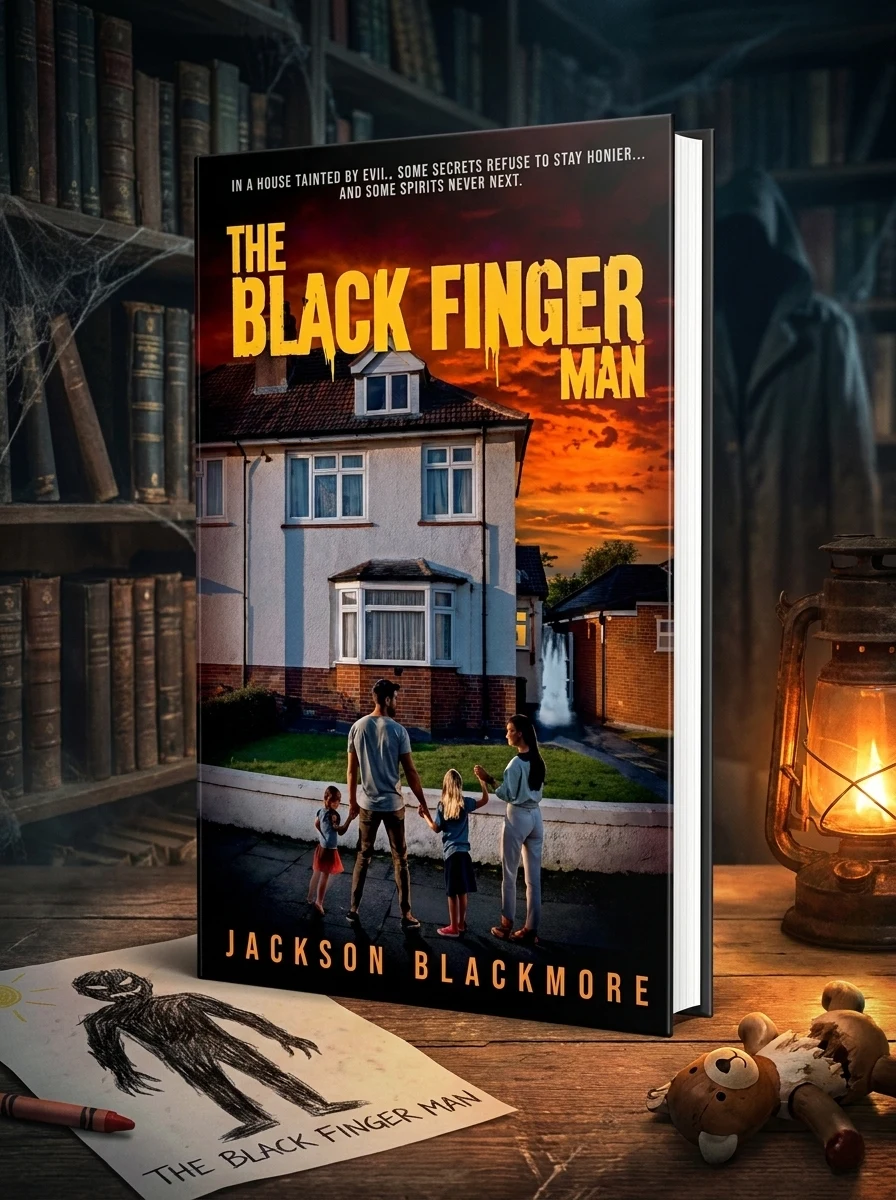
The Black Finger Man
A family faces a Nazi-linked demon in their new haunted home.
The story follows David, Jenn, and their two daughters as they confront a malevolent force in their new residence. Initial signs include moving shadows and pet deaths. The children soon display bruises and draw pictures of The Black Finger Man. This figure is revealed to be Hanns, a former Nazi officer who sacrificed his humanity for power through occult means. He remains bound to the location, feeding on fear. The family must identify the source of this evil to survive. Blackmore uses the backdrop of World War II era atrocities to ground the supernatural elements in real historical horror. The narrative does not rely on jump scares but rather on the slow realization that the house holds a deadly secret. The threat is personal and immediate, targeting the children specifically.
The narrative draws on the historical period of Nazi Germany and the specific figure of Hanns. It connects this era to modern supernatural horror through the concept of a sadistic officer binding himself to demonic forces. The story utilizes the tradition of haunted houses where past evils linger in physical locations, specifically referencing the occult practices used by the antagonist.


📝 Description: The Black Finger Man
💎 Our verdict on The Black Finger Man
📖 Why choose it
Why this book is worth reading
This book is ideal for readers who appreciate haunted house tropes intertwined with historical trauma. It appeals to those seeking a slow-burn supernatural dread rather than immediate shock value. The narrative offers a compelling exploration of how past sins can manifest as present threats, particularly targeting the innocent. Fans of psychological horror will find the focus on family dynamics under siege engaging. The grounding of demonic forces in specific historical contexts provides a unique texture for enthusiasts of cosmic and gothic horror who prefer their scares rooted in tangible evil.
⭐ Reader reviews
Reader rating
Blackmore effectively constructs a tale of lingering malevolence by anchoring supernatural elements in the weight of historical darkness. The story avoids reliance on jump scares, favoring instead a creeping sense of dread as the family discovers the deadly secret within their new home. The portrayal of Hanns serves as a chilling reminder of human capacity for evil, extending beyond death through occult means. This approach suits readers who enjoy stories where the threat is personal and immediate, specifically targeting children. While it lacks complex character studies, its focus on atmospheric tension and historical horror makes it a solid choice for those interested in the intersection of domestic fear and global tragedy.
You might also like
See more →







Have a question about this item?
Ask about the edition, condition, delivery or anything else — we reply by email or phone, usually within a day.
