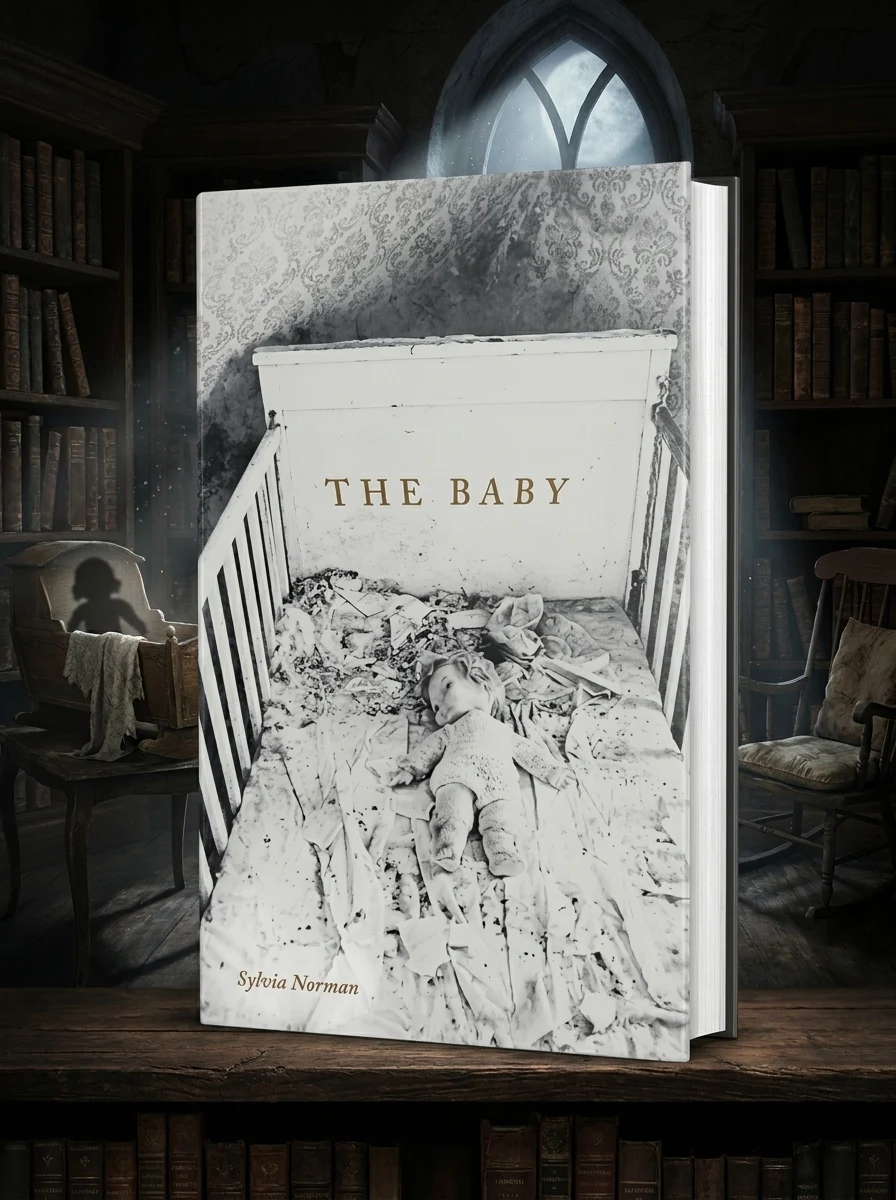
The Baby
A psychological horror novel about a mother who suspects her newborn is an evil entity.
Norman investigates the terrifying possibility that a newborn can harbor ancient evil. The plot follows Patricia’s descent into paranoia as she witnesses Bernard behaving like an elderly male. William’s inability to see this threat isolates her further. The story questions the reliability of medical explanations for postpartum trauma. It asks if love can survive when one parent sees a monster in their child. The narrative structure relies on Patricia’s subjective experience rather than objective proof. This creates a claustrophobic atmosphere where the reader must decide who is truly insane. The horror lies in the betrayal of maternal instinct and the failure of medical science to explain the inexplicable.
Published by iUniverse in 2015, this work sits within the modern tradition of psychological horror fiction. It reflects contemporary anxieties about postpartum mental health and the reliability of medical diagnoses. The narrative engages with gothic tropes of the corrupted home and the monstrous child, updating them for a twenty-first-century audience familiar with clinical interpretations of trauma.


📝 Description: The Baby
💎 Our verdict on The Baby
📖 Why choose it
Why this book is worth reading
Readers who enjoy psychological thrillers that blur the line between mental illness and paranormal activity will find this narrative compelling. It offers a claustrophobic atmosphere where the reader must decide who is truly insane, relying on Patricia’s subjective experience rather than objective proof. The book suits those intrigued by the betrayal of maternal instinct and the failure of medical science to explain the inexplicable. It challenges the assumption that love can survive when one parent sees a monster in their child. Fans of stories questioning the reliability of medical explanations for postpartum trauma will appreciate the tension between diagnosis and supernatural suspicion. The text transforms the nursery into a site of dread, appealing to those who prefer horror rooted in domestic settings over external monsters.
⭐ Reader reviews
Reader rating
Sylvia Norman crafts a chilling exploration of paranoia, turning the familiar act of parenting into a source of terror. By focusing on Patricia’s subjective descent, the narrative creates an intense, claustrophobic mood that keeps readers guessing about the truth. The work effectively draws on gothic traditions, making the home feel like a prison where family bonds fracture under pressure. It excels in portraying the isolation caused by medical dismissal of genuine fear. This approach suits readers who enjoy psychological depth over jump scares. However, it may not appeal to those seeking clear resolutions or lighthearted domestic fiction. The horror lies in the ambiguity, forcing engagement with the protagonist’s fractured mind. Norman successfully questions whether the threat is real or imagined, delivering a tense, atmospheric experience for fans of unreliable narrators.
📖 Read on the blog
🏛 Books from this publisher iUniverse


You might also like
See more →



Have a question about this item?
Ask about the edition, condition, delivery or anything else — we reply by email or phone, usually within a day.
