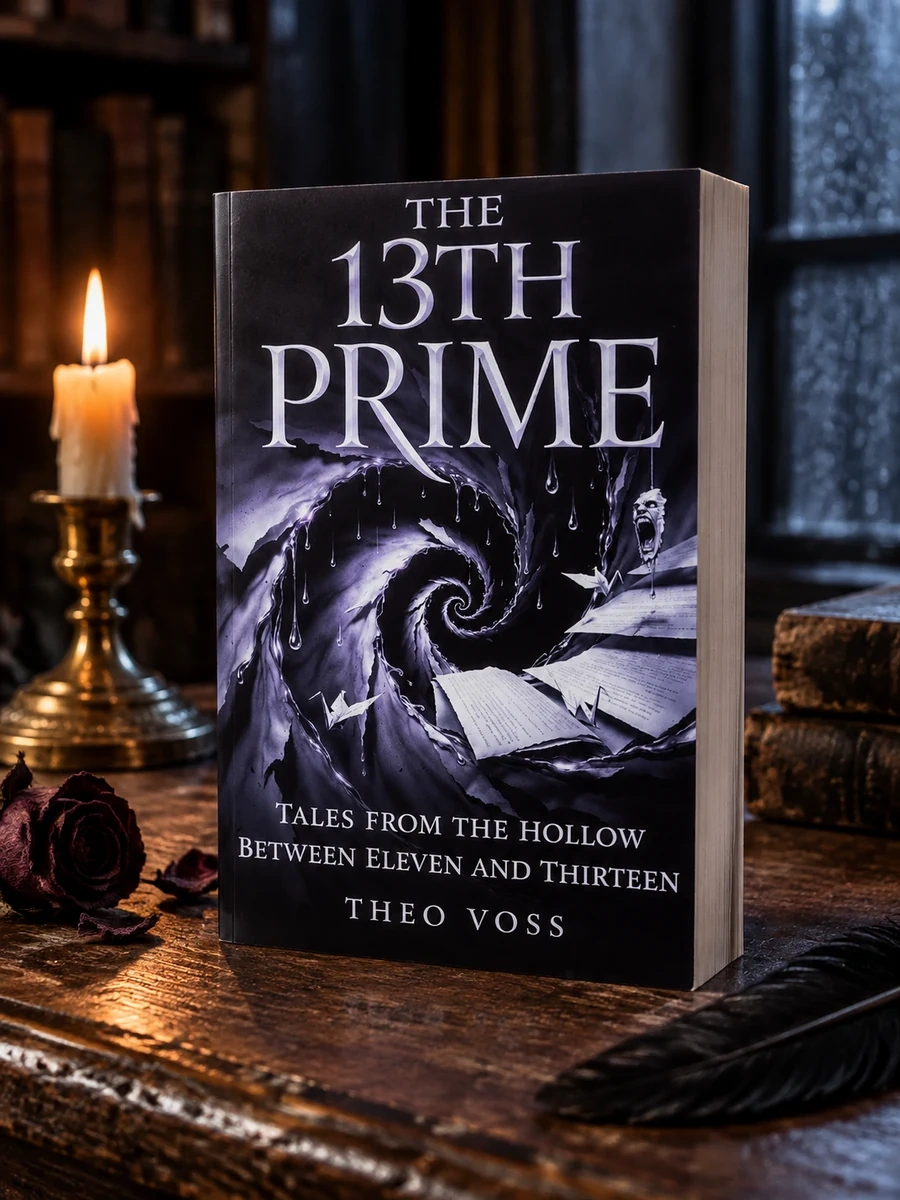
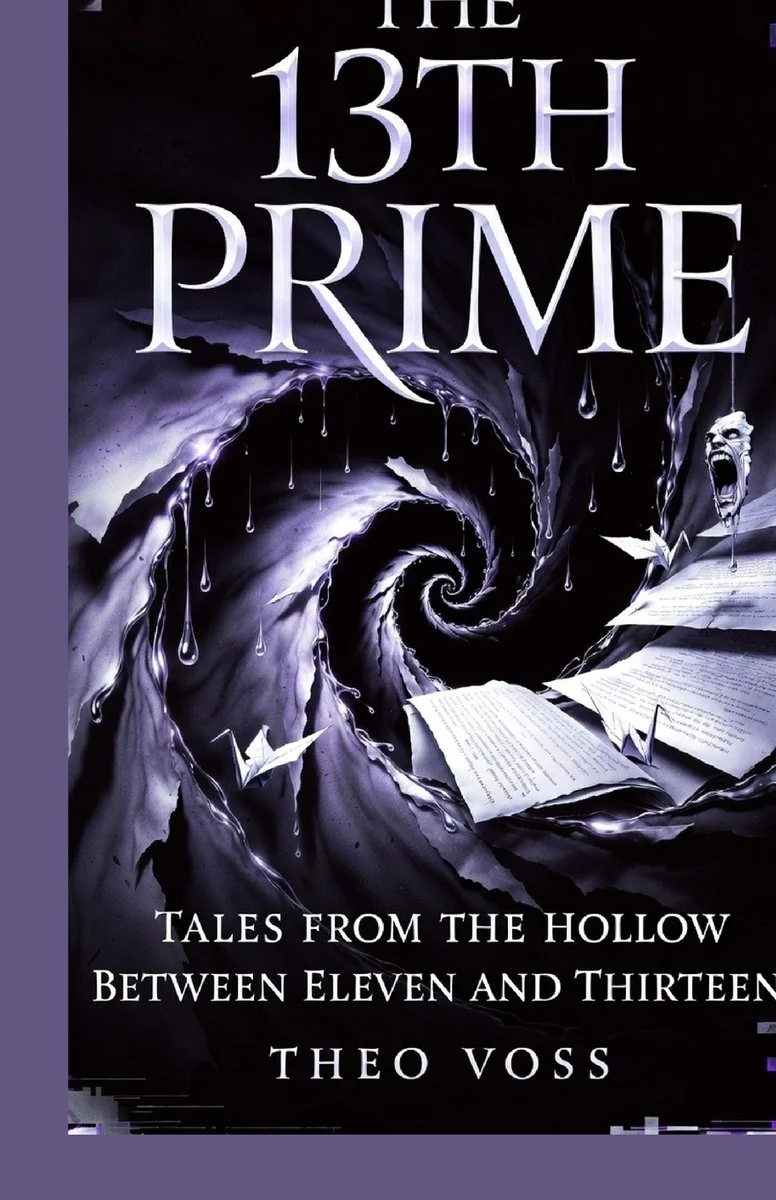
The 13th Prime: Tales from the Hollow Between Eleven and Thirteen
An anthology of six surreal tales blending mathematics with cosmic horror.
This collection focuses on the eerie possibilities found in numerical anomalies and temporal gaps. Voss constructs narratives that challenge perception through mathematical unease. The stories utilize imagery like ink devouring ideas and mirrors reflecting broken selves. The tone remains consistently unsettling rather than adventurous. It targets readers interested in the New Weird genre and psychological horror. The work avoids conventional plot structures in favor of atmospheric dread. Fans of Ted Chiang or China Mieville will recognize the stylistic echoes. The book does not promise resolution but rather lingering discomfort.
The 13th Prime sits within the contemporary weird fiction and supernatural horror traditions. It aligns with works by Jeff VanderMeer, China Mieville, and Ted Chiang. The book appeals to readers of psychological speculative fiction who enjoy New Weird aesthetics. It targets an audience seeking literary unease and existential voids rather than traditional scares.


📝 Description: The 13th Prime: Tales from the Hollow Between Eleven and Thirteen
💎 Our verdict on The 13th Prime: Tales from the Hollow Between Eleven and Thirteen
📖 Why choose it
Why this book is worth reading
Readers seeking existential voids and psychological speculative fiction will find this anthology compelling. Those who appreciate the New Weird genre and mathematical dread will engage with Voss’s surreal exploration of numerical anomalies. The book appeals to audiences comfortable with disorienting, atmospheric narratives that prioritize lingering discomfort over resolution. Fans of cosmic horror who enjoy imagery like ink devouring ideas or mirrors reflecting broken selves will recognize the stylistic echoes of influential writers in the field.
⭐ Reader reviews
Reader rating
Theo Voss crafts a consistently unsettling atmosphere through six surreal tales that blend mathematics with cosmic horror. The collection excels at transforming abstract concepts into tangible dread, utilizing striking imagery such as raindrops freezing with equations and black holes whispering through event horizons. By avoiding conventional plot structures, Voss creates a sense of temporal unease that lingers long after reading. This approach suits readers interested in the intersection of speculative fiction and psychological horror. While those preferring traditional ghost stories may find the elements disorienting, fans of literary weird fiction will appreciate the intricate weaving of impossible concepts into everyday life.