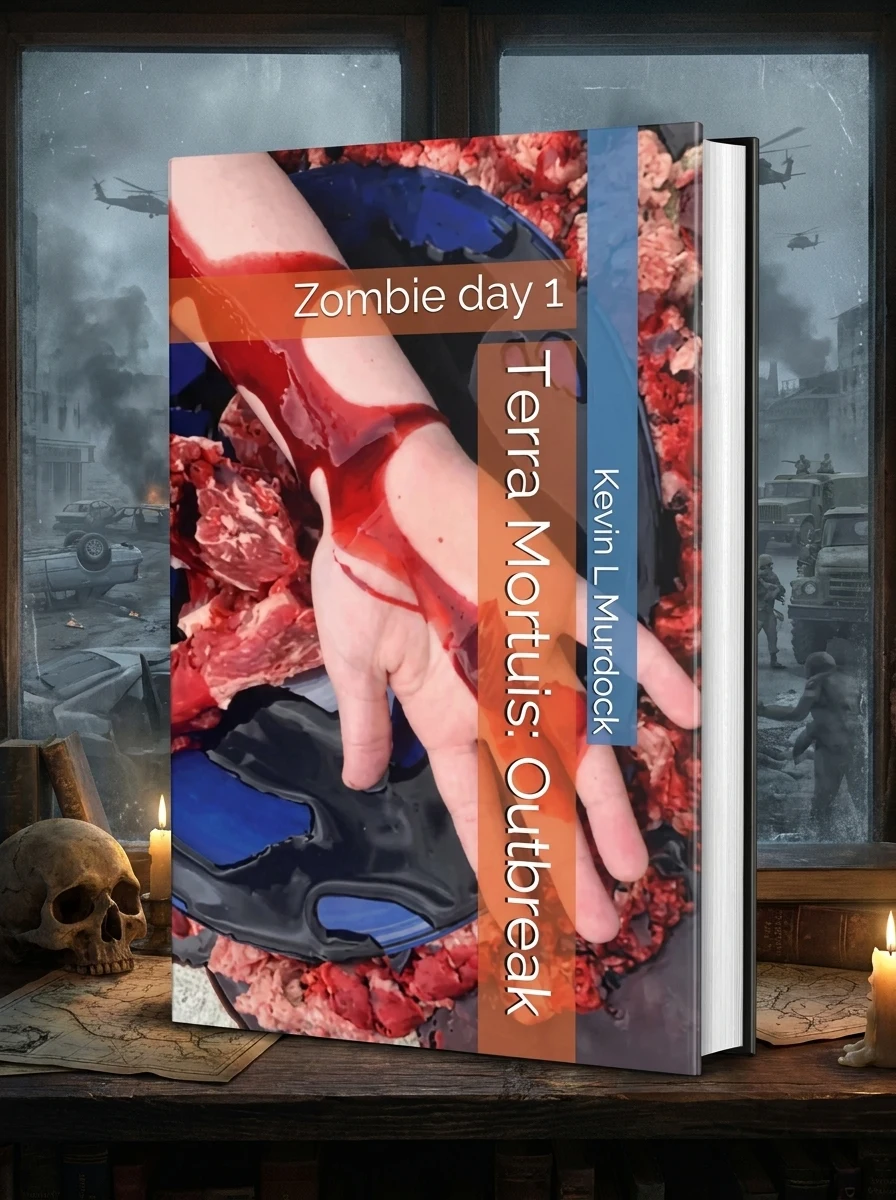
Terra Mortuis: Outbreak: Zombie day 1
A financial team in Bethesda fights for survival during the first day of a zombie outbreak.
The story centers on a group of financial advisors in Bethesda Maryland who witness an ancient evil release into their community. Their morning meeting turns into a fight for life as the dead begin to attack. The narrative tracks the initial spread of infection and the immediate reactions of those trapped in high-rise offices. Murdock focuses on the logistical nightmare of being stuck with limited resources while the outside world descends into chaos. The plot moves quickly through the first twenty-four hours, showing how urban infrastructure fails under such pressure.
This work sits within the American zombie fiction tradition of the early 2020s. It uses Bethesda Maryland as a specific setting for its narrative. The story reflects contemporary anxieties about sudden societal collapse and institutional failure during a health crisis.


📝 Description: Terra Mortuis: Outbreak: Zombie day 1
💎 Our verdict on Terra Mortuis: Outbreak: Zombie day 1
📖 Why choose it
Why this book is worth reading
Readers who crave fast-paced, high-tension apocalyptic scenarios set in recognizable American locations will find this book particularly engaging. It offers a grounded look at the logistical nightmare of an initial zombie outbreak, focusing on the immediate chaos rather than long-term societal collapse. Those who enjoy confined-space thrillers where urban infrastructure fails under pressure will appreciate the rapid escalation of violence and isolation. The narrative appeals to fans of contemporary zombie fiction who prefer physical danger and survival mechanics over deep philosophical questions about the undead. It is ideal for those seeking a quick, intense read that captures the panic of day one in a modern setting.
⭐ Reader reviews
Reader rating
Murdock effectively captures the disorientation of the first twenty-four hours of an apocalypse, utilizing the confined space of a Bethesda high-rise to heighten tension. The narrative excels in depicting the rapid failure of urban infrastructure and the desperate attempts of trapped individuals to survive against rising odds. While it lacks deep philosophical inquiry, it succeeds as a visceral entry in the sudden outbreak subgenre. The focus on immediate physical danger and logistical nightmares provides a gritty, realistic tone that appeals to horror enthusiasts. It is best suited for readers who prefer grounded settings and fast-paced action over fantasy elements or long-term world-building, offering a concise and intense survival experience.