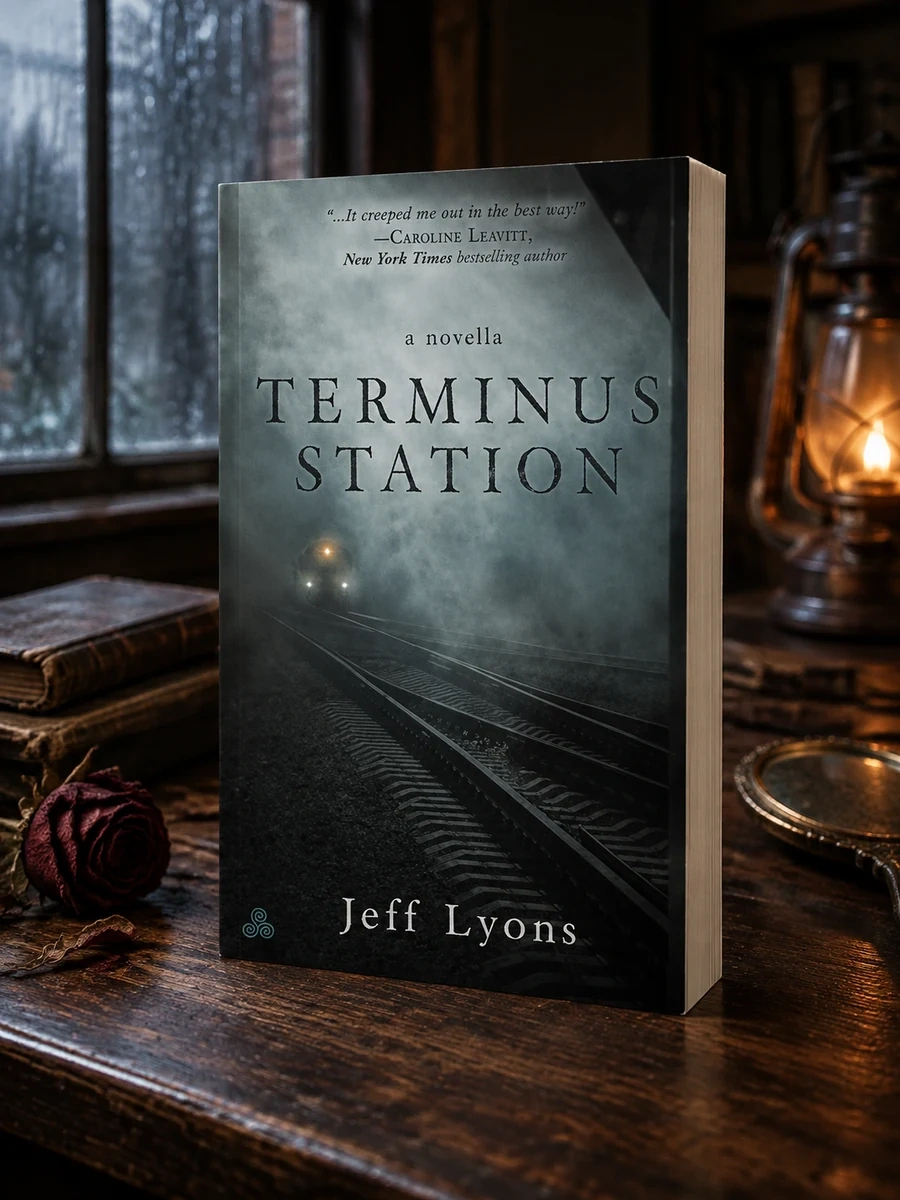

Terminus Station
A suicidal man encounters a supernatural woman on his final train ride.
Ira Blechman intends to commit suicide on his last night of misery. He waits for a train that he believes will be his final ride. A strange woman appears as the only other passenger. She knows him better than he knows himself. Her presence disrupts his plan and reveals a larger purpose. The story examines how a broken promise affects reality. It blurs the line between the known world and the unknown. Lyons writes with precision about the psychological impact of such encounters. The narrative focuses on Ira’s internal struggle as he faces forces beyond his control. The ending suggests that death is not an escape but a transition to something greater.
This work sits within the contemporary horror genre, published in late 2019 by Storygeeks Press. It draws on gothic fiction traditions involving trains as liminal spaces and women who exist between worlds. The narrative reflects modern anxieties about isolation and meaninglessness.


📝 Description: Terminus Station
💎 Our verdict on Terminus Station
📖 Why choose it
Why this book is worth reading
Readers seeking character-driven horror that prioritizes existential dread over visceral shock will find this book compelling. It appeals to those who appreciate the intersection of true crime realism and supernatural mystery, specifically those drawn to tales where a broken promise triggers metaphysical consequences. Fans of slow-burn narratives that explore the fragility of sanity against unknown forces will gain from its psychological precision. The story offers a unique perspective on despair and destiny, making it ideal for individuals who enjoy delving into the thin boundary between the known world and the unknowable. It is particularly suitable for readers who prefer atmospheric tension and internal struggle over fast-paced action.
⭐ Reader reviews
Reader rating
Jeff Lyons delivers a precise exploration of psychological terror through Ira Blechman’s encounter with a supernatural woman on a final train ride. The narrative excels in blurring the line between reality and the unknown, using gothic traditions to examine fate and broken promises. While lacking the adrenaline of thrillers, its deliberate pacing builds profound tension. This book suits readers who favor metaphysical revelations and character-driven horror over action. It effectively captures the weight of existential crisis and the disruption of personal control by larger designs. The focus on internal struggle provides a refreshing alternative to standard genre tropes, offering a thoughtful meditation on death as transition rather than escape.