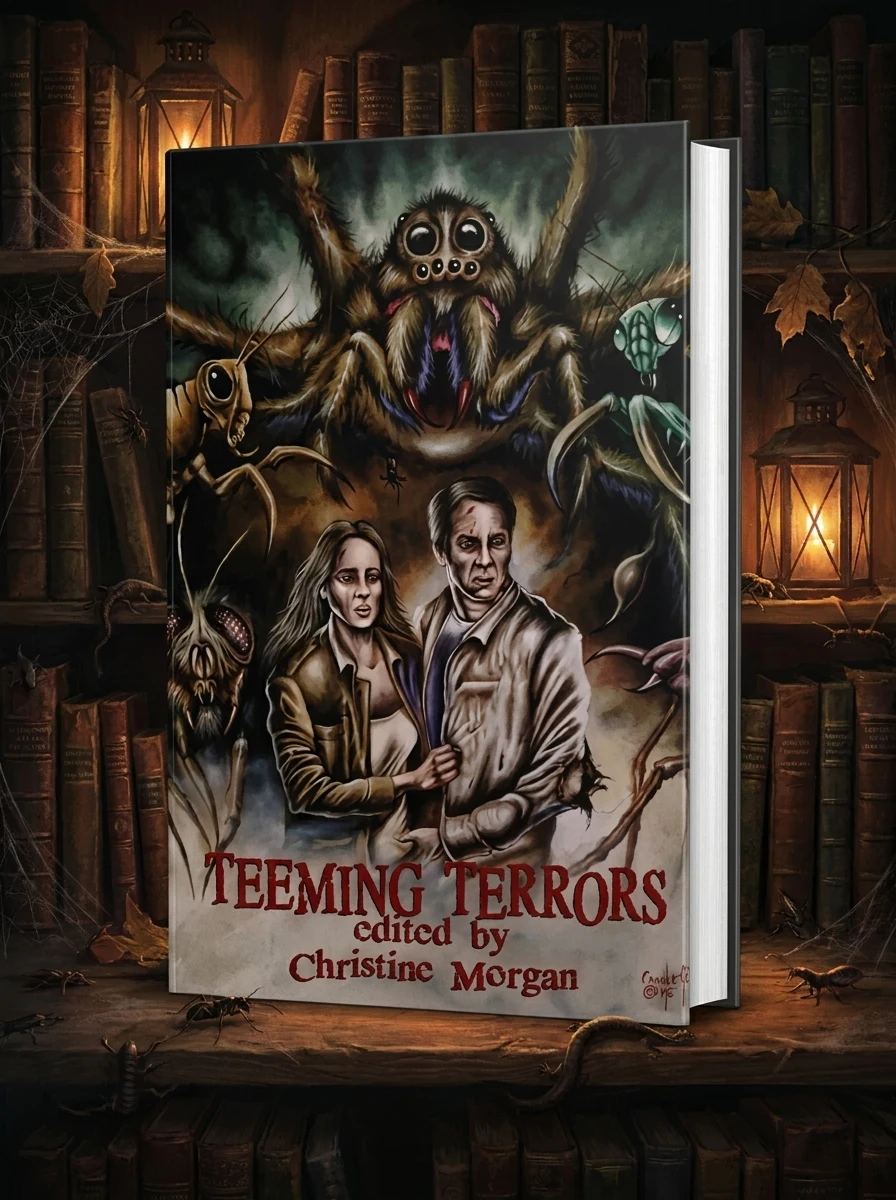
Teeming Terrors
A study of ordinary creatures that become lethal when they move in massive swarms.
This volume investigates the specific fear arising from natural organisms acting in unison. Wynn identifies the terror found in the convergence of many small, dangerous entities. The text moves away from solitary predators to focus on the psychological impact of being hunted by thousands. It covers insects, animals, and other beings that scuttle or slither. The approach is analytical yet evocative, highlighting how ordinary things become extraordinary threats through sheer volume. This perspective offers a fresh take on horror by utilizing real-world biology rather than invented lore.
Published in 2015 by Createspace Independent Publishing Platform, this work sits within the tradition of American horror fiction. It bridges the gap between nature writing and supernatural fear. The book reflects a contemporary anxiety about the environment, using the format of a standard paperback to deliver its unsettling message to modern readers.


📝 Description: Teeming Terrors
💎 Our verdict on Teeming Terrors
📖 Why choose it
Why this book is worth reading
This book appeals to readers interested in the intersection of natural beauty and mortal danger, offering a fresh perspective on horror by utilizing real-world biology instead of fictional beasts. It is ideal for enthusiasts of ecological horror who appreciate the stark warning about creatures surrounding us daily. Those who recognize that majesty often conceals lethal intent will find value in Wynn’s analytical yet evocative approach. The text challenges readers to reconsider their relationship with the environment, highlighting how ordinary things become extraordinary threats through sheer volume. It serves as a reminder that nature is filled with entities seeking harm, shifting focus from singular monsters to the terrifying power of numbers.
⭐ Reader reviews
Reader rating
Wynn presents a compelling study of the lethal potential in ordinary nature, examining creatures that creep, crawl, and slither. By emphasizing danger in overwhelming swarms rather than isolation, the work creates a unique psychological impact. It successfully blends gothic fear with biological reality, avoiding reliance on fantastical monsters. This approach suits readers who prefer grounded menace over lighthearted escapism. The analytical tone highlights the inherent threat of collective masses, transforming familiar phobias into unimaginable dangers. While those seeking pure fantasy might find it too realistic, enthusiasts of natural horror will appreciate its vivid exploration of how small organisms become teeming terrors when united.