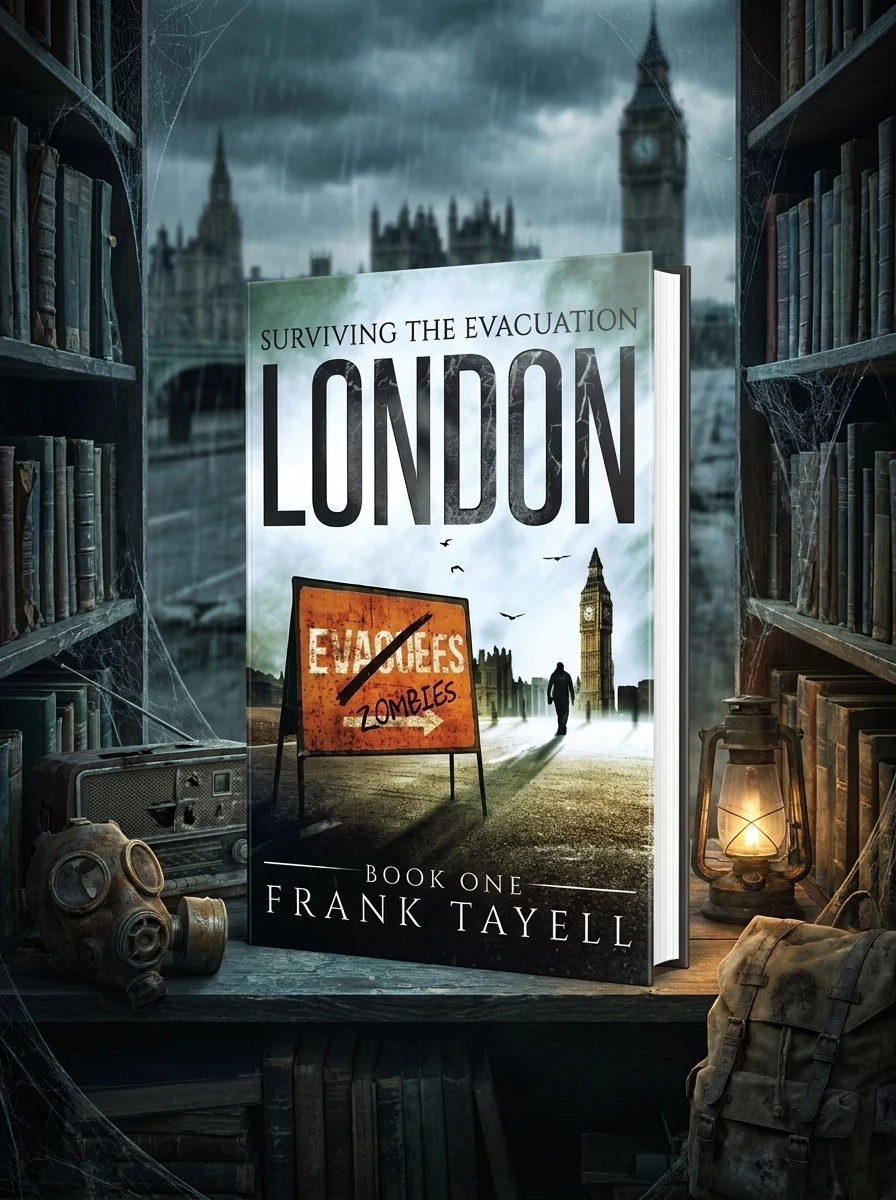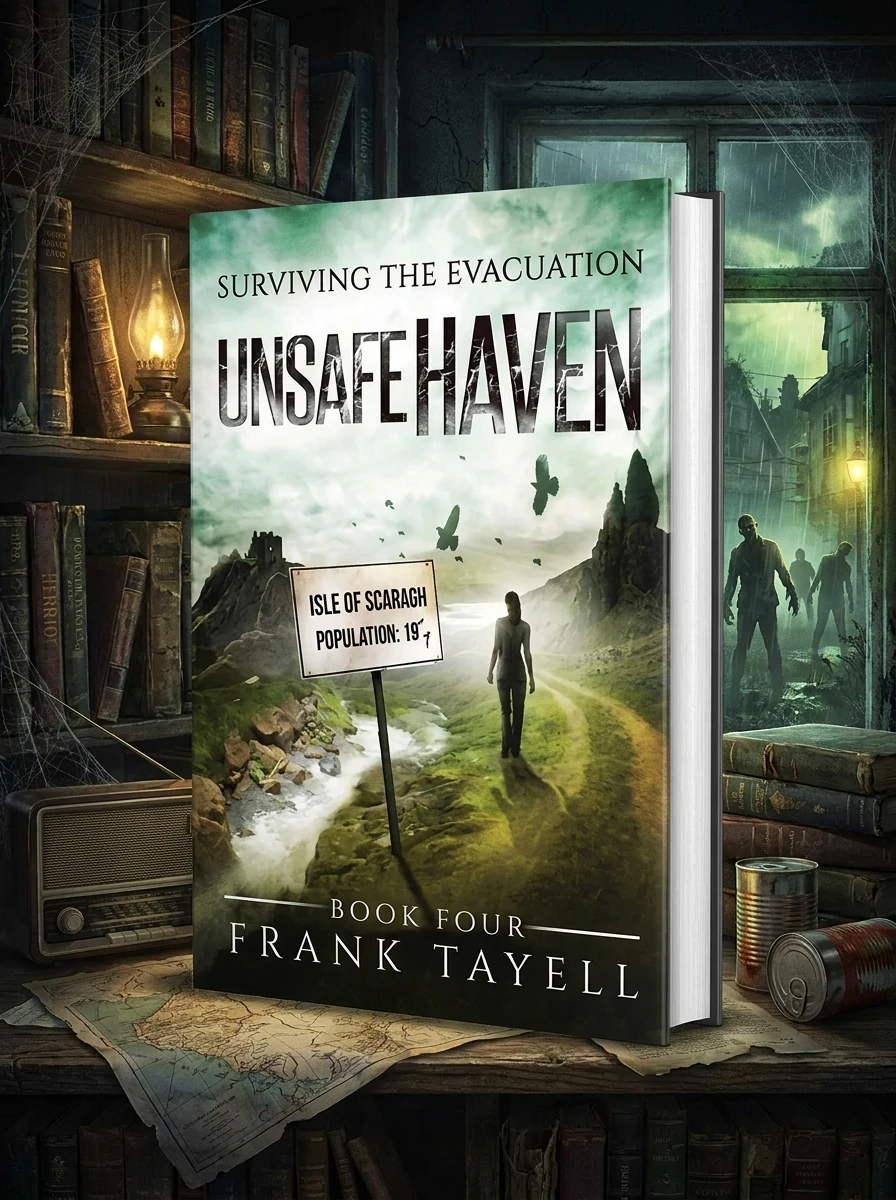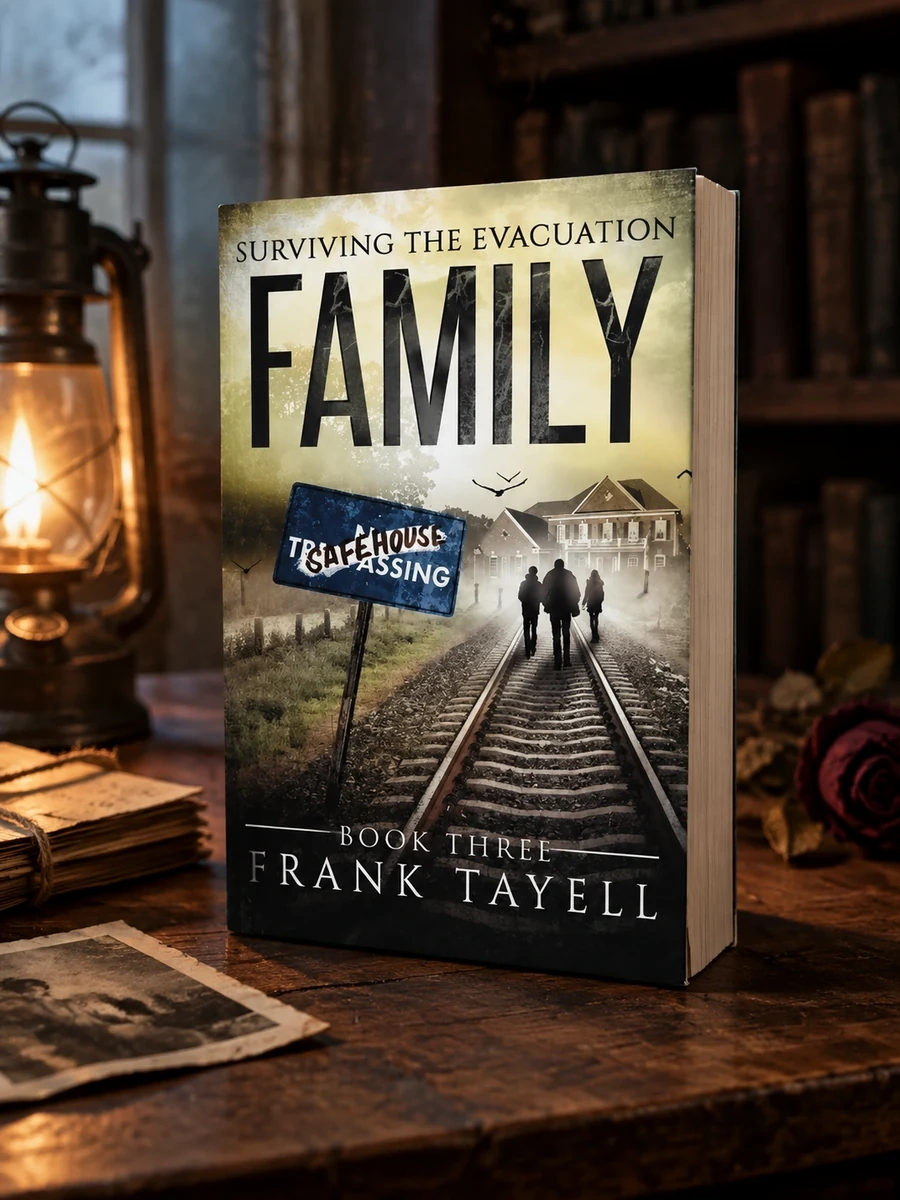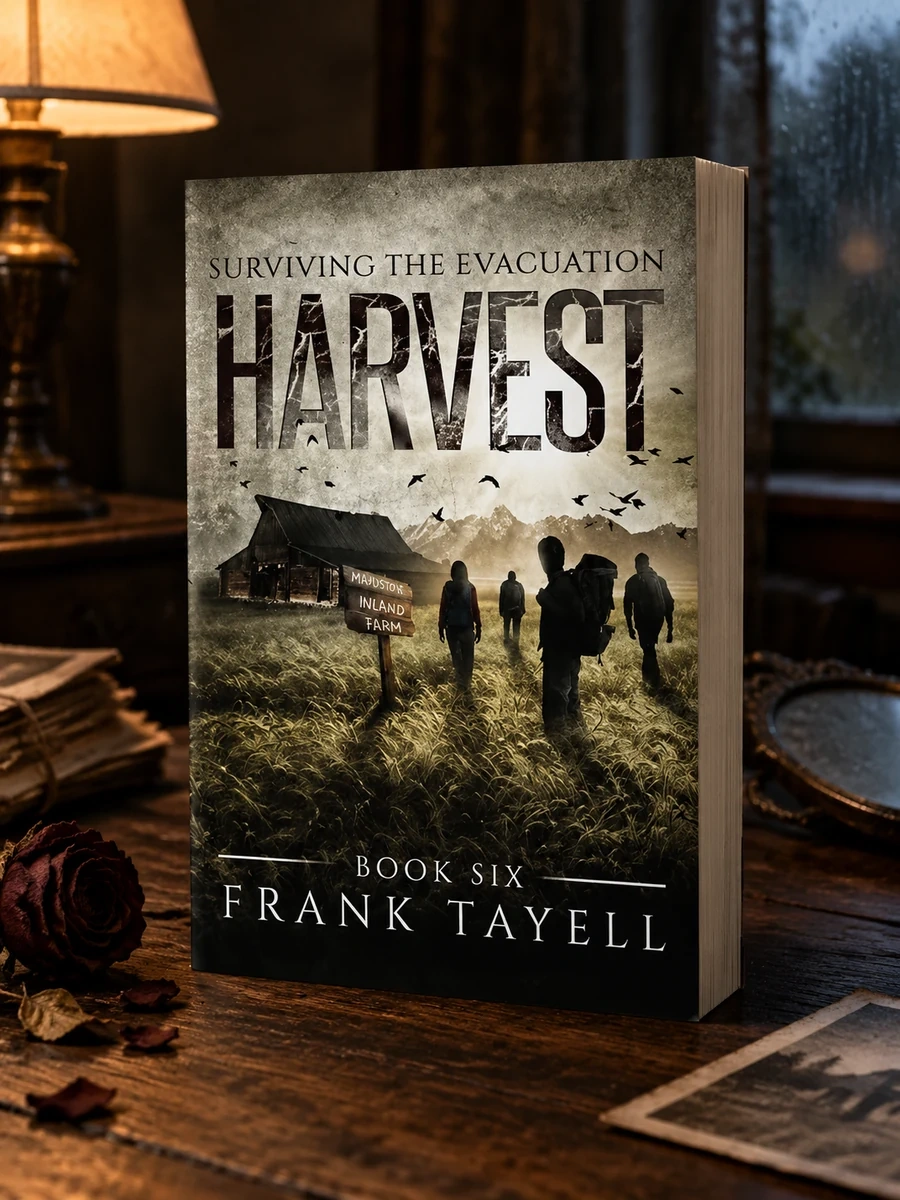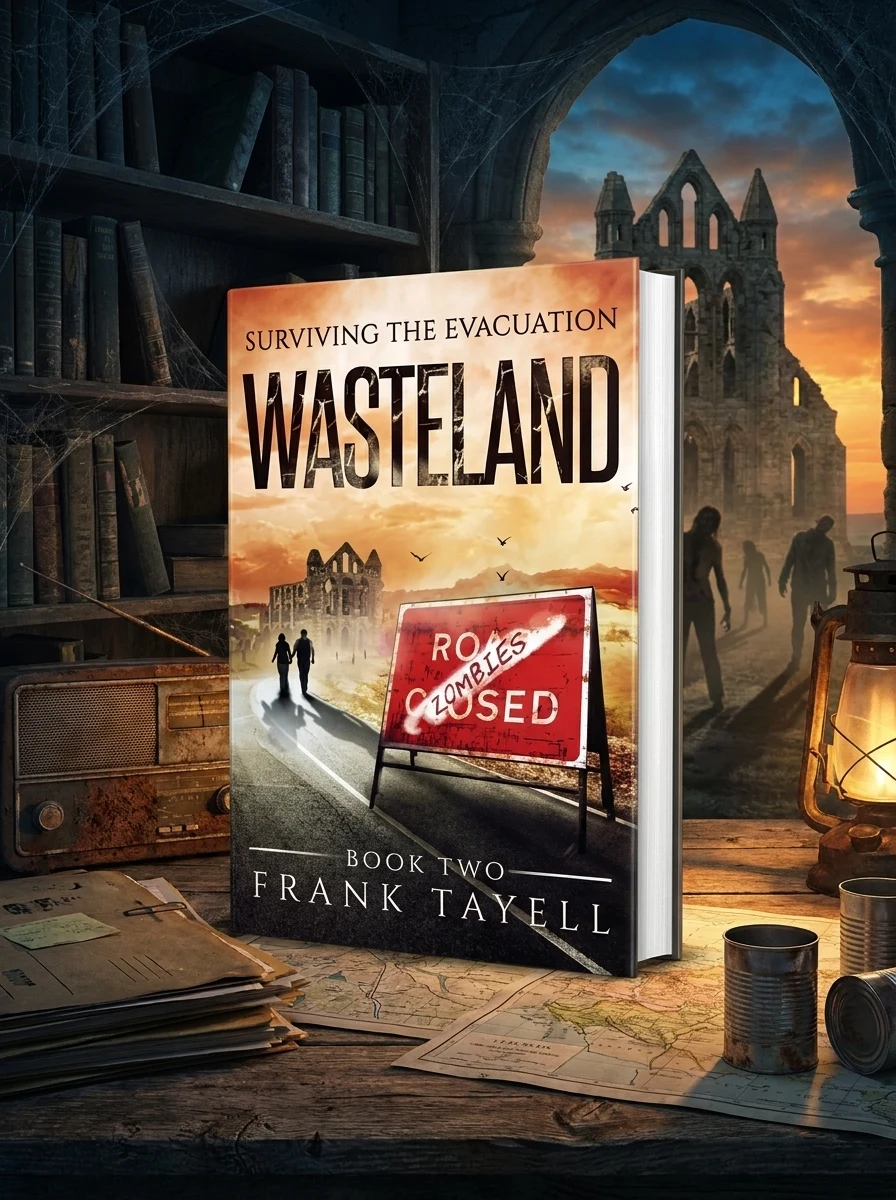
Surviving The Evacuation Book 2: Wasteland
A journal account of survival in post-apocalyptic Britain by Frank Tayell.
Tayell structures this second volume as a personal record rather than an omniscient narrative. The text focuses on Bill Wright's internal processing of the files from Sholto. These records hint at a conspiracy involving the virus's creation. The physical journey involves moving away from the failed evacuation zones in southern England. The route leads toward a specific stately home linked to his childhood memories. Along this path, he gathers companions including Kim and two children. The group faces human threats that prove more lethal than the undead horde blocking their progress.
The story is set in Britain after a global civil war and outbreak that left anarchy to rule. It draws on the tradition of British gothic horror through its use of ruined abbeys and stately homes as settings for survival.


📝 Description: Surviving The Evacuation Book 2: Wasteland
💎 Our verdict on Surviving The Evacuation Book 2: Wasteland
📖 Why choose it
Why this book is worth reading
Readers seeking a grounded, introspective take on the zombie genre will find this volume rewarding. It appeals to those who prefer psychological depth and conspiracy over relentless action. The unique second-person journal format offers an immersive experience into Bill Wright's internal processing of trauma and revelation. Fans of British geographical settings in apocalyptic scenarios will appreciate the specific focus on southern England’s ruined landscape. Those interested in the bureaucratic origins of disaster, rather than just the survival mechanics, will engage with the files from Sholto. It is ideal for readers who enjoy slow-burn tension and the gradual unraveling of a vast conspiracy through personal archives rather than omniscient narration.
⭐ Reader reviews
Reader rating
Tayell effectively utilizes the journal format to explore Bill Wright’s psychological state amidst the British wasteland. The shift from external survival to internal processing of Sholto’s files creates a compelling mystery regarding the virus's origins. The narrative excels in building tension through human threats that prove more lethal than the undead horde. By anchoring the story in specific stately homes and motorways, the author grounds the apocalyptic scale in tangible British geography. This approach suits readers who value detailed world-building through personal records over fast-paced action sequences. The focus on isolation and the burden of unwitting involvement in a conspiracy provides a fresh angle on the genre.