
Stanley Goes to Medical School
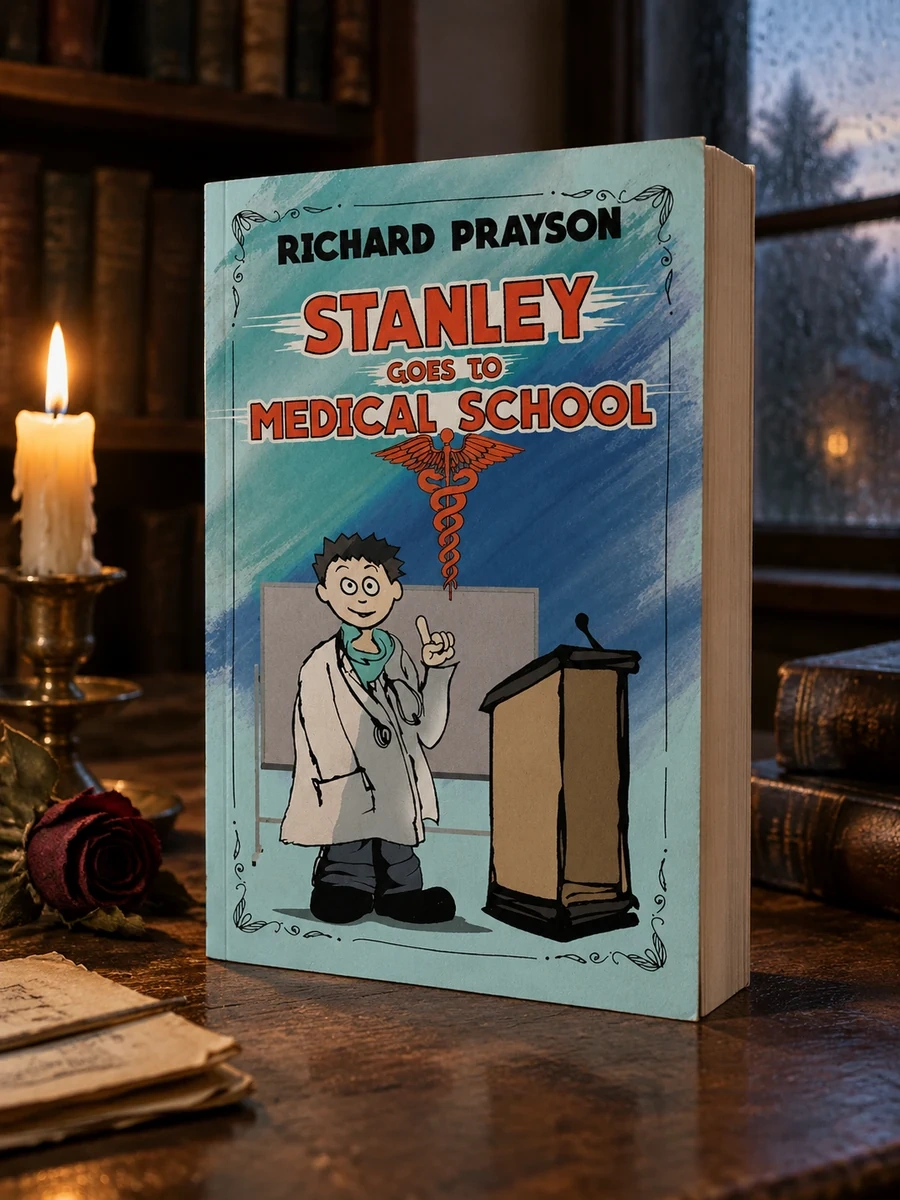
An eight year old orphan navigates the absurdities of medical school education.
Richard Prayson crafts a satirical narrative centered on Stanley, an orphan boy whose exceptional memory allows him to bypass typical educational barriers. The text examines the first year of medical school through a lens of dark comedy. It highlights the disconnect between youthful innocence and the harsh realities of professional training. The author draws on Roald Dahl’s stylistic traditions to create a world that is both whimsical and critical. This approach allows for a detailed look at institutional culture without relying on heavy academic jargon. The story focuses on character interactions and the surreal nature of Stanley’s situation.
Published by Gatekeeper Press in 2020, this work sits within the tradition of satirical fiction that critiques institutional structures. It aligns with the spirit of Roald Dahl’s storytelling, blending humor with social commentary for a modern American audience interested in unconventional narratives.


📝 Description: Stanley Goes to Medical School
💎 Our verdict on Stanley Goes to Medical School
📖 Why choose it
Why this book is worth reading
Readers who appreciate satirical fiction and dark humor will find this book particularly engaging. It offers a unique critique of modern medical education structures through the eyes of an eight-year-old orphan, blending whimsy with institutional absurdity. Those interested in gothic and supernatural fiction collections that challenge traditional narratives will enjoy its distinctive tone. The story avoids heavy academic jargon, focusing instead on character interactions and surreal moments. It is ideal for those seeking a departure from serious medical texts or straightforward coming-of-age stories, providing a comical look at rigorous professional training demands.
⭐ Reader reviews
Reader rating
Prayson successfully crafts a satirical narrative that examines the first year of medical school through dark comedy. By utilizing a child’s perspective, he highlights the disconnect between youthful innocence and harsh professional realities. The book excels in its character-driven approach, avoiding traditional plot arcs in favor of memorable interactions within an academic setting. It suits readers who enjoy absurdity blended with academic critique. While it may not appeal to those seeking serious medical textbooks, it stands as a unique entry in contemporary horror and dark fantasy. The text effectively critiques institutional culture without relying on dense terminology, making it accessible yet intellectually stimulating for fans of unconventional storytelling.