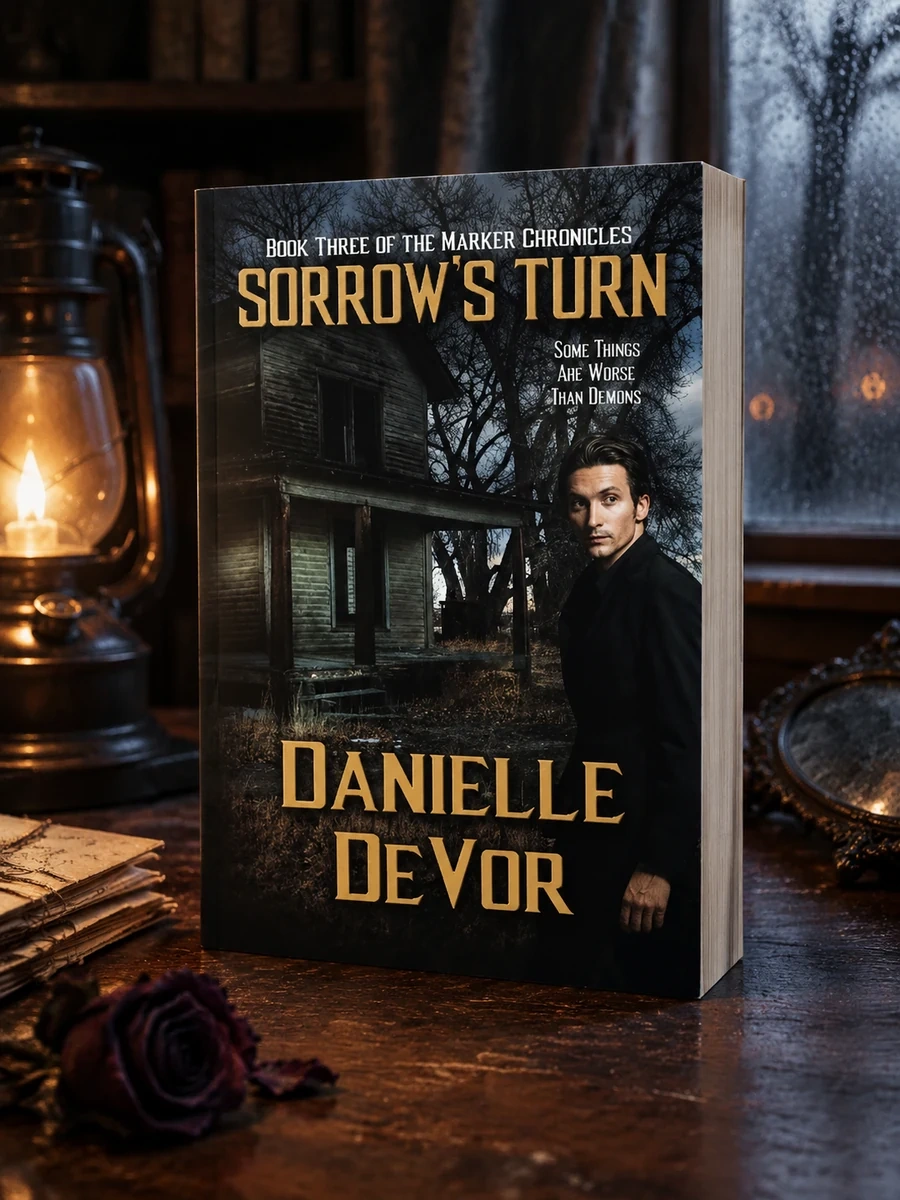

Sorrow's Turn
A reluctant exorcist faces sabotage and a living corpse at the Vatican's training school.
Jimmy Holiday enters the Vatican's exorcism school with high hopes for proper training. The Order of Markers supports his education, but internal enemies work to undermine him. When his studies end abruptly, he takes on a case involving a resurrected body. This is not a zombie scenario. Jimmy uses his usual methods to investigate. He believes the situation will stabilize. His confidence breaks when he realizes the person betraying him is someone he trusts most. The plot focuses on his struggle to maintain control amid deception.
The narrative engages with Catholic exorcism traditions and Vatican protocols. It imagines a formal school for practitioners within the Church hierarchy. The setting reflects modern bureaucratic structures applied to spiritual warfare. Devor draws on contemporary urban fantasy conventions to frame these religious elements.


📝 Description: Sorrow's Turn
💎 Our verdict on Sorrow's Turn
📖 Why choose it
Why this book is worth reading
This book offers a compelling exploration of institutional corruption and personal betrayal within a religious context. Readers interested in the procedural aspects of spiritual combat will appreciate the focus on techniques rather than generic horror tropes. It is ideal for those who enjoy character-driven narratives where the protagonist transitions from student to practitioner under duress. The story provides insight into the Vatican's exorcism school, appealing to those curious about the intersection of faith and organizational politics. By avoiding zombie clichés, it presents a unique supernatural challenge that requires careful investigation. Fans of urban fantasy will find the blend of religious tradition with modern thriller pacing engaging. It suits readers who prefer mysteries where trust is broken by those closest to the protagonist.
⭐ Reader reviews
Reader rating
Danielle Devor delivers a supernatural thriller that prioritizes procedural detail over sensationalism. The narrative effectively examines the conflict between individual faith and institutional politics, offering a grounded perspective on exorcism traditions. Jimmy Holiday’s journey from reluctant student to active practitioner provides a strong emotional core for the story. The book distinguishes itself by avoiding common horror clichés, focusing instead on the psychological weight of betrayal and deception. It is best suited for readers who enjoy theological thrillers and urban fantasy with serious thematic undertones. Those seeking standalone folklore or historical non-fiction might find the narrative style less appealing. However, fans of character-driven mysteries involving supernatural elements will likely appreciate the careful construction of tension and the exploration of trust within a high-stakes religious environment.