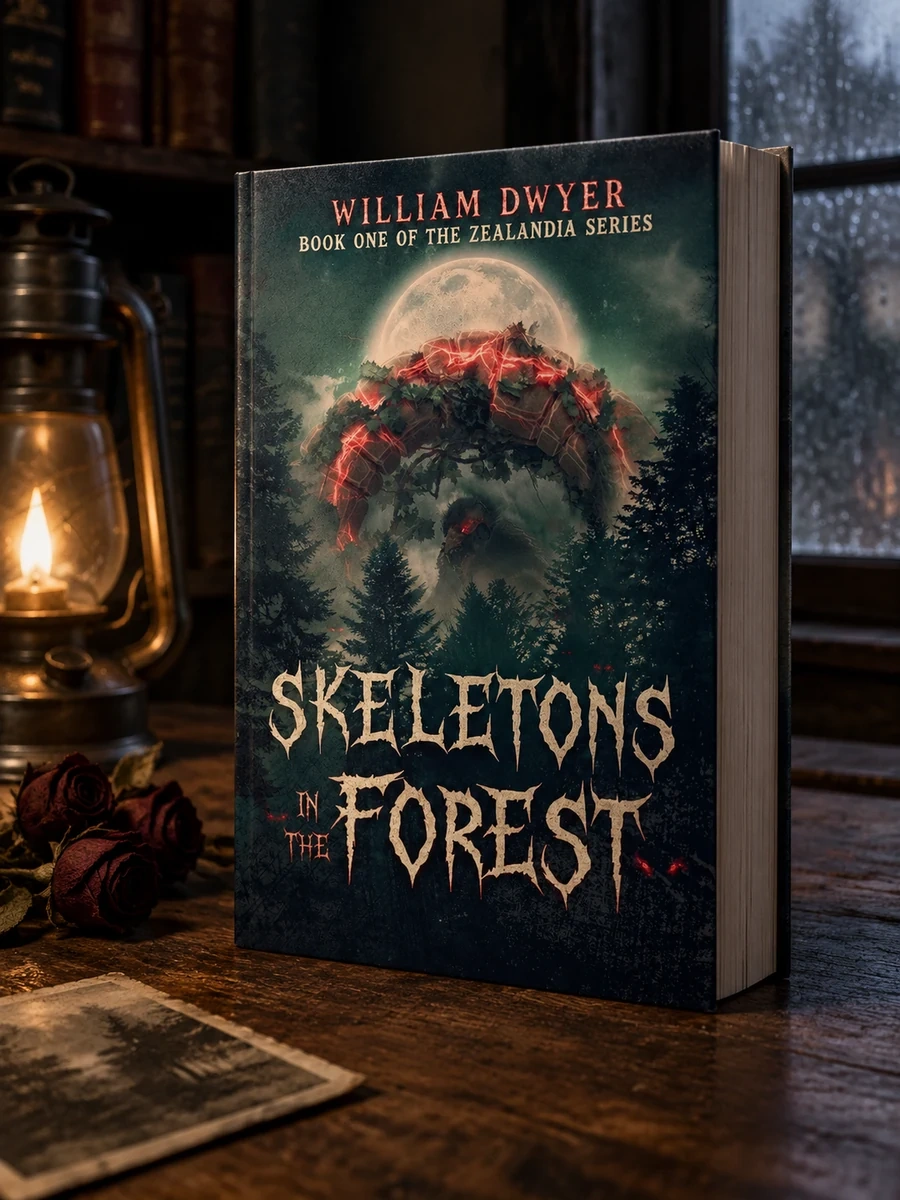
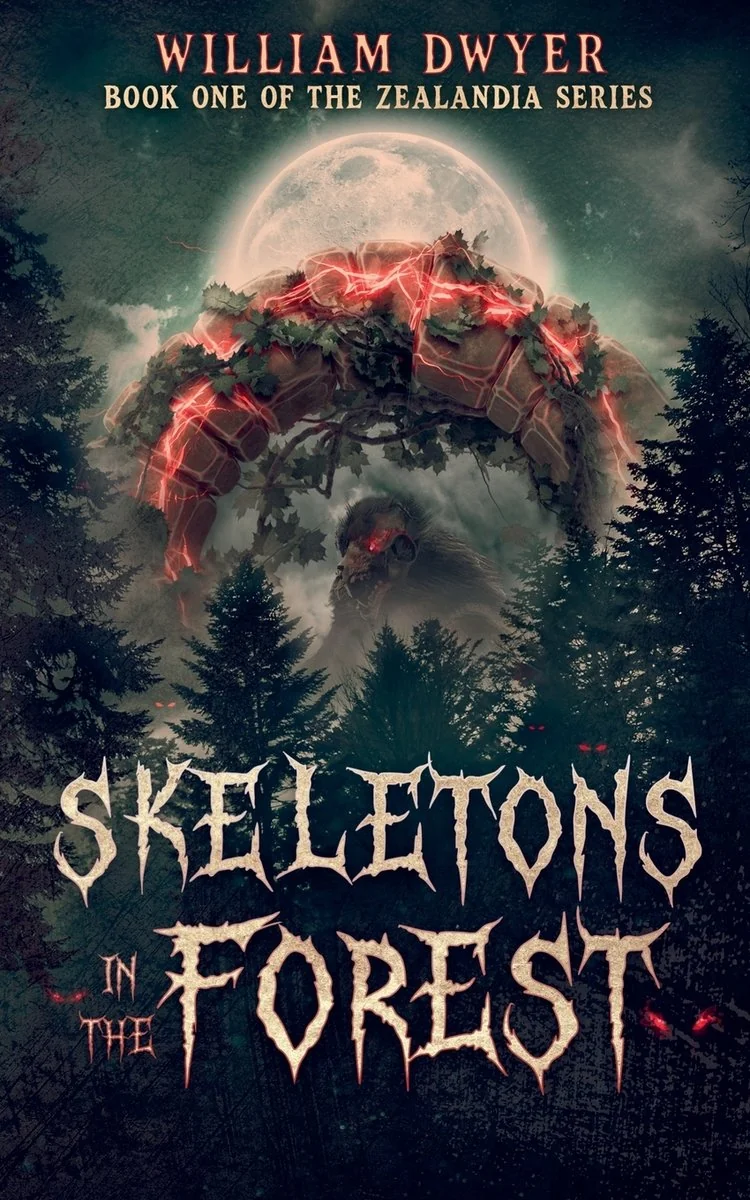
Skeletons in the Forest
A skeptic fights ancient Maori spirits awakened by modern development in New Zealand.
Ken ignores local warnings until progress disturbs hidden stone circles. Creatures emerge from these ruins, bringing death to Whangamomona. The dead rise, and the forest becomes a hunting ground for corrupted beings. Ken must team up with others to survive this threat born from disregarding the past. The story focuses on the clash between modern indifference and ancient power. It is not about ghosts in attics but entities tied to the land itself. The horror comes from the realization that some myths are warnings, not stories. Dwyer writes a novella that moves quickly through this crisis. The pacing reflects the sudden collapse of safety for the characters. There is no time for debate when the bush has teeth.
The novella is set in modern New Zealand, specifically referencing the town of Whangamomona. It draws on Maori mythology and the significance of ancient stone circles hidden in the bush for centuries. The story reflects contemporary tensions between development and traditional beliefs.


📝 Description: Skeletons in the Forest
💎 Our verdict on Skeletons in the Forest
📖 Why choose it
Why this book is worth reading
Readers who appreciate horror rooted in specific cultural landscapes and environmental dread will find this novella compelling. It appeals to those who prefer entities tied to the land over traditional attic ghosts, offering a fast-paced narrative that emphasizes the sudden collapse of safety. The story is ideal for fans of gritty supernatural fiction who enjoy seeing skepticism clash with ancient power. Those interested in the breakdown between myth and reality, particularly within a New Zealand setting, will gain satisfaction from the raw courage displayed by characters facing corrupted beings. It serves as an entry point to a series focused on human carelessness against non-existent entities.
⭐ Reader reviews
Reader rating
Dwyer delivers a brisk, atmospheric novella that effectively utilizes the New Zealand bush as a primary antagonist rather than a passive backdrop. The pacing mirrors the sudden intrusion of supernatural threat into modern life, creating immediate tension without lingering on exposition. By grounding the horror in Maori mythology and ancient stone circles, the narrative offers a distinct alternative to generic haunted house tropes. The strength lies in its specific cultural grounding and the realization that myths are warnings. While remote readers of traditional ghost stories might find the setting too isolated, folklore enthusiasts will appreciate the tangible connection between the land and the emerging corruption. It is a focused exploration of ancient power versus modern indifference.
📖 Read on the blog
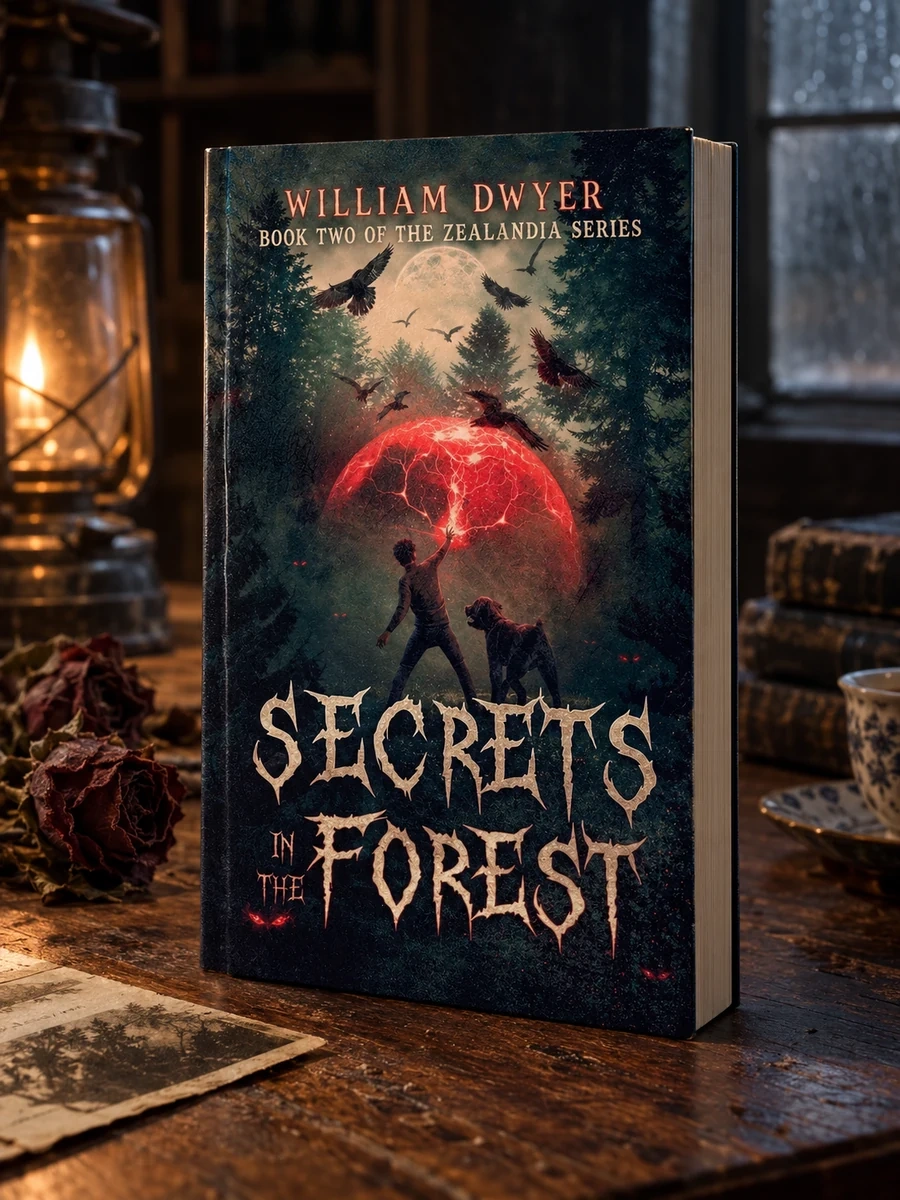
✍️ More books by this author William Dwyer


🏛 Books from this publisher William Dwyer
You might also like
See more →




Have a question about this item?
Ask about the edition, condition, delivery or anything else — we reply by email or phone, usually within a day.
