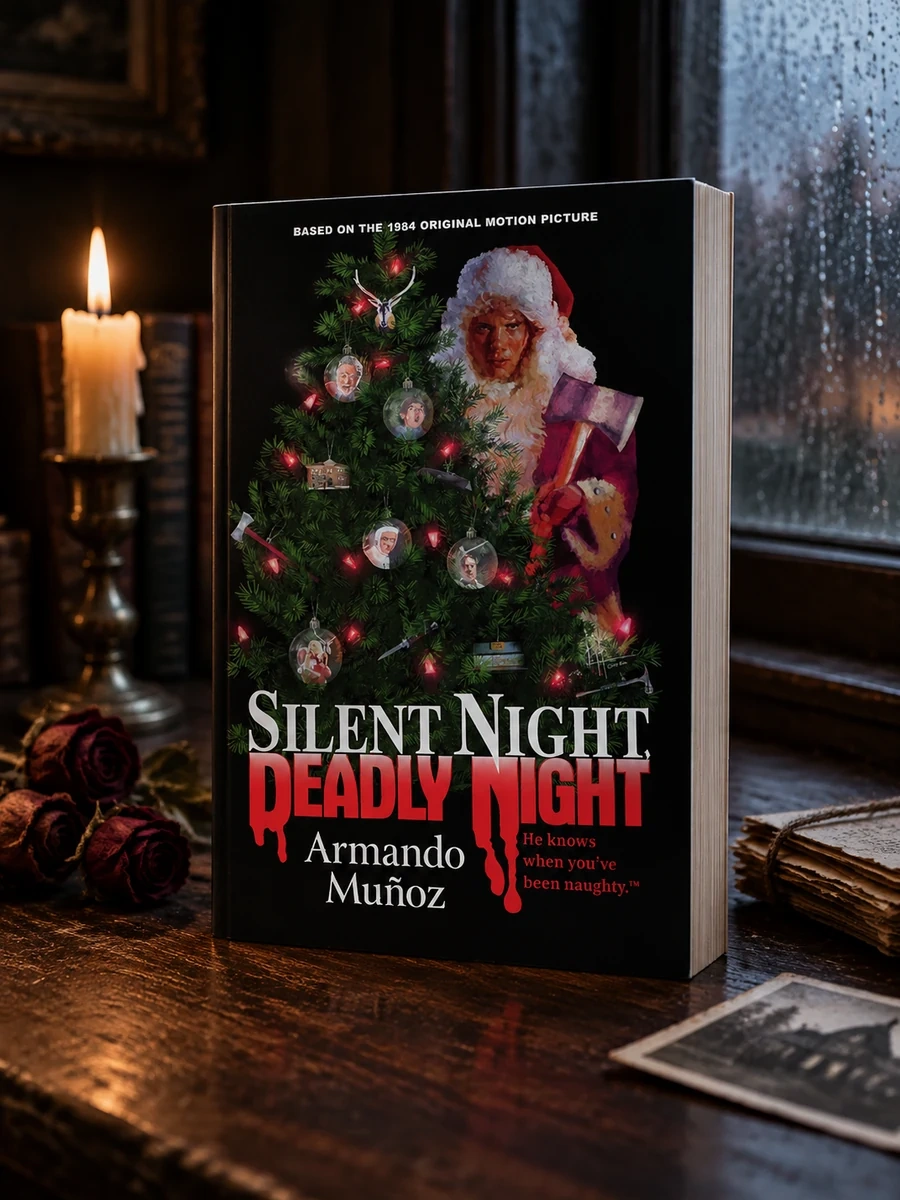
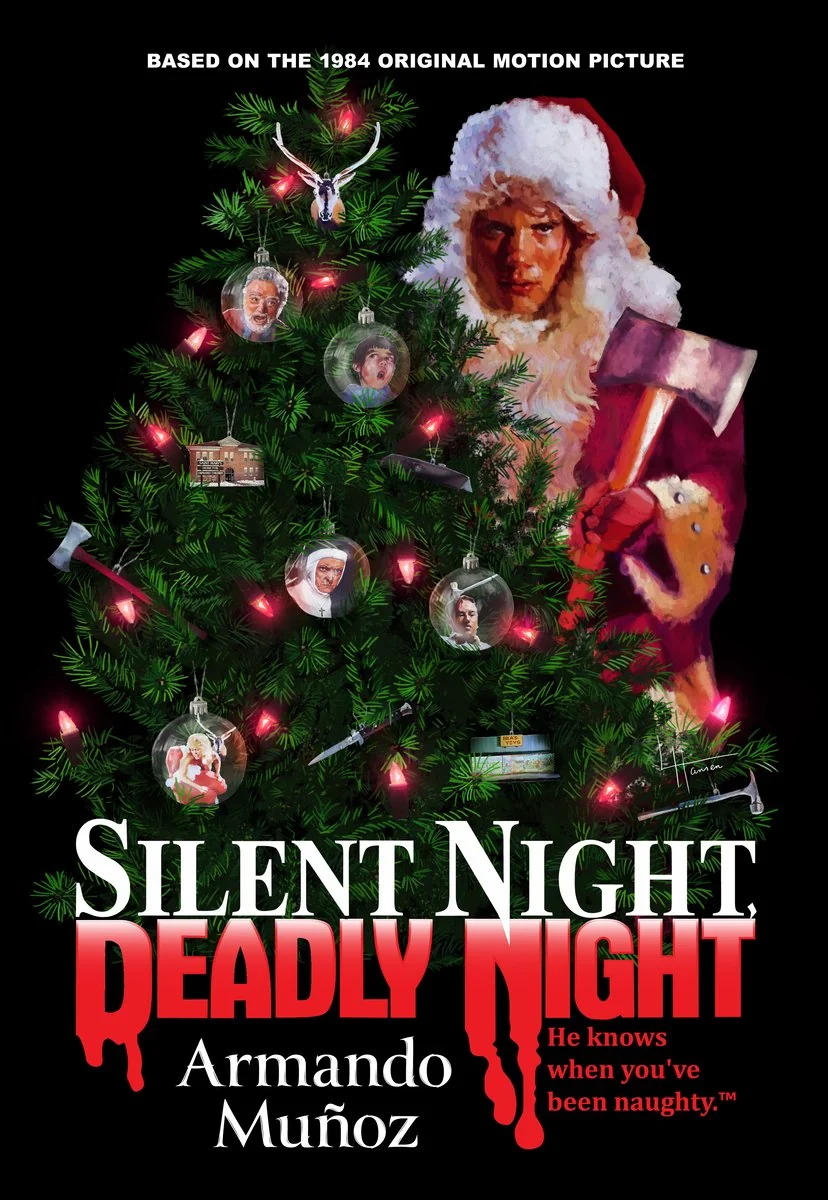
Silent Night, Deadly Night: The Official Novelization of the Original Movie
A novelization of the 1984 slasher film by Armando Munoz.
This book expands on the events of the original movie, focusing on Billy Chapman’s descent into madness. It covers his life in a strict orphanage and his job at a toy store. The story highlights the contrast between Christmas traditions and violent retribution. Munoz writes from Billy’s perspective, showing how past trauma influences his present actions. The narrative does not shy away from the brutal consequences of his rage. It serves as a companion to the film for those who want more detail on the character’s internal state.
The book is published by Titan Books in 2025. It adapts the 1984 cult classic Silent Night, Deadly Night. The story is set in 1971 and 1984. It inspired a 2022 remake. The work sits within the slasher film genre and Christmas horror tradition.


📝 Description: Silent Night, Deadly Night: The Official Novelization of the Original Movie
💎 Our verdict on Silent Night, Deadly Night: The Official Novelization of the Original Movie
📖 Why choose it
Why this book is worth reading
This novelization appeals to fans of slasher fiction and gothic horror who crave deeper insight into the origins of cult classics. It is ideal for readers who prefer literary immersion over cinematic spectacle, offering a detailed exploration of Billy Chapman’s psychological unraveling. Those interested in the contrast between Christmas traditions and violent retribution will find value in this companion piece. However, it is unsuitable for those seeking lighthearted holiday cheer or non-fiction analysis. The text provides a window into how past trauma influences present actions, making it essential for enthusiasts of the subgenre who want to understand the character’s internal state beyond the screen.
⭐ Reader reviews
Reader rating
Armando Munoz successfully adapts the narrative for readers seeking depth behind the gore. By focusing on Billy Chapman’s descent into madness, the book highlights the brutal consequences of rage and trauma. The structure effectively contrasts Christmas traditions with violent retribution, offering a compelling study of psychological horror. It serves as a vital companion to the original film, providing details on the character’s motivations that the movie could not fully explore. This work is best suited for horror aficionados who enjoy exploring the internal states of antagonists in cult classics. Readers who appreciate the intersection of gothic elements and slasher tropes will find this adaptation both insightful and chillingly effective.