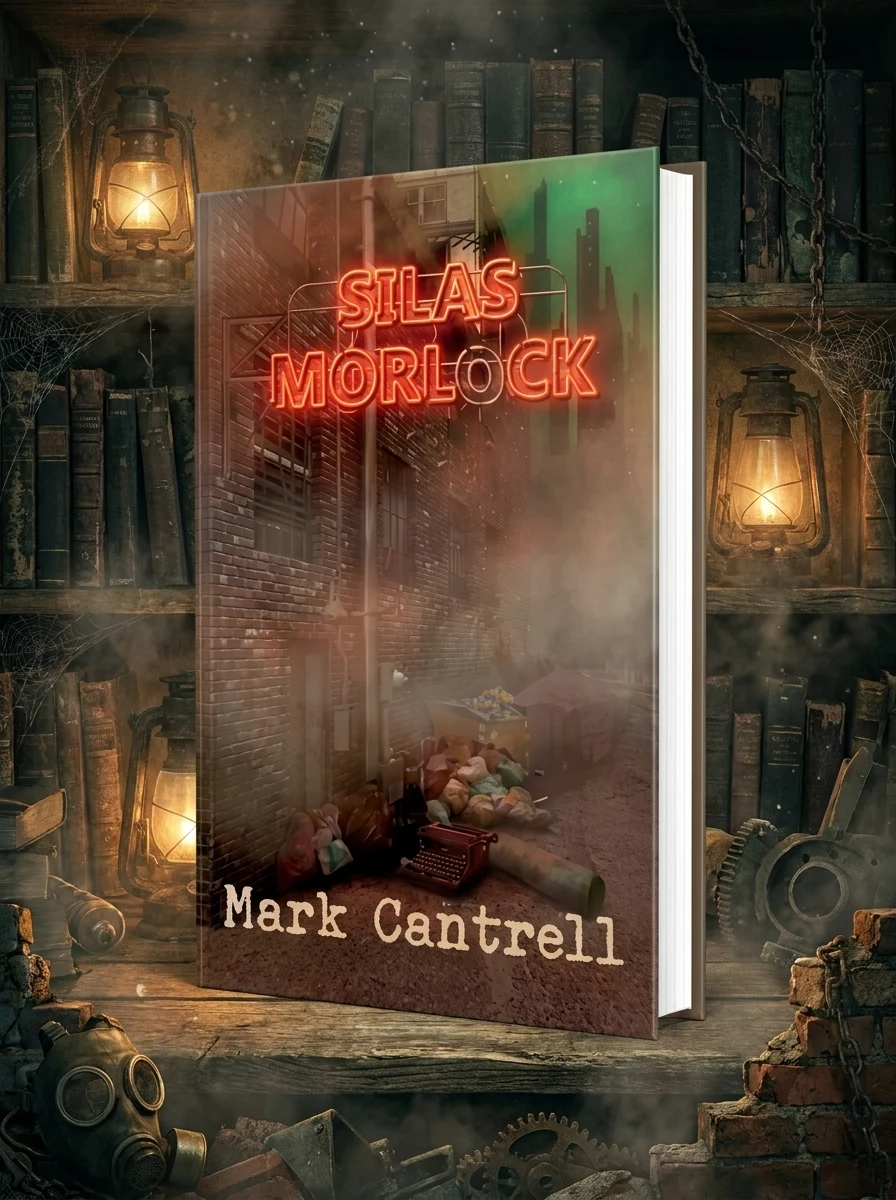
Silas Morlock
A bleak dystopian novel about societal collapse and survival.
Silas Morlock strips away the comfort of civilized life to reveal the harsh mechanics of existence during an apocalypse. Mark Cantrell constructs a world where the end is not a sudden event but a slow, unforgiving process. The narrative focuses on the psychological and physical toll of living in ruins. There are no heroes here, only survivors navigating a landscape defined by decay. The story rejects supernatural explanations for its horror, instead relying on the terrifying plausibility of societal breakdown. This approach creates a sense of dread that lingers long after the final page. Readers will find themselves confronting the fragility of their own world through this lens of desolation.
Published in 2013 by Inspired Quill, this work sits within the tradition of dystopian and apocalyptic science fiction. It draws on gothic fiction’s focus on desolation to create a narrative of existential threat. The book appeals to readers who prefer horror grounded in plausible catastrophe rather than supernatural elements.


📝 Description: Silas Morlock
💎 Our verdict on Silas Morlock
📖 Why choose it
Why this book is worth reading
Readers who crave tension and appreciate narratives grounded in the harsh mechanics of survival will find this book compelling. It appeals to those seeking existential threat within a framework of societal weight rather than abstract evil or supernatural elements. Fans of gothic fiction may find resonance in its focus on breakdown and desolation, as Cantrell delivers a cohesive vision where terror and science fiction blur. The text offers a specific kind of dread emerging from the collapse of order, ensuring the horror feels immediate and tangible for audiences who prefer plausible catastrophe over easy resolutions or light comfort.
⭐ Reader reviews
Reader rating
Mark Cantrell constructs a world where the end is a slow, unforgiving process rather than a sudden event. Silas Morlock strips away civilized comfort to reveal the terrifying plausibility of societal breakdown through psychological and physical tolls. There are no heroes here, only survivors navigating decay. This approach creates lingering dread that challenges readers with the reality of a world ending. The work suits those who prefer horror rooted in plausible catastrophe over supernatural elements. It offers a steady rhythm that confronts the fragility of human constructs. Readers seeking tension within a framework of societal weight will appreciate this unyielding atmosphere without light comfort.
You might also like
See more →







Have a question about this item?
Ask about the edition, condition, delivery or anything else — we reply by email or phone, usually within a day.
