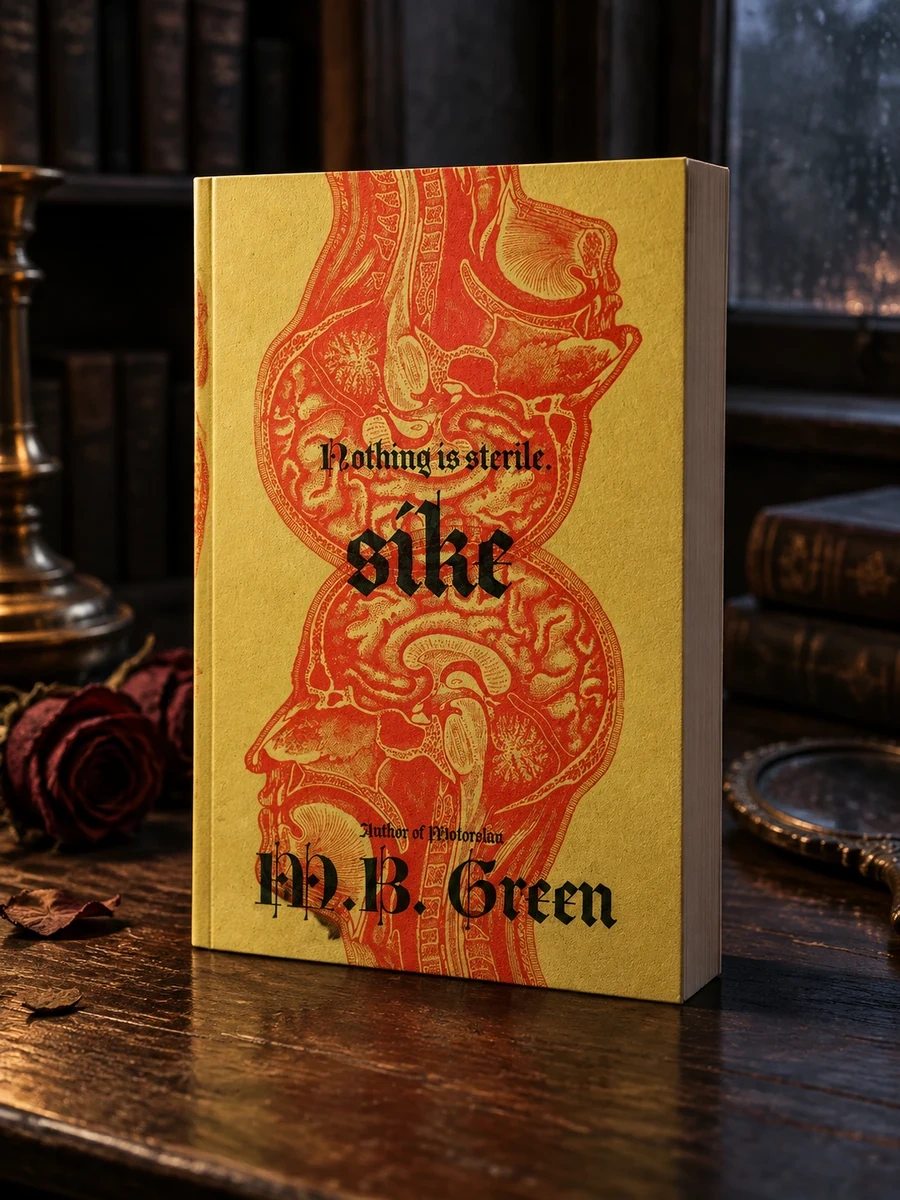

Sike
A psych nurse's reality unravels into a jazz-haunted nightmare at Camarillo State Hospital.
Dominic Crowe works as a psychiatric nurse, collecting razors and managing vitals while pretending the bright lights do not bother him. His body begins to stutter with headaches and hallucinations, signaling a deeper unraveling. The hospital environment shifts into a surreal dreamscape where palm trees sway behind barred windows and poppies bloom against stucco. Green uses the real Camarillo State Hospital as the foundation for this fever dream of burnout and obsession. The story operates as a confession from within a nervous breakdown, offering a darkly funny and psychologically honest look at decay. Fans of transgressive fiction will recognize the influence of authors like Chuck Palahniuk and Bret Easton Ellis in its approach to mental collapse.
The novel draws on the history of Camarillo State Hospital before it closed, situating itself within the tradition of transgressive horror. It appeals to readers familiar with the works of Chuck Palahniuk and Bret Easton Ellis, focusing on the psychological limits of the mind under professional strain.


📝 Description: Sike
💎 Our verdict on Sike
📖 Why choose it
Why this book is worth reading
Readers seeking a psychologically honest and darkly funny examination of professional decay will find this novel compelling. It appeals to those interested in the internal mechanics of a nervous breakdown rather than external monsters. The book offers a unique blend of jazz-haunted surrealism and clinical horror, grounded in the real Camarillo State Hospital. Fans of transgressive fiction who appreciate unstable narrative voices and themes of obsession will gain from its intimate portrayal of a caregiver’s erosion. It does not suit those preferring traditional ghost stories or lighthearted supernatural fiction, but rather those ready for a fever dream of burnout.
⭐ Reader reviews
Reader rating
Green delivers an intense psychological horror novel that maps the disintegration of a psychiatric nurse’s reality. By grounding surreal imagery—swaying palm trees and blooming poppies—in the historical Camarillo State Hospital, the text creates a potent atmosphere of decay. The narrative voice is intimate yet unstable, effectively mirroring Dominic Crowe’s deteriorating mental state. While it lacks traditional monsters, its strength lies in exploring burnout and obsession through a darkly humorous lens. This work suits readers who appreciate transgressive fiction and complex character studies over conventional supernatural thrills. It is a rigorous, honest look at the blurring line between patient and caregiver.