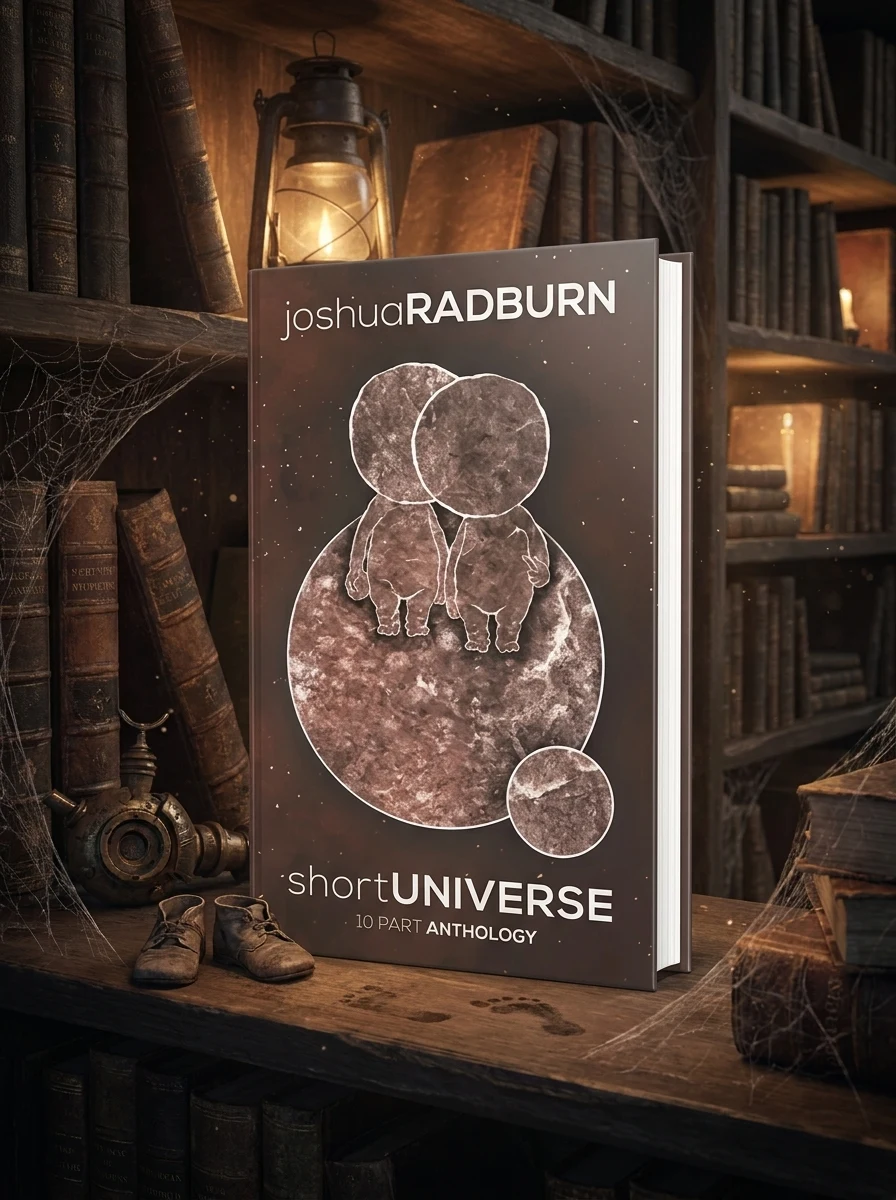
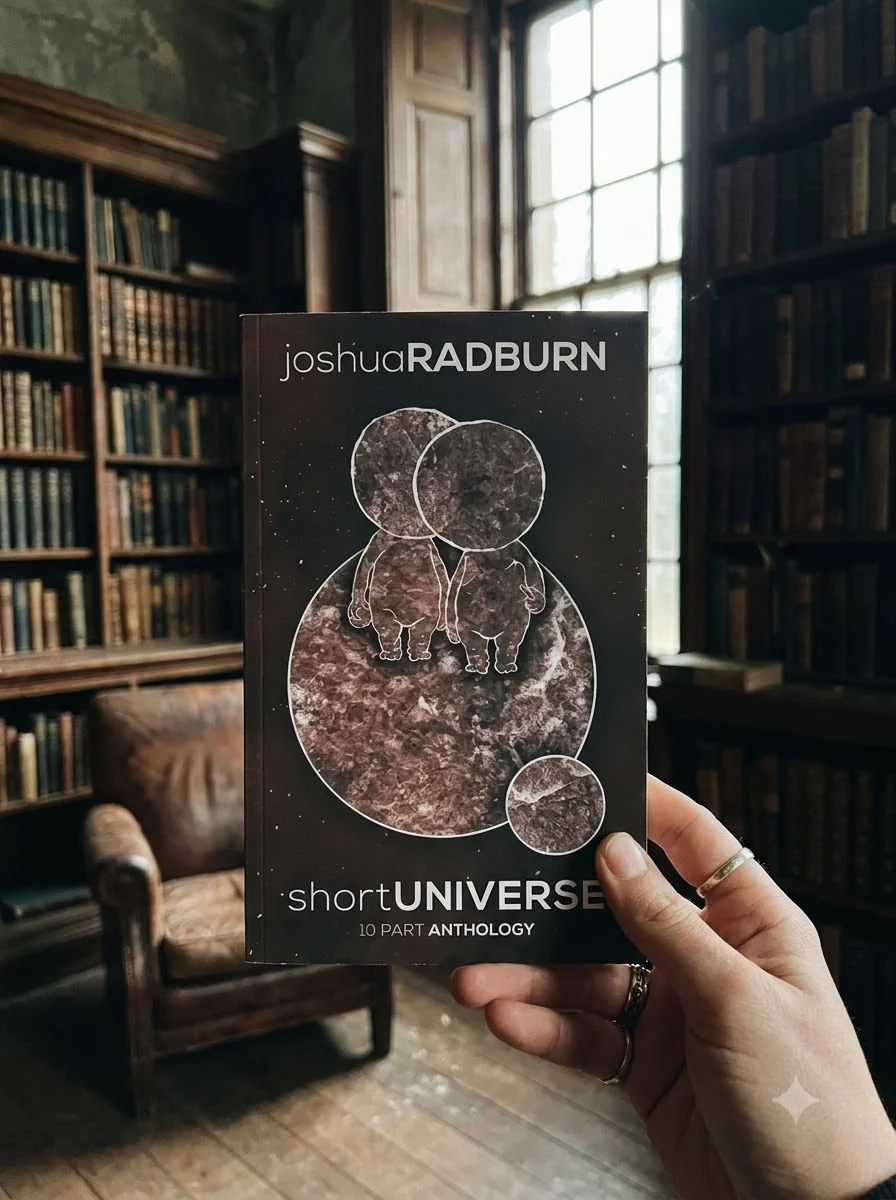
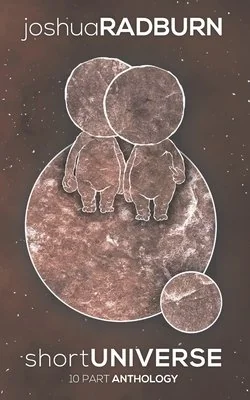
Short Universe
A sci-fi horror anthology about the last librarian hearing footsteps.
This collection examines the psychological state of Phillos, the sole survivor of his kind. He manages a Great Library that no longer has patrons. The arrival of footsteps challenges his understanding of reality. Radburn uses ten separate narratives to expand this premise. Each part explores a different facet of horror in a voided universe. The stories do not rely on complex plots but on atmosphere and dread. The author avoids traditional hero arcs, focusing instead on the weight of existence. This structure allows for varied tones within the same overarching theme. The book appeals to fans of existential horror and cosmic scale.
Published in 2017 by J D Radburn, this work sits within the contemporary independent press landscape for speculative fiction. It draws on established sci-fi horror tropes to examine isolation and the unknown across time and space.


📝 Description: Short Universe
💎 Our verdict on Short Universe
📖 Why choose it
Why this book is worth reading
Readers drawn to existential horror and atmospheric dread will find this collection compelling. It appeals to those who prefer mood over plot, offering a deep dive into the psychological state of a solitary survivor. Fans of cosmic scale and isolated protagonists facing unknown threats will appreciate the varied tones across ten distinct narratives. The book is ideal for audiences comfortable with speculative fiction that prioritizes tension and unease. It offers no comfort or resolution, instead presenting unsettling encounters in an empty universe. Those seeking traditional character arcs or historical realism may find it lacking, but others will value its pure focus on fear and loneliness.
⭐ Reader reviews
Reader rating
Radburn successfully constructs a chilling atmosphere of isolation through ten distinct narratives centered on Phillos, the final librarian. The strength lies in its commitment to mood, using the Great Library as a backdrop for cosmic dread rather than complex plotting. The anthology effectively maps bloody misadventures across time and space without relying on traditional hero arcs. This approach allows for varied tones while maintaining a cohesive theme of existential weight. It suits readers who enjoy speculative fiction that challenges their understanding of reality through sudden intrusion and vast emptiness.
You might also like
See more →







Have a question about this item?
Ask about the edition, condition, delivery or anything else — we reply by email or phone, usually within a day.
