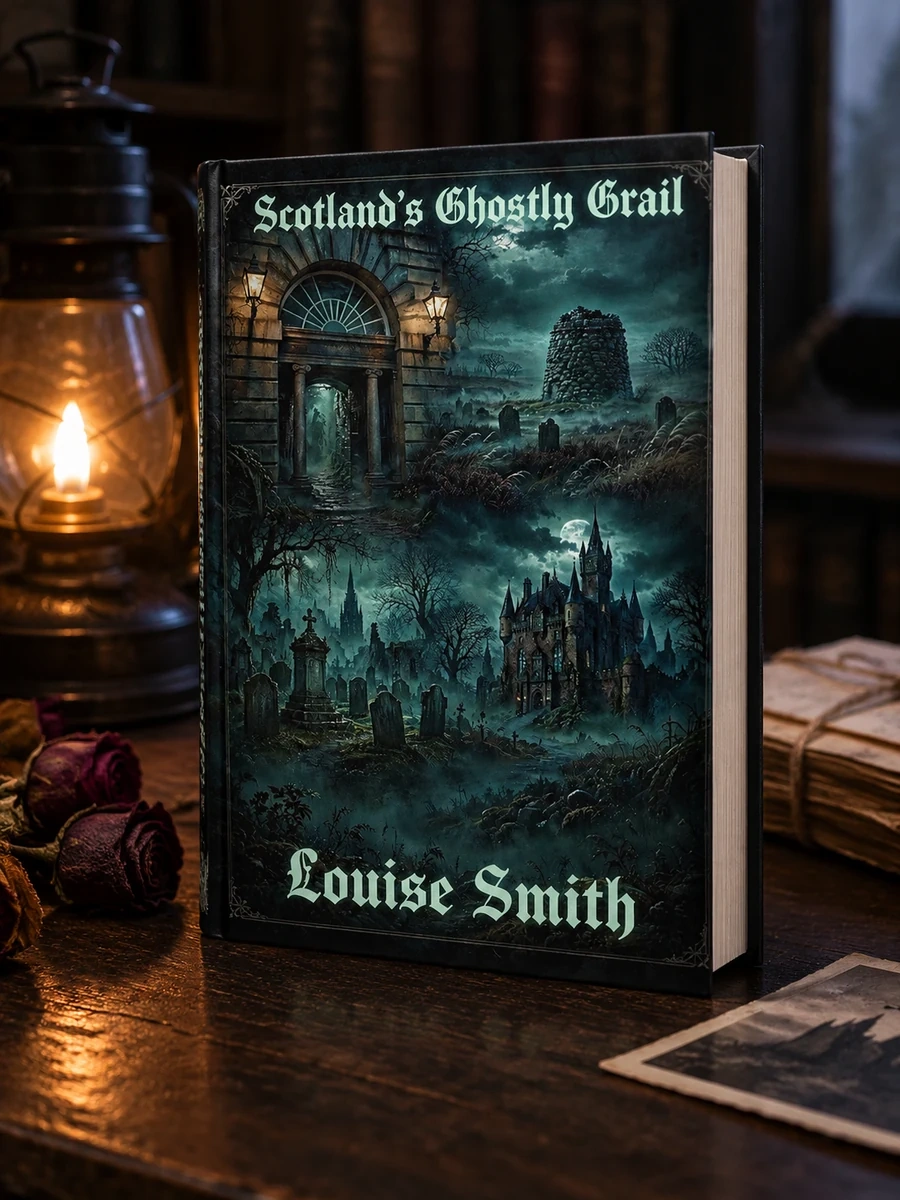
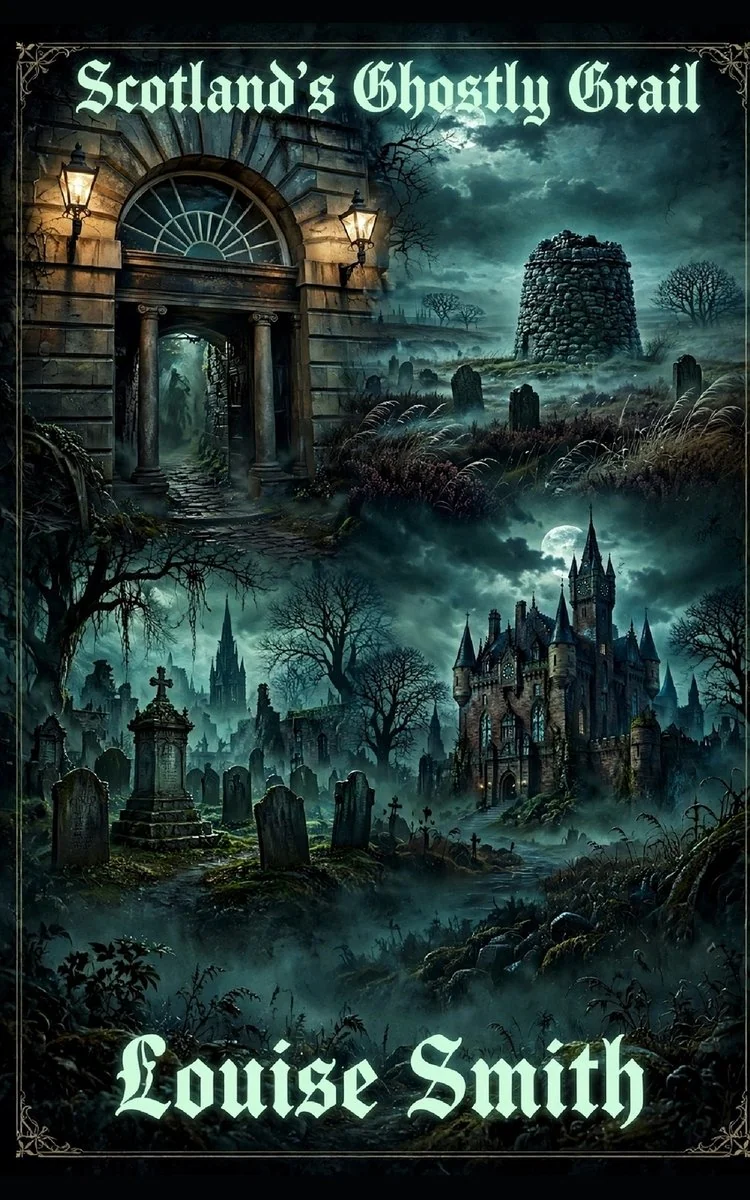
Scotland's Ghostly Grail
A historical examination of Scotland's violent past and haunted sites by Louise Smith.
Smith focuses on the tangible history behind the supernatural claims found in Scottish folklore. The text moves beyond general ghost stories to ground them in specific historical traumas. It details the fate of those hanged for crimes, whose remains ended up on anatomy tables. It also records the execution methods used against women accused of witchcraft. The author links these historical events to physical locations like vaults and ships that are said to hold entities from the other side. This approach connects the tangible history of disease and execution with the intangible claims of hauntings in castles and golf courses.
The book situates itself within Scotland’s historical narrative, contrasting its current fame for countryside and whisky with a past defined by battle bloodshed, public hangings, and widespread disease during the infancy of medicine.


📝 Description: Scotland's Ghostly Grail
💎 Our verdict on Scotland's Ghostly Grail
📖 Why choose it
Why this book is worth reading
Readers interested in the intersection of history and the macabre will find this text compelling for its grounded approach to supernatural claims. It appeals to those who prefer their ghost stories rooted in tangible reality rather than pure fantasy. By examining the fate of executed criminals, victims of witch trials, and the spread of disease, the book offers a grim but educational perspective on Scotland's past. Fans of true crime and gothic history will appreciate how Smith connects specific locations like castles and vaults to their violent origins, providing a deeper understanding of why these sites are considered haunted. It serves those seeking to understand the sinister undercurrents of Scottish heritage without relying on unsubstantiated paranormal speculation.
⭐ Reader reviews
Reader rating
Louise Smith effectively demystifies Scotland's haunted reputation by anchoring it in historical fact rather than folklore alone. The text succeeds in its goal of linking physical locations to past traumas, such as public hangings and witch persecutions, providing a sobering context for modern ghost stories. This approach appeals to readers who find traditional ghost tales lacking in substance or credibility. While the tone is undeniably grim, focusing on disease, execution, and anatomical study, it remains informative for those interested in the darker aspects of national identity. The book is best suited for history buffs and horror enthusiasts who appreciate a scholarly examination of how violence shapes place-based hauntings.
📖 Read on the blog
📖 From the series “Ghostly Grail”


✍️ More books by this author Louise Smith
🏛 Books from this publisher Independently Published






You might also like
See more →

Have a question about this item?
Ask about the edition, condition, delivery or anything else — we reply by email or phone, usually within a day.
