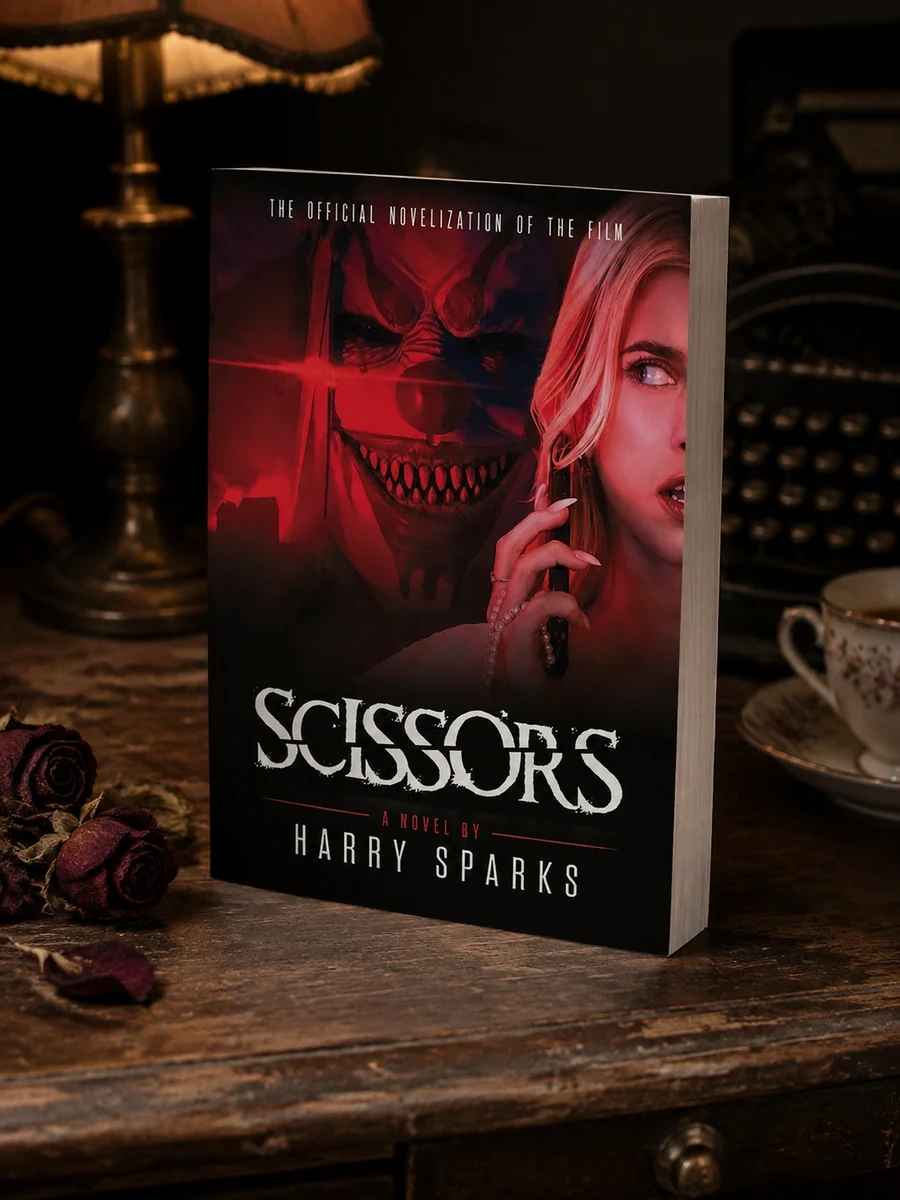
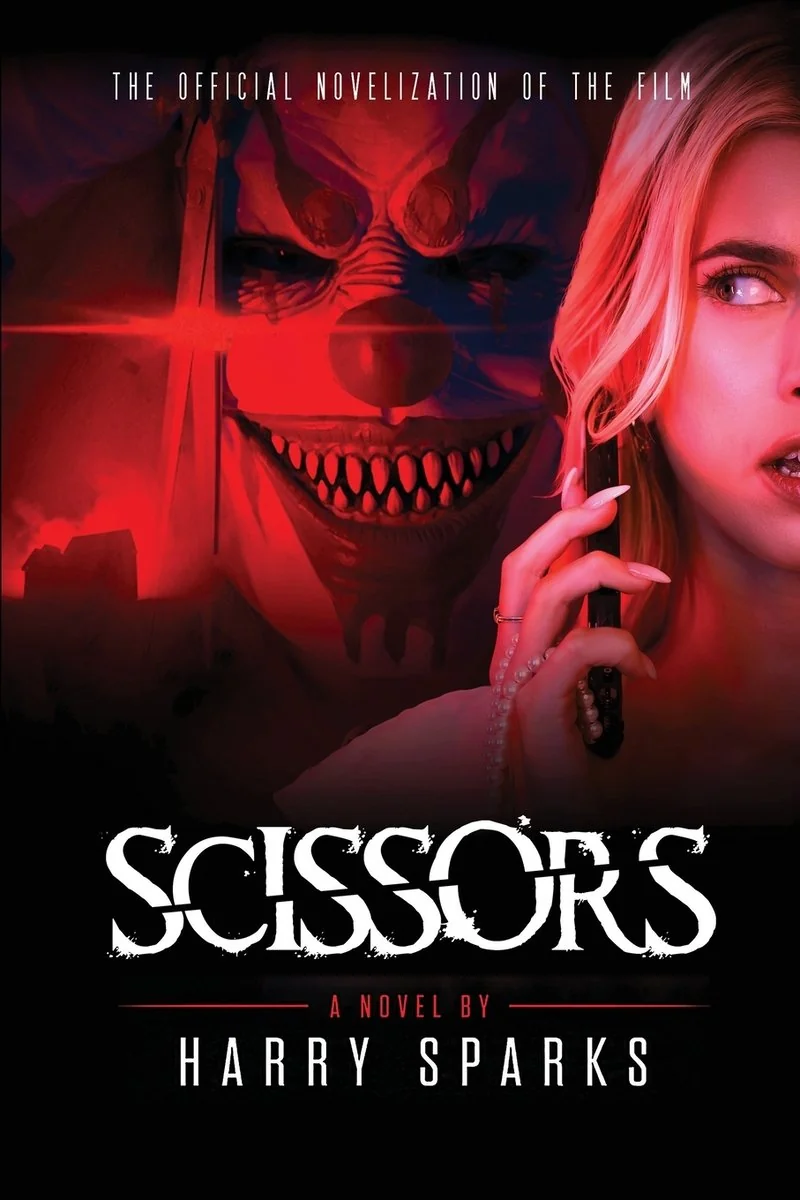
Scissors
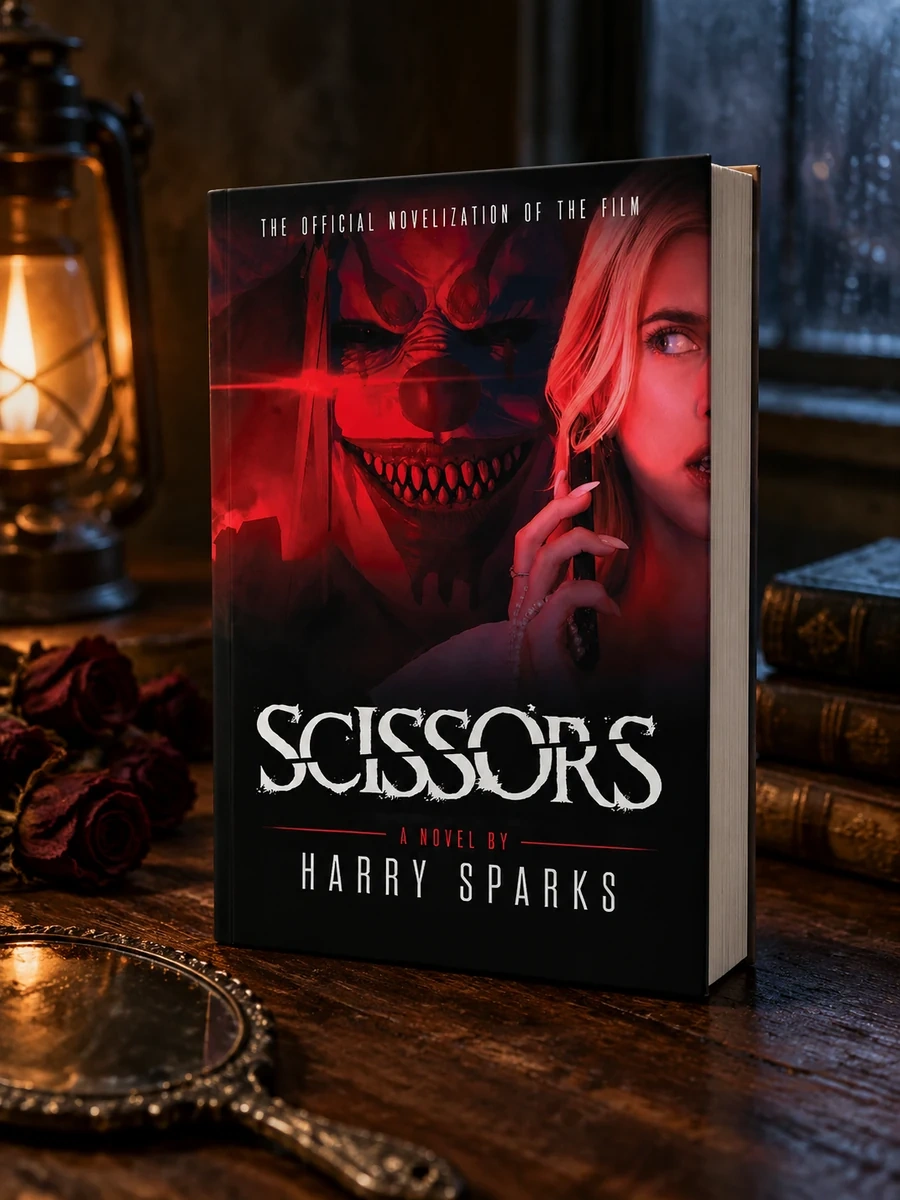
A novelization of a Tubi film about a webcam model and a masked killer.
The book adapts the story of Tiffany Baker and Courtney Hudson from the screen to the page. Sparks expands on the original film by providing internal monologues and background details not visible in the movie. The plot follows the escalation of threats from online messages to real-world violence in Ashland Falls. Readers gain access to the killer's perspective, which adds a layer of dread to the standard thriller format. The narrative does not rely on jump scares but rather on the slow realization that the danger is personal and close. This approach creates a sense of intimacy with the terror. The prose focuses on the psychological impact of being watched and hunted. It is a study of how trauma resurfaces when safety is illusory.
This title sits within the contemporary indie horror landscape, specifically bridging digital media and print fiction. It reflects the modern anxiety surrounding webcam culture and online stalking. The story is set in Ashland Falls, grounding the supernatural elements in a recognizable American town setting.


📝 Description: Scissors
💎 Our verdict on Scissors
📖 Why choose it
Why this book is worth reading
Readers interested in the intersection of trauma and digital threats will find this adaptation compelling. It appeals to those who prefer psychological dread over visceral gore, offering a deep dive into the minds of characters haunted by their pasts. The expansion from screen to page allows for a more intimate understanding of the killer’s perspective and the victims' internal struggles. It is suitable for fans of stories where the horror stems from the realization that safety is illusory and danger is personal. Those who enjoy examining how online interactions escalate into real-world violence will appreciate the focus on psychological impact rather than sensationalism.
⭐ Reader reviews
Reader rating
Sparks successfully translates the tension of the source material into prose, emphasizing the slow-burn nature of stalking and obsession. By providing internal monologues and background details, the book adds significant depth to the characters, particularly Tiffany Baker and Courtney Hudson. The narrative avoids jump scares, instead focusing on the psychological weight of being watched and hunted. This approach creates a genuine sense of intimacy with the terror, making the threat feel immediate and personal. It is best suited for readers who appreciate studies of trauma resurfacing when safety is compromised. While it may not appeal to those seeking traditional gothic settings or lighthearted entertainment, it offers a concrete examination of modern digital fears through a chilling, character-driven lens.