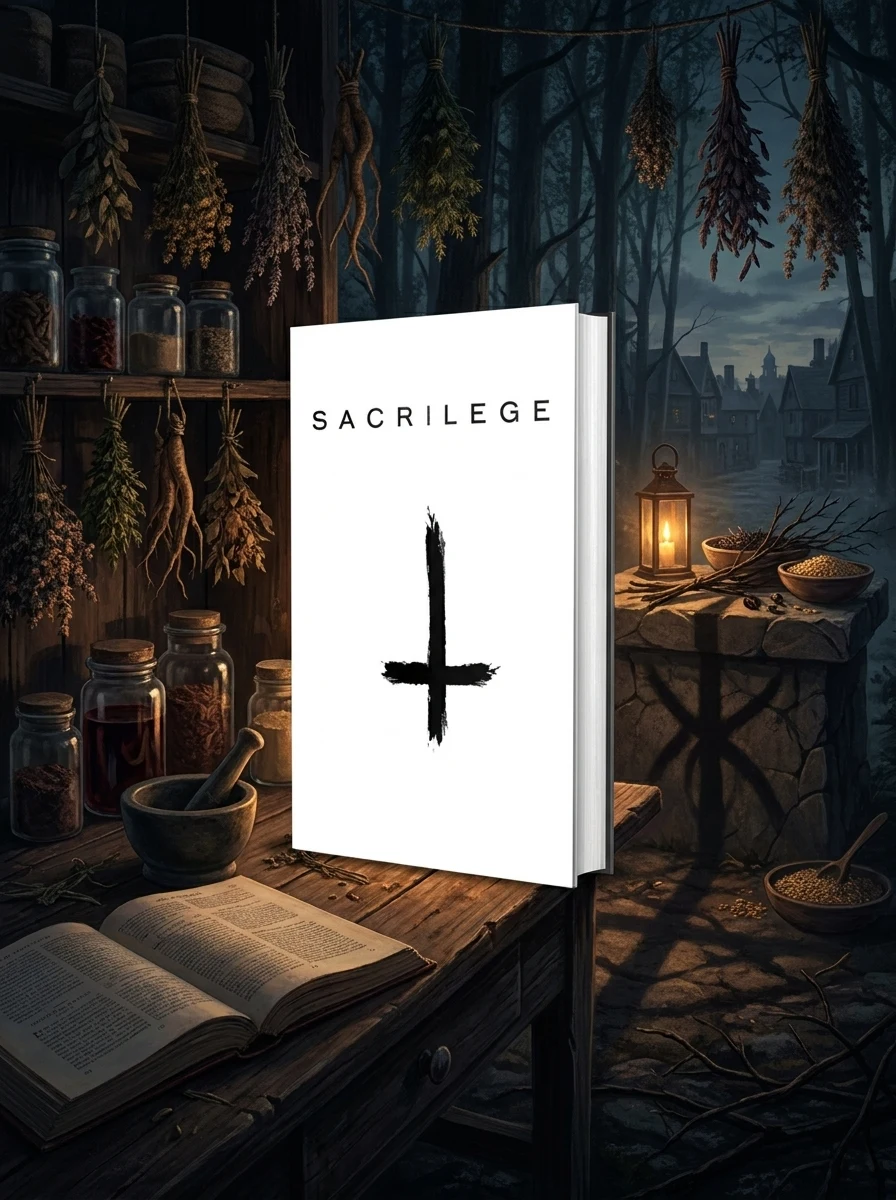


Sacrilege
A physician mentors a curious girl in a starving 1690s town hiding dark secrets.
The story examines the breakdown of social order in a isolated community driven by fear and superstition. Johnson portrays the tension between scientific inquiry and religious dogma through the eyes of Erasmus and Anina. The narrative does not shy away from the brutality of ritualistic practices or the psychological toll of famine on a population. It focuses on how authority figures manipulate belief to maintain control, and what happens when that control fails under the weight of starvation and exposure.
Set in 1690s Cauldridge, Massachusetts, the book draws on the historical period of American colonial theocracy. It reflects the era's intense focus on sin, divine punishment, and the rigid social structures enforced by local clergy and community leaders.


📝 Description: Sacrilege
💎 Our verdict on Sacrilege
📖 Why choose it
Why this book is worth reading
Readers seeking a dense, atmospheric exploration of societal collapse under the weight of famine and religious extremism will find this narrative compelling. It is ideal for those interested in psychological horror set within early American colonial contexts, where authority figures manipulate belief to maintain control. The book appeals to fans of dark fantasy and true crime who enjoy analyzing how fear and superstition fracture community bonds. Those who appreciate stories examining the brutal intersection of medical science and ritualistic practice will gain insight into the psychological toll on a population exposed to starvation. It is not for readers preferring lighthearted adventure or modern settings, as the period-specific tensions create a heavy, immersive experience focused on the breakdown of social order.
⭐ Reader reviews
Reader rating
Johnson delivers a harrowing examination of how fear and superstition erode the foundations of an isolated community. The narrative effectively portrays the tension between scientific inquiry and religious dogma through the perspectives of Erasmus and Anina, highlighting the brutality of ritualistic practices without shying away from their consequences. The depiction of Cauldridge’s theocracy offers a chilling look at how authority manipulates belief, making the subsequent collapse of social cohesion feel inevitable yet devastating. This work suits readers who enjoy historical horror and supernatural fiction set in early American contexts. It is particularly well-suited for those interested in stories about societal breakdown and religious extremism. The dense atmosphere and period-specific tensions provide a rigorous, immersive experience for fans of psychological depth over plot-driven action.
You might also like
See more →







Have a question about this item?
Ask about the edition, condition, delivery or anything else — we reply by email or phone, usually within a day.
