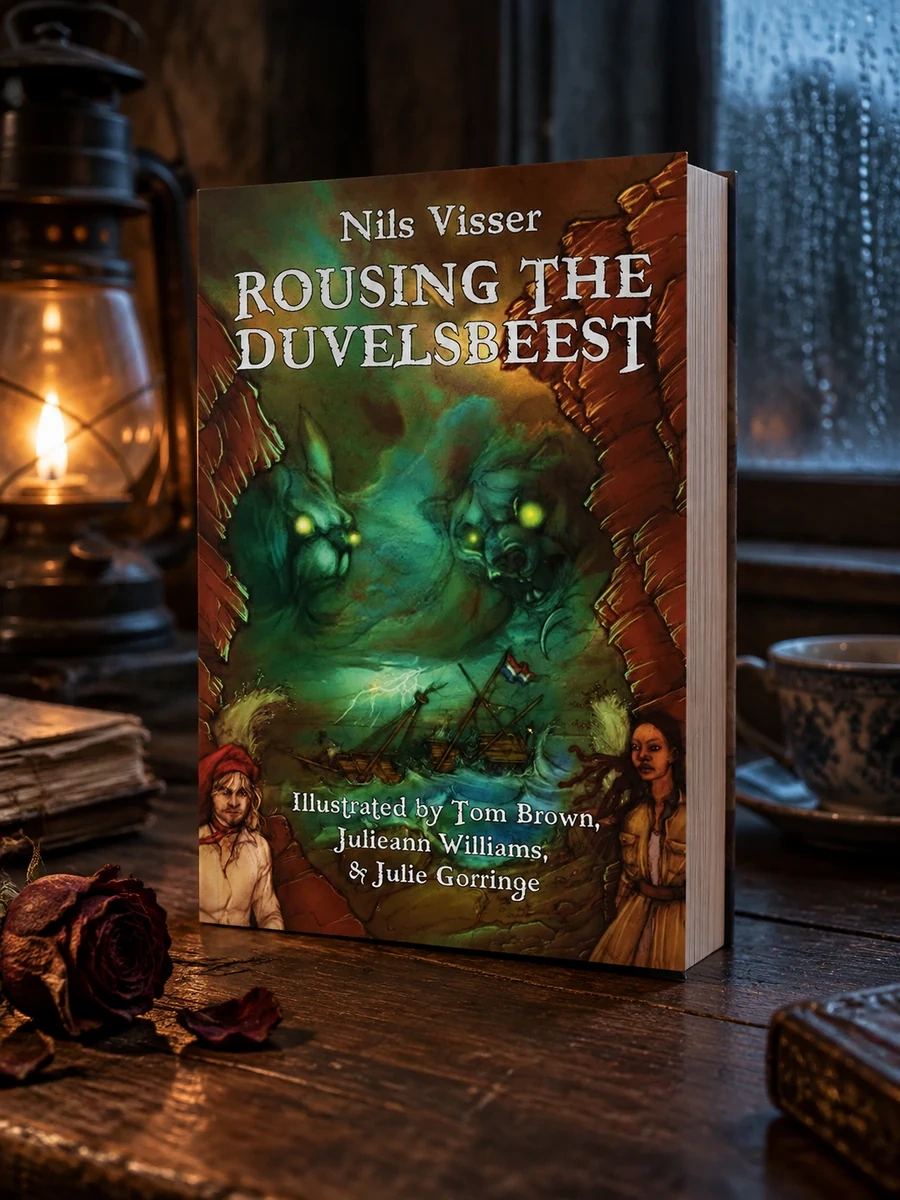
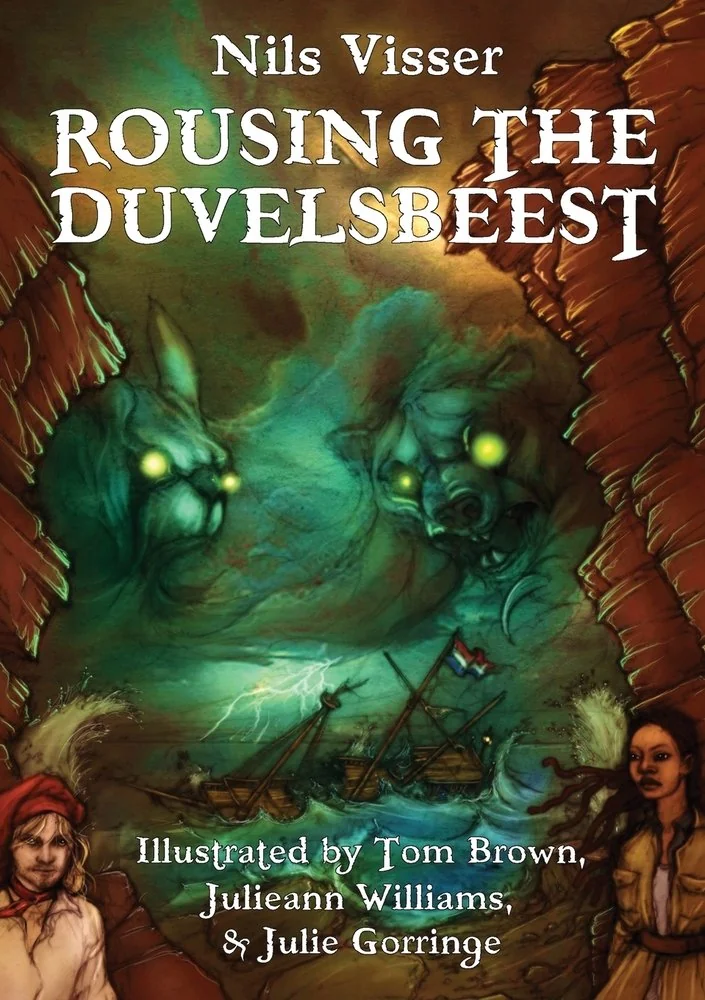
Rousing the Duvelsbeest
A dual-timeline horror novel about a hidden island and its shipwrecked victims.
Visser intertwines two distinct eras to explore the enduring mystery of Arenes. The 1616 timeline focuses on Leyn Jonas, whose survival depends on understanding the island’s hostile geography. The 2016 storyline follows Lette Sabajo, whose professional skills in archival research become crucial when dealing with the supernatural implications of the shipwreck. The author uses these parallel narratives to build a sense of dread that spans centuries. The connection between the past and present remains central to the plot, as both protagonists face threats that defy logical explanation.
The narrative bridges 1616 Dutch East India Company voyages and 2016 Western Australian museum research. It draws on maritime history and archival science to ground its supernatural elements in a specific geographical and temporal context.


📝 Description: Rousing the Duvelsbeest
💎 Our verdict on Rousing the Duvelsbeest
📖 Why choose it
Why this book is worth reading
Readers who appreciate atmospheric dread and slow-burn horror will find this book deeply engaging. It offers a unique blend of historical texture and supernatural ambiguity, appealing to those who enjoy maritime mysteries where the environment itself is hostile. The dual-timeline structure provides intellectual stimulation through archival research while delivering visceral terror through survival scenarios. Fans of cosmic horror who prefer mood over resolution will appreciate the exploration of an island that defies logic and maps. It is ideal for audiences seeking a challenging, thought-provoking read that prioritizes psychological tension and historical detail over conventional plot mechanics or fast-paced action.
⭐ Reader reviews
Reader rating
Visser masterfully constructs a tale of enduring mystery by intertwining two distinct eras to explore the haunting legacy of Arenes. The narrative effectively builds dread through its parallel structure, contrasting Leyn’s visceral survival struggle in 1616 with Lette’s intellectual confrontation with the supernatural in 2016. The author excels in blending historical detail with unexplained phenomena, creating a palpable sense of unease. While the ambiguous nature may unsettle readers seeking clear resolutions, it perfectly suits fans of gothic fiction who value mood and psychological tension. This is a compelling work for those who enjoy maritime mysteries where history itself becomes a source of terror.
You might also like
See more →







Have a question about this item?
Ask about the edition, condition, delivery or anything else — we reply by email or phone, usually within a day.
