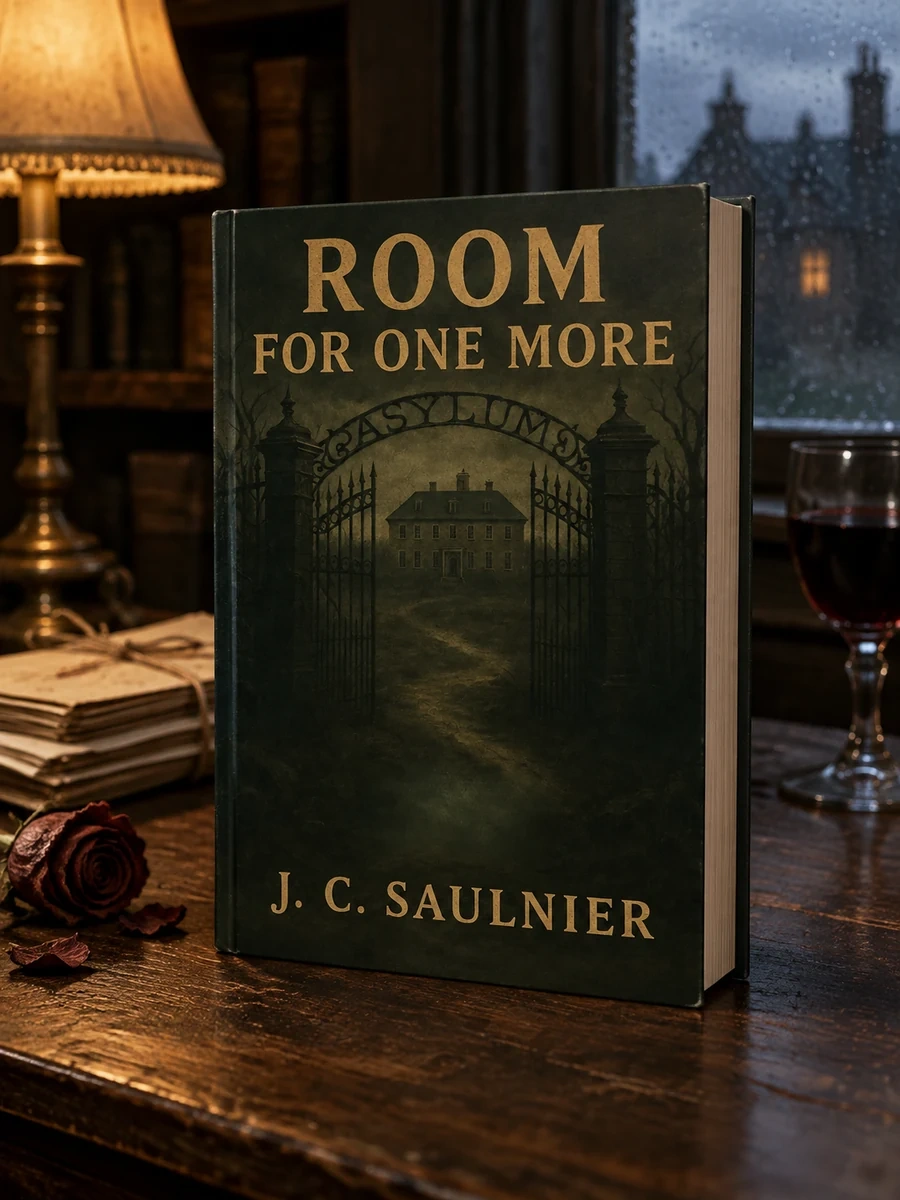
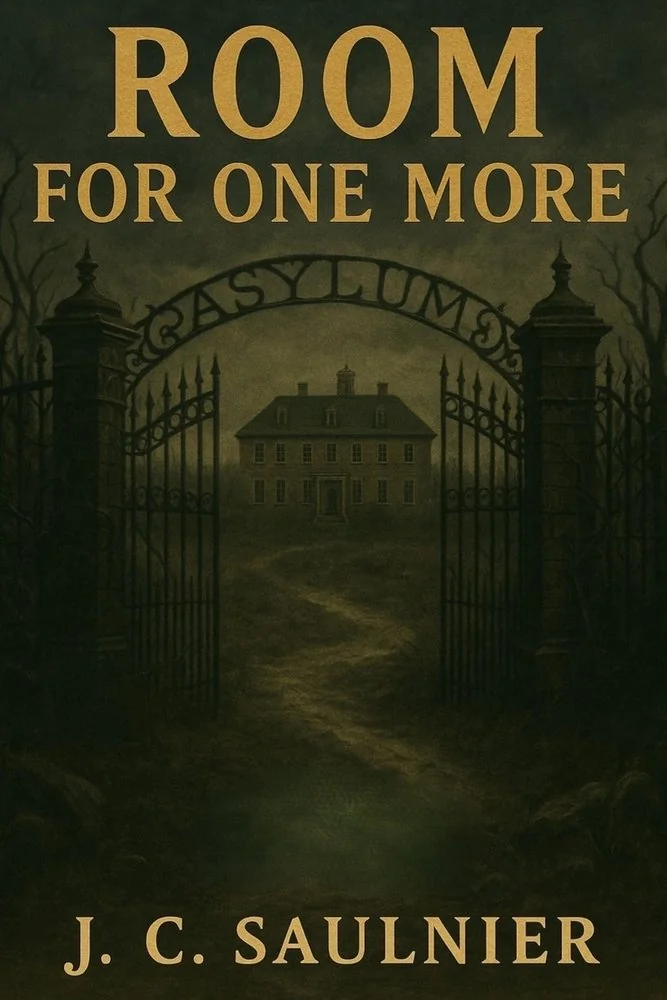
Room For One More
A woman fights for her identity in an institution that erases memories.
Elsie wakes up with no recollection of her past, confined within Saint Ivora, a facility where forgetting is presented as the cure. The narrative follows her struggle as she navigates blurred lines between sanity and delusion. She relies on fragmented clues, including notebooks and the ambiguous presence of Emma, to piece together her reality. The plot focuses on the psychological toll of this environment rather than external threats. Saulnier explores how trauma can distort perception and how compliance can mask danger. The story does not offer easy answers or clear escapes. It remains grounded in the immediate, claustrophobic experience of its protagonist.
The book sits within the psychological horror genre, drawing comparisons to Shutter Island, The Silent Patient, and The Last House on Needless Street. It focuses on modern institutional settings rather than historical periods.


📝 Description: Room For One More
💎 Our verdict on Room For One More
📖 Why choose it
Why this book is worth reading
Readers who enjoy visceral psychological horror and narratives focused on internal mental erosion will find this debut compelling. It appeals to those interested in the painful necessity of memory and how trauma distorts perception. The book offers a stark look at the cost of remembering in a place designed to erase identity. It is ideal for audiences who prefer grounded, claustrophobic experiences over supernatural elements. Those seeking to explore themes of mind control and fragile identity will appreciate the tension constructed by Saulnier. However, readers preferring historical gothic settings or clear escapes may find it less satisfying.
⭐ Reader reviews
Reader rating
Saulnier crafts a tense atmosphere where identity is fragile and truth is costly. The narrative effectively examines trauma and compliance, masking danger behind the promise of a cure. By focusing on Elsie’s fragmented clues and uncertain reality, the book maintains a claustrophobic intensity throughout. It succeeds in portraying the psychological toll of an environment that erases memories. This approach aligns well with fans of psychological thrillers who value ambiguity over resolution. The story does not offer easy answers, demanding active engagement from the reader. It is best suited for those who appreciate a stark, immediate exploration of sanity and delusion.
You might also like
See more →



Have a question about this item?
Ask about the edition, condition, delivery or anything else — we reply by email or phone, usually within a day.
