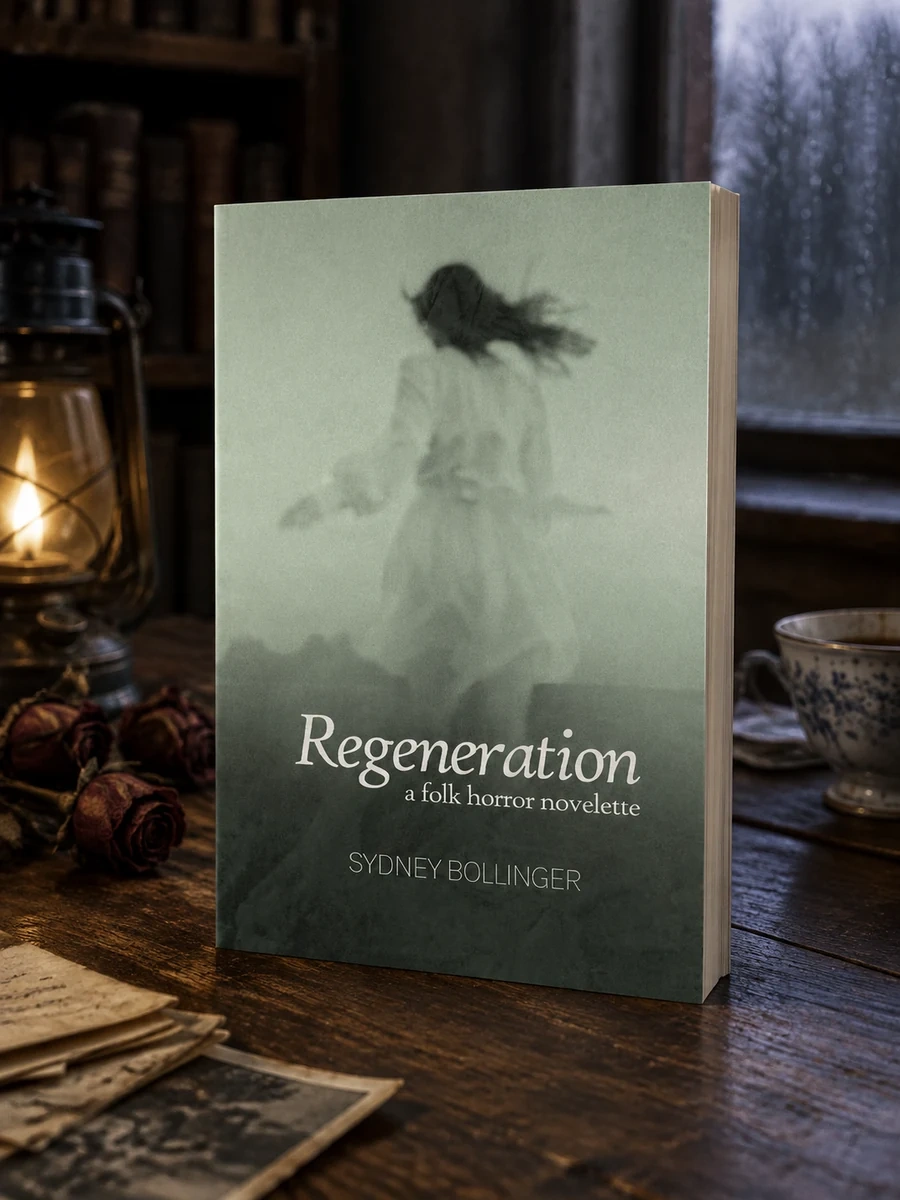
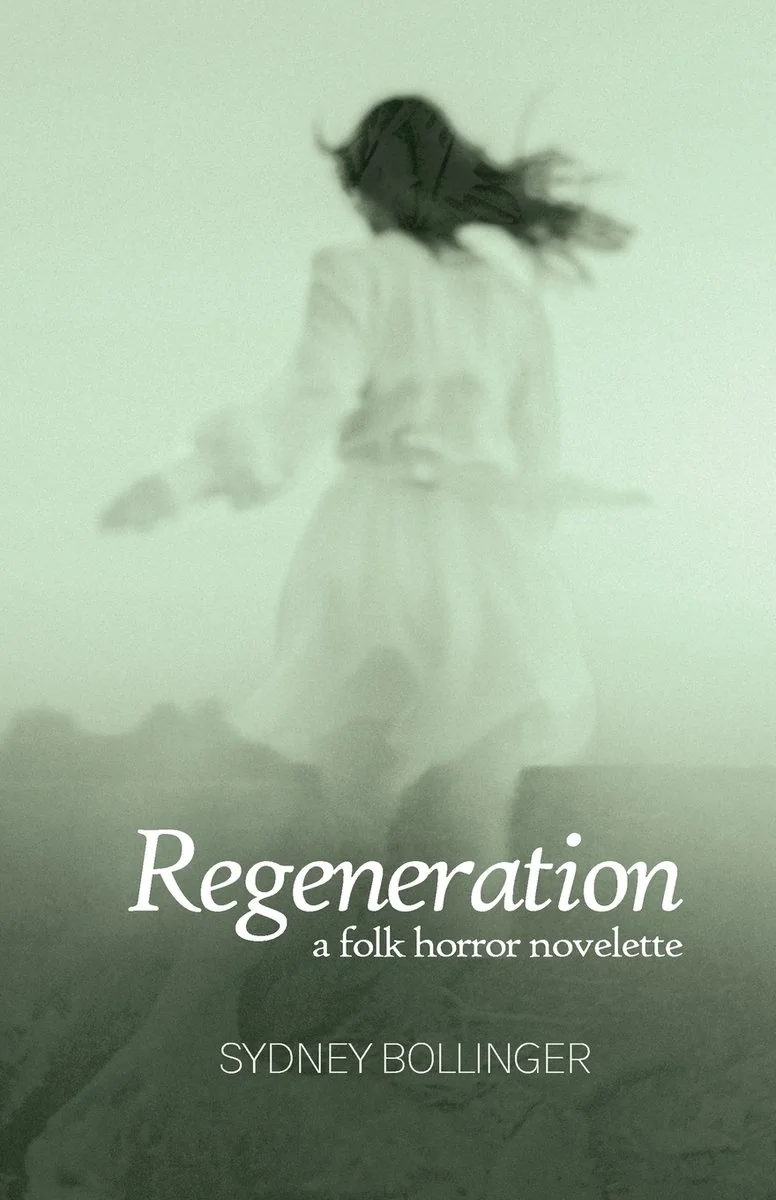
Regeneration
A folk horror novelette about two sisters facing a deadly community ritual.
Bollinger crafts a tense narrative where silence speaks louder than words. Leanne’s refusal to engage with Mina for nearly two months creates a palpable rift in their relationship. The text highlights specific memories, like sharing the old plush chair during morning reverence. These details ground the horror in domestic familiarity rather than external threats. The fear stems from the potential betrayal of trust and the inevitability of the ceremony. Mina’s character is defined by her perceived loyalty to the group’s warnings. Leanne questions whether she will be forced to make a difficult choice regarding her sister’s fate. The story does not offer easy answers or clear resolutions. It leaves the reader with the chilling possibility that escape through the woods might be attempted again.
This novelette emerges from the tradition of American folk horror, echoing the communal dread found in Shirley Jackson's work and the aesthetic terror of Picnic at Hanging Rock. It aligns with the visual language of Midsommar, focusing on rural isolation and ancient customs that demand sacrifice.


📝 Description: Regeneration
💎 Our verdict on Regeneration
📖 Why choose it
Why this book is worth reading
Readers who appreciate atmospheric tension and community-based dread will find this novelette deeply engaging. It offers a study of psychological unease rather than fast-paced action or explicit gore. Those interested in the subversion of domestic familiarity into horror will appreciate how silence and ritual replace traditional monsters. The narrative appeals to audiences who enjoy exploring the weight of tradition and the isolation of setting. It is ideal for those seeking a story where the fear stems from potential betrayal and the inevitability of ceremony, rather than clear resolutions or easy escapes.
⭐ Reader reviews
Reader rating
Sydney Bollinger crafts a tense narrative where silence speaks louder than words, grounding horror in domestic familiarity. The focus on Leanne’s fifty-seven-day silence creates palpable rifts, highlighting how shared routines unravel under ritualistic pressure. By drawing comparisons to classic works like Picnic at Hanging Rock, the text establishes a tone of traditional folk horror without relying on supernatural monsters. Bollinger structures the tale around internal conflict and the weight of tradition, amplifying isolation. This approach suits readers who appreciate psychological unease over explicit gore. The story examines trust and compliance, leaving chilling possibilities open rather than offering easy answers or clear resolutions for the sisters' fate.
You might also like
See more →







Have a question about this item?
Ask about the edition, condition, delivery or anything else — we reply by email or phone, usually within a day.
