
Rats
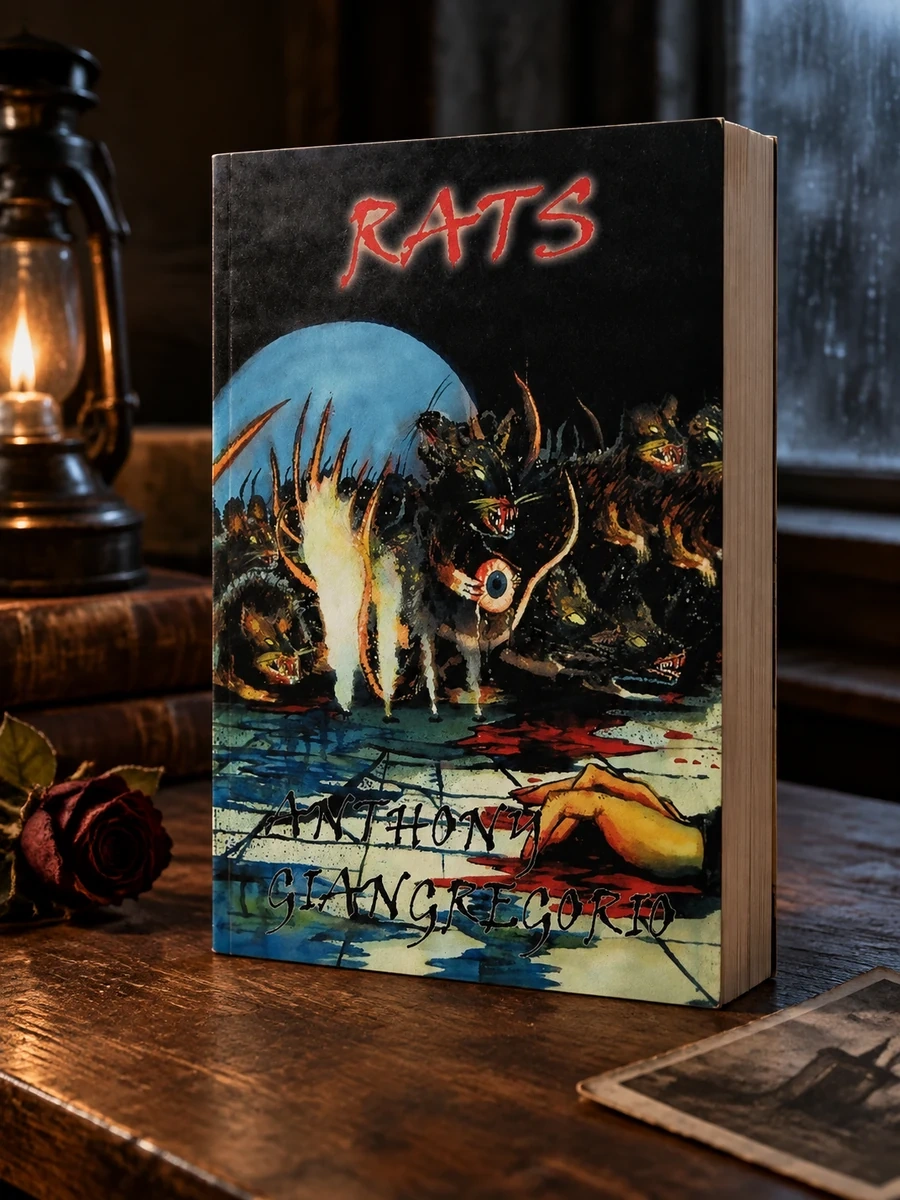
A novel about giant rats hunting children in a town that refuses to believe.
Giangregorio constructs a narrative where the horror stems from both the physical threat of the animals and the psychological terror of being unheard. The author uses the perspective of a kid to highlight the helplessness faced by those who witness atrocities but lack the power to stop them. The setting of Wakefield becomes a character in itself, defined by its silence and complicity. The plot moves from initial sightings to a grim realization that survival is unlikely. The work does not offer easy solutions or heroic interventions, instead focusing on the creeping dread of inevitable doom. Readers will find the tension built through the contrast between official warnings about wild dogs and the actual monstrous reality.
Published in 2011 by Living Dead Press, this work sits within the modern horror genre. It reflects a period where independent presses focused on visceral creature features and gothic elements. The story is grounded in the specific locale of Wakefield, Massachusetts, using that setting to explore fears of urban decay and loss of safety.


📝 Description: Rats
💎 Our verdict on Rats
📖 Why choose it
Why this book is worth reading
Readers who crave atmospheric tension and psychological horror will find this novel deeply compelling. It offers a visceral exploration of helplessness, where the true terror stems not just from giant rats but from institutional denial and societal complicity. Those who enjoy stories about vulnerable protagonists fighting against overwhelming odds in isolated communities will appreciate the grim realism. The book appeals to fans of dark fantasy and cosmic horror elements that emphasize inevitable doom over heroic rescue. It is ideal for audiences seeking a chilling narrative that critiques how silence protects the powerful while endangering the weak, providing a sobering look at fear and isolation without offering easy resolutions or lighthearted supernatural escapes.
⭐ Reader reviews
Reader rating
Giangregorio crafts a harrowing narrative where the horror arises from both physical threat and psychological terror. By utilizing a child’s perspective, the author effectively highlights the helplessness of witnessing atrocities while being unheard. The setting of Wakefield becomes a character defined by silence and complicity, amplifying the dread as authorities dismiss warnings about wild dogs instead of acknowledging monstrous rats. This contrast builds intense tension, focusing on creeping doom rather than heroic intervention. The work suits readers who appreciate hidden threats and societal failure within horror traditions. It avoids complex political thrillers or lighthearted tales, delivering instead a grim realization of survival's unlikelihood. Fans of psychological horror and creature features will find this a potent, unsettling experience that lingers long after the final page.