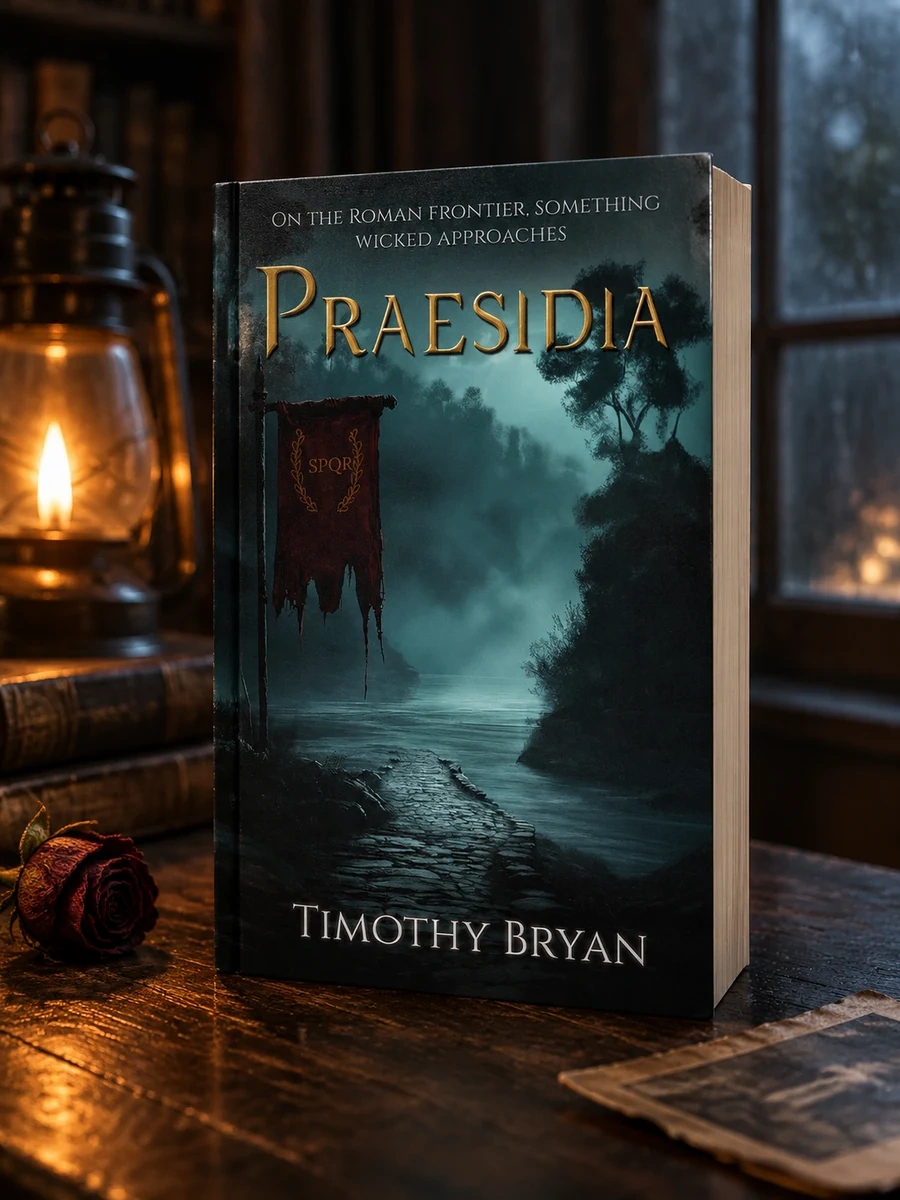
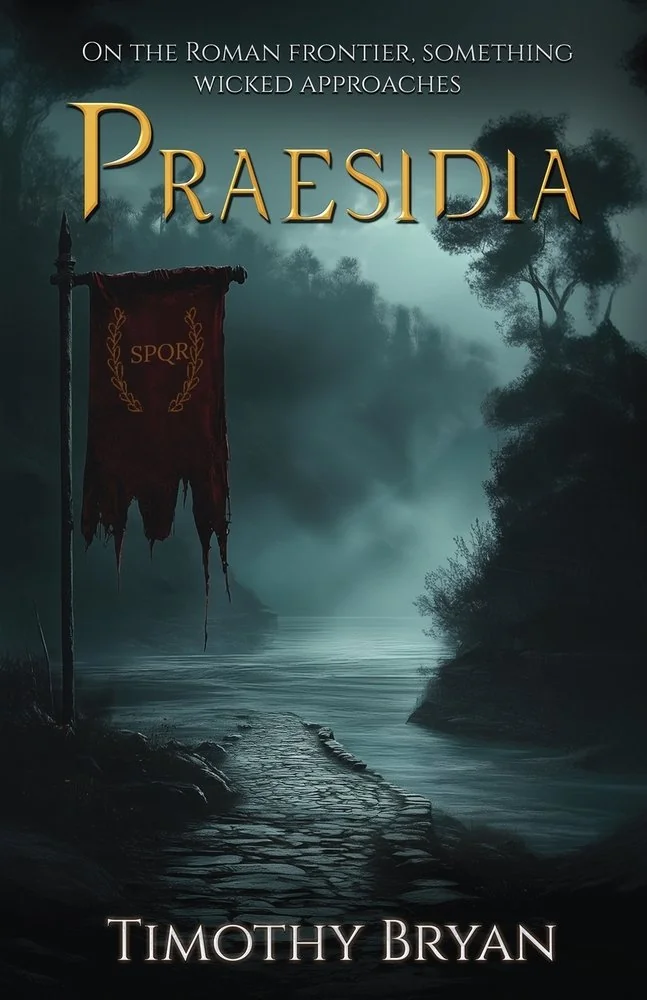
Praesidia
A Roman commander faces a supernatural threat beyond the barbarian tribes.
Praesidia examines the intersection of military duty and supernatural horror in ancient times. Timothy P Bryan constructs a narrative where the real danger is not human but something lurking in the Germanic forests. Marius Livonius must navigate a choice that threatens both his family and civilization. The book utilizes the setting of the Danube border to create isolation and dread. Bryan’s approach focuses on the psychological toll of command when facing an invisible enemy. This work appeals to those who appreciate historical settings blended with gothic elements. It does not cater to readers preferring pure fantasy or modern thrillers.
The story is set on the remote Roman border near the Danube River. It draws on the period of conflict with Germanic tribes and the traditions of Roman frontier defense. The setting emphasizes the isolation of the legionary station and the looming threat from the dark woods.


📝 Description: Praesidia
💎 Our verdict on Praesidia
📖 Why choose it
Why this book is worth reading
Readers who appreciate the intersection of historical rigor and atmospheric supernatural fiction will find significant reward in this narrative. It appeals specifically to those who enjoy exploring the psychological toll of command when facing an invisible, malignant enemy beyond human comprehension. The book offers a compelling examination of moral dilemmas where personal sacrifice intersects with potential global catastrophe. Those seeking fast-paced action without emotional weight or modern sensibilities may find it less engaging. However, fans of gothic elements blended with ancient military contexts will value the detailed exploration of isolation and dread. It is an ideal choice for readers interested in how duty conflicts with survival when civilization itself hangs in the balance against a threat lurking in the dark woods.
⭐ Reader reviews
Reader rating
Timothy P Bryan constructs a compelling narrative that effectively merges Roman military history with gothic horror traditions. The setting of the Danube border serves as a potent vessel for isolation and dread, allowing the supernatural threat to feel both ancient and immediate. Bryan excels at portraying the psychological erosion of Marius Livonius as he confronts an enemy more severe than typical barbarian raids. The prose grounds the horror in the specific historical period, avoiding modern sensibilities to enhance authenticity. This work suits fans of historical supernatural fiction who enjoy atmospheric tension and complex moral dilemmas. It is a thoughtful exploration of duty and sacrifice, appealing to those who prefer emotional weight over mere action.