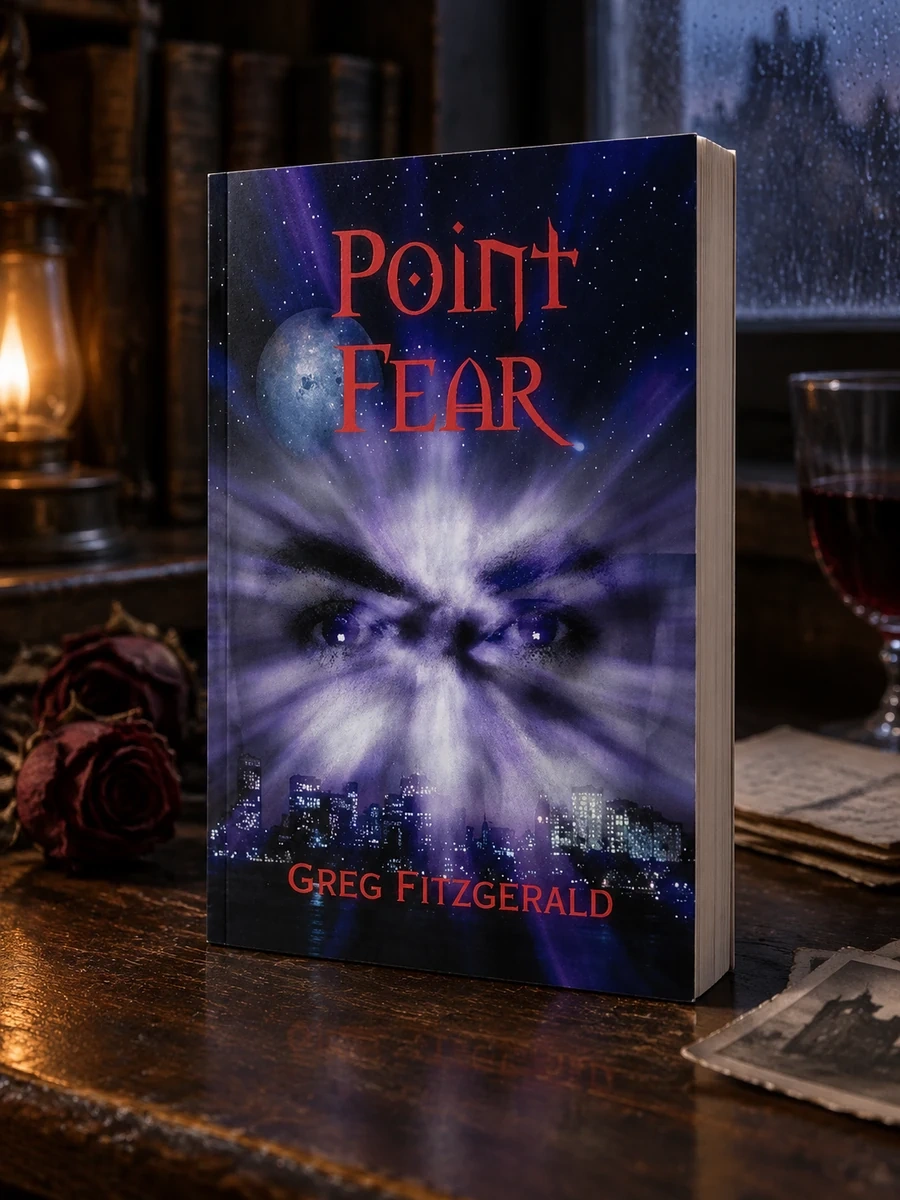

Point Fear
A multi-generational haunted house story spanning from the 1850s to the 1990s.
This novel examines how past sins poison future generations. Fitzgerald connects three time periods through a single location. The initial tragedy sets the stage for subsequent hauntings. The professor’s academic interest contrasts with the visceral danger faced by his students. The mother’s intervention in the 1990s drives the final act. The narrative suggests that some houses retain their violent history. Each era adds layers to the central mystery. The story does not resolve neatly but rather deepens the horror.
The text moves from 1850s California settlement to 1960s academic inquiry and finally 1990s confrontation. It reflects American Gothic traditions where domestic spaces become sites of supernatural retribution. The narrative structure mirrors the persistence of historical violence in modern settings.


📝 Description: Point Fear
💎 Our verdict on Point Fear
📖 Why choose it
Why this book is worth reading
Readers interested in the mechanics of generational trauma and the psychological weight of inherited guilt will find this novel compelling. Fitzgerald offers a structured exploration of how past sins poison future lives, appealing to those who prefer slow-burn dread over immediate shock value. The book is ideal for audiences who enjoy haunted house tropes that are deeply rooted in family dysfunction and institutional failure rather than external monsters. By connecting three distinct eras through a single location, the narrative provides a cumulative sense of horror that rewards patience. It suits readers seeking emotional weight and atmospheric tension, offering a study in how violence persists within domestic spaces across decades.
⭐ Reader reviews
Reader rating
Fitzgerald constructs a layered narrative that effectively utilizes chronological progression to build dread. The connection between the 1850s tragedy, the 1960s academic investigation, and the 1990s confrontation creates a cohesive thematic arc regarding unresolved suffering. The text succeeds in establishing a palpable atmosphere of decay and inevitability. It is best suited for readers who appreciate psychological horror and gothic family sagas over fast-paced action. While the lack of neat resolution may frustrate some, it accurately reflects the enduring nature of the central mystery. The work stands as a sturdy example of traditional haunted house fiction that prioritizes emotional resonance and historical continuity.
You might also like
See more →






Have a question about this item?
Ask about the edition, condition, delivery or anything else — we reply by email or phone, usually within a day.
