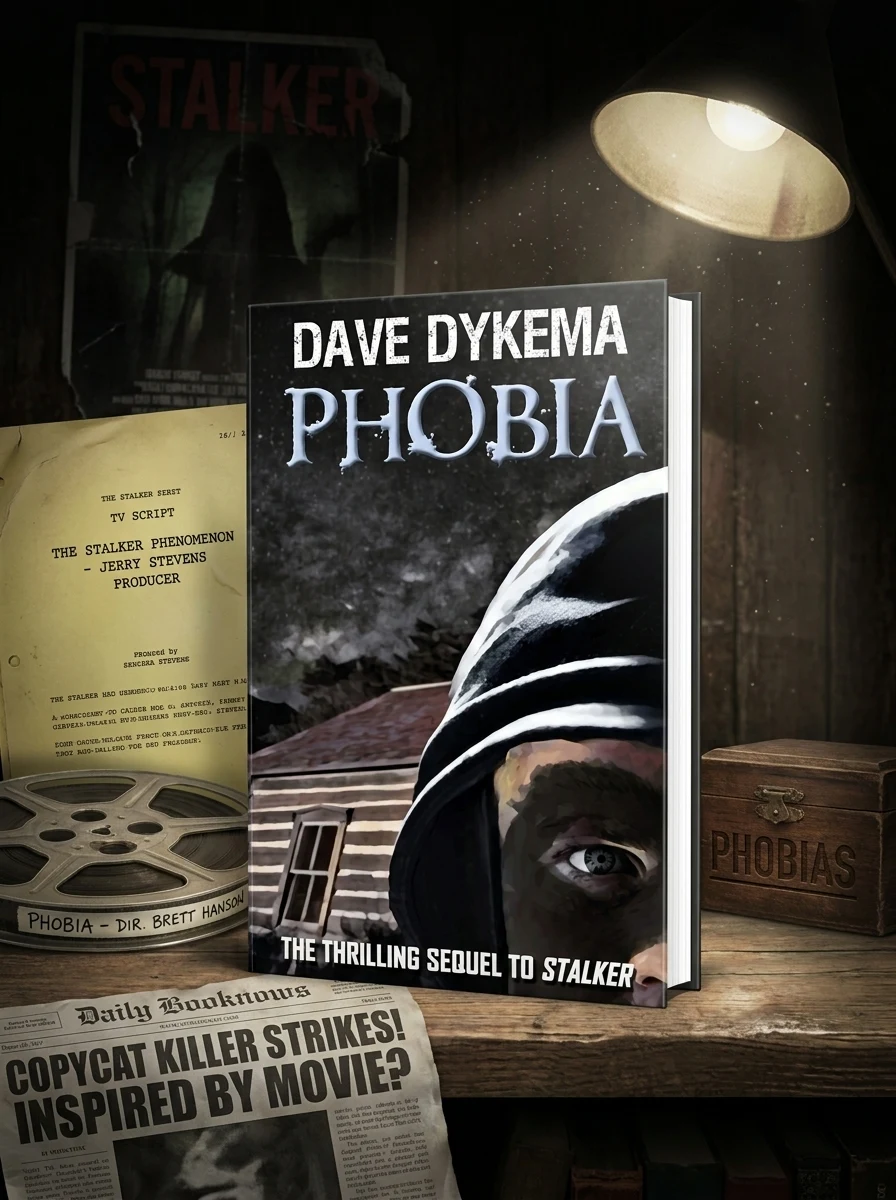

Phobia
A sequel exploring how a film inspires real copycat killings.
Dykema follows Jerry Stevens as he investigates the lingering impact of the Stalker phenomenon. The author examines the dangerous power of media to inspire violence. Stevens travels west to work on a documentary, only to find himself targeted by someone who has studied the original case. Director Brett Hanson’s previous film serves as the catalyst for this new wave of terror. The killer uses the plot of Phobia to plan his attacks. This approach highlights the blurring line between entertainment and reality. Dykema writes with a focus on psychological tension rather than supernatural forces. The story asks how deeply fiction can affect the human mind. Stevens must face a foe who knows exactly what triggers fear. The narrative relies on the proximity of the killer to the production crew.
This book sits within the American thriller tradition, specifically the subgenre of media-inspired violence narratives. It references the real-world phenomenon of copycat crimes following high-profile media events. The story is set in California, focusing on the film industry's capacity to shape public perception and inspire dangerous behavior.


📝 Description: Phobia
💎 Our verdict on Phobia
📖 Why choose it
Why this book is worth reading
Readers who appreciate the psychological tension of media manipulation will find this book compelling. It offers a grounded exploration of how fiction bleeds into reality, focusing on immediate danger rather than supernatural elements. Those interested in the blurring line between entertainment and real-world violence will engage with Jerry Stevens’ investigation into copycat killings. The narrative appeals to fans of horror who prefer psychological dread over gore or supernatural forces. It examines the power of storytelling to inspire terror, making it suitable for those who enjoy thrillers centered on the consequences of disseminating dark narratives.
⭐ Reader reviews
Reader rating
Dykema delivers a tense thriller that shifts from newsrooms to Hollywood, examining the Stalker phenomenon through a new lens. The book excels in portraying how Director Brett Hanson’s film serves as a catalyst for real-world terror, with a killer using the plot as a blueprint. This approach highlights the psychological weight of media influence without relying on supernatural crutches. The narrative remains grounded in the proximity of danger to the production crew, creating palpable suspense. It is best suited for readers who favor psychological horror and media criticism over gore. By focusing on how fiction affects the human mind, Dykema crafts a story about the predator who mirrors the screen’s darkness, offering a chilling look at the cost of storytelling.
📖 Read on the blog
✍️ More books by this author Dave Dykema



🏛 Books from this publisher Independently Published






You might also like
See more →

Have a question about this item?
Ask about the edition, condition, delivery or anything else — we reply by email or phone, usually within a day.
