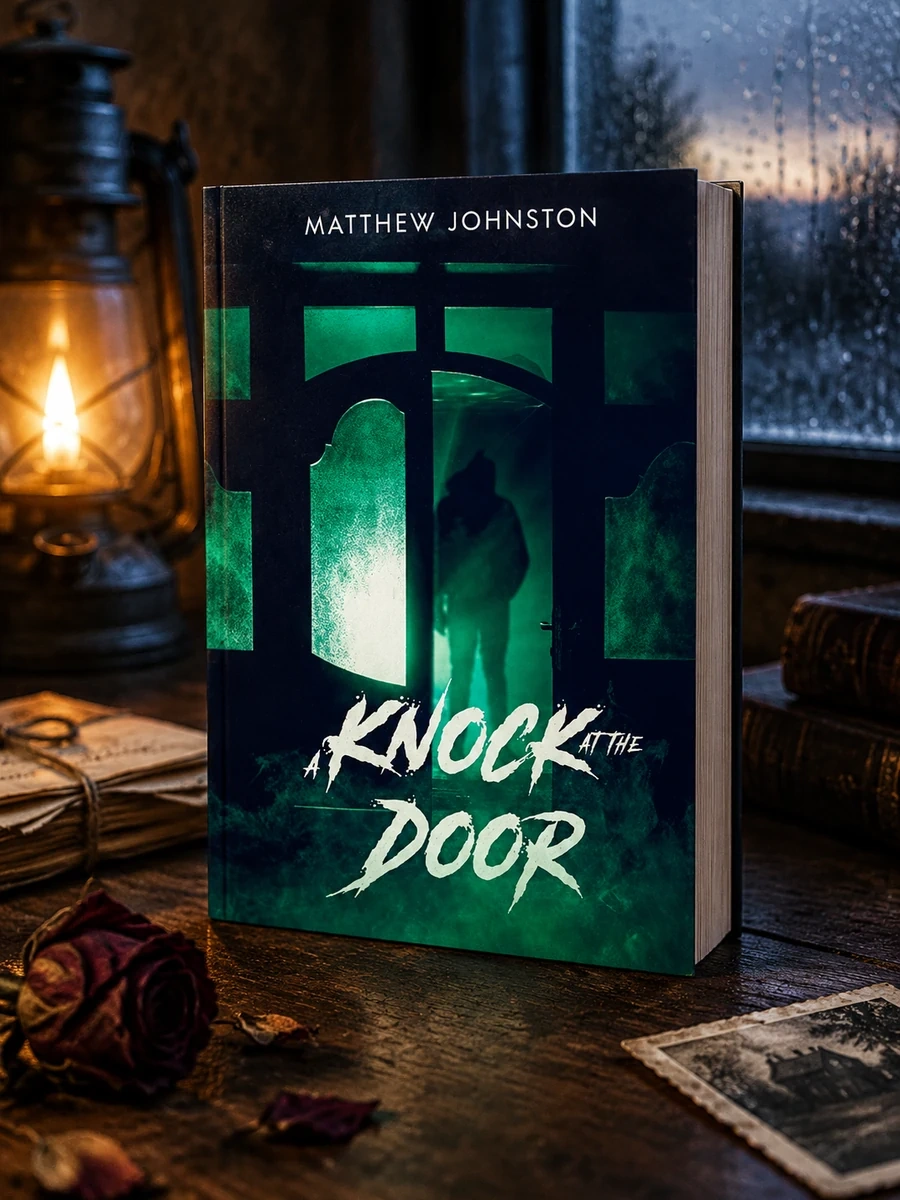

A Knock at the Door
A psychological horror novel about trauma and a supernatural stalker.
Clara Henderson’s attempt at normalcy fails when a knock at her door revives childhood nightmares. Johnston uses the Knock-Knock Man legend to externalize internal pain. The creature represents a persistent threat that cannot be ignored or escaped. The narrative does not offer easy resolutions but focuses on the lingering effects of abuse. Readers experience Clara’s growing dread as the boundary between memory and reality blurs. The story emphasizes how past violence echoes in present moments. Johnston constructs a plot where the supernatural is indistinguishable from psychological breakdown. This approach allows for a deep exploration of fear without relying on gore. The focus remains on Clara’s emotional state and her struggle to regain control. The horror is intimate and personal, rooted in specific memories rather than generic monsters.
This work sits within the contemporary independent publishing landscape of 2019. It draws on American gothic traditions where domestic spaces become sites of terror. The narrative reflects modern understandings of psychological recovery while invoking classic folklore tropes about creatures that hunt at thresholds.


📝 Description: A Knock at the Door
💎 Our verdict on A Knock at the Door
📖 Why choose it
Why this book is worth reading
Readers seeking an intimate and claustrophobic horror experience will find value in this narrative’s focus on emotional resilience rather than visceral gore. It is ideal for those interested in how past violence echoes into the present, offering a deep exploration of fear rooted in specific memories rather than generic monsters. The book appeals to audiences who appreciate stories where the supernatural is indistinguishable from psychological breakdown, providing a tense examination of reclaiming control after abuse. By externalizing internal pain through the Knock-Knock Man legend, it offers a unique perspective on trauma recovery that avoids easy resolutions, making it compelling for fans of character-driven terror.
⭐ Reader reviews
Reader rating
Johnston crafts a deeply unsettling atmosphere by blurring the lines between memory and reality, ensuring the horror remains personal rather than abstract. The narrative effectively uses the violation of private space to amplify dread, creating a relentless sense of intrusion that mirrors Clara’s psychological state. This approach allows for a sophisticated exploration of trauma without relying on shock value, focusing instead on the lingering effects of abuse. The book is best suited for readers who enjoy emotional thrill rides blending domestic drama with gothic elements. It succeeds in its goal to make fear feel immediate and unavoidable, offering a poignant look at how repressed memories can manifest as tangible threats.