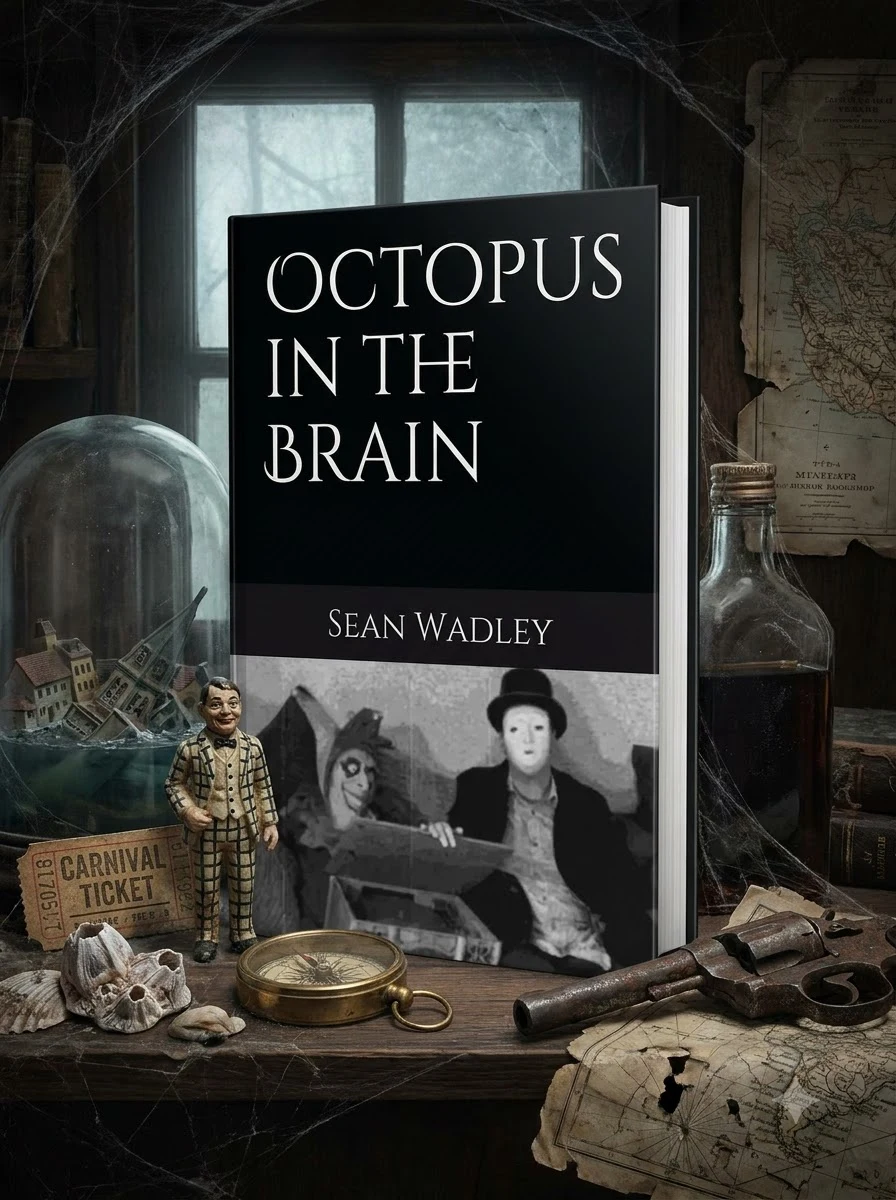
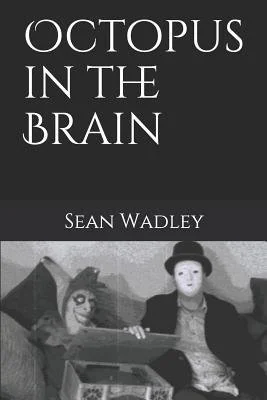
Octopus in the Brain
A tale of failed assassination and an ancient evil in Summer Time Town
The narrative follows two individuals whose journey into darkness begins after a botched hit on a crime lord. Their path leads them to uncover a rotting secret within Summer Time Town. An old memory of a dancing man in a chequered suit resurfaces, connecting past and present horrors. The protagonist experiences recurring visions of an octopus and a sinking town. These elements suggest a supernatural threat that has persisted for decades. Wadley uses these motifs to build tension around the idea of an unaging figure from the past. The story explores how old sins and ancient entities continue to affect the living. It is a work of horror that blends personal trauma with communal decay.
This book falls within the genre of horror and supernatural fiction. It engages with gothic themes of ancient, unaging entities and coastal dread. The setting of Summer Time Town suggests a localized folklore tradition where past events haunt the present landscape.


📝 Description: Octopus in the Brain
💎 Our verdict on Octopus in the Brain
📖 Why choose it
Why this book is worth reading
Readers drawn to atmospheric horror that blends psychological tension with supernatural elements will find this narrative compelling. It appeals to those who enjoy stories where the past actively haunts the present, specifically through the lens of failed violence and lingering guilt. The book offers a unique exploration of how ancient evils persist in modern settings, making it ideal for fans who prefer eerie, mood-driven plots over fast-paced action. By intertwining personal trauma with communal decay, it provides a deep dive into the lingering effects of sin and memory. Those interested in the intersection of crime fiction tropes and cosmic dread will appreciate the unconventional path taken by characters fleeing their past mistakes.
⭐ Reader reviews
Reader rating
Wadley effectively constructs a claustrophobic atmosphere where the boundary between psychological breakdown and supernatural invasion blurs. The motif of the dancing man serves as a chilling anchor, grounding abstract cosmic horror in tangible, recurring imagery. The narrative excels in linking personal failure to broader communal decay, creating a sense of inevitable doom. It suits readers who appreciate slow-burn tension and symbolic horror over explicit gore. While it may disappoint those seeking straightforward crime thrillers, it rewards patience with a richly textured exploration of ancient evils. The blending of gothic traditions with modern psychological themes creates a distinct voice that feels both timeless and urgently contemporary in its depiction of rotting secrets.
📖 Read on the blog
🏛 Books from this publisher Independently Published








You might also like
See more →
Have a question about this item?
Ask about the edition, condition, delivery or anything else — we reply by email or phone, usually within a day.
