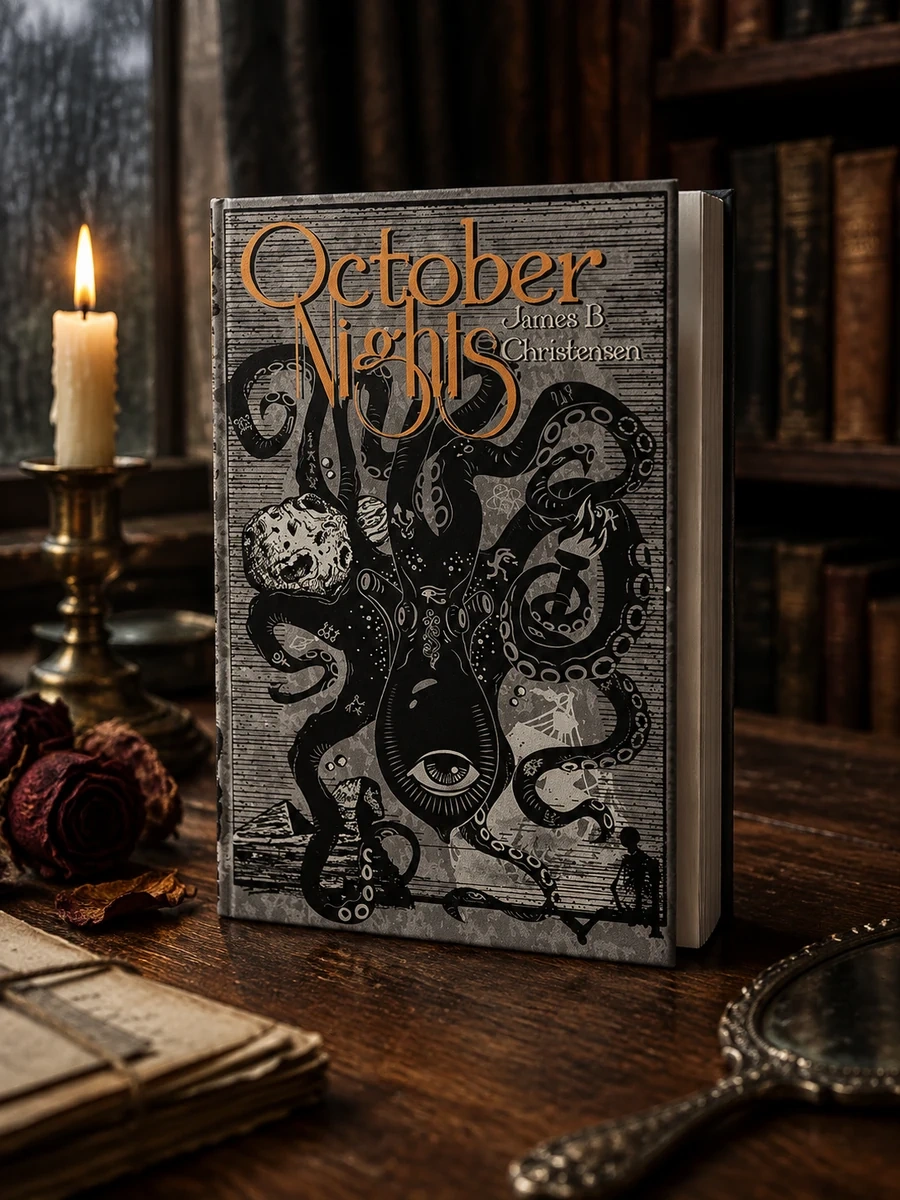

October Nights
A focused collection emphasizing atmospheric dread over complex plots.
This volume stands apart from typical genre offerings by rejecting narrative complexity in favor of pure mood. Christensen constructs a steady stream of unease that relies on the reader’s imagination rather than explicit action. The structure supports this goal, presenting horror as an experience to be felt rather than a puzzle to be solved. It draws on traditional gothic elements to create a sense of lingering discomfort. The result is a work that feels both classic and immediate. It does not attempt to surprise with sudden turns but instead builds pressure through consistent tone. This approach ensures the fear remains present long after the reading stops. The book serves as a study in atmospheric control, showing how silence and setting can generate more terror than violence. It is a deliberate choice for those who find standard horror tropes exhausting.
Published in October 2017 by Ravensbook Media, this paperback enters the market during a period where readers sought authentic horror experiences. It aligns with the tradition of gothic fiction that values mood and psychological pressure over modern spectacle.


📝 Description: October Nights
💎 Our verdict on October Nights
📖 Why choose it
Why this book is worth reading
This volume is designed for readers who appreciate the raw mechanics of fear and prefer their horror delivered with precision. It offers a straightforward path through unease, letting the setting do the heavy lifting without distraction. The book serves as a study in atmospheric control, showing how silence and setting can generate more terror than violence. It is a deliberate choice for those who find standard horror tropes exhausting or who seek a concentrated dose of supernatural unease. By avoiding complex narratives, it provides a lingering chill that stems from the tradition itself, ensuring the fear remains present long after reading stops.
⭐ Reader reviews
Reader rating
Christensen constructs a steady stream of unease that relies on the reader’s imagination rather than explicit action. The structure supports this goal, presenting horror as an experience to be felt rather than a puzzle to be solved. It draws on traditional gothic elements to create a sense of lingering discomfort. The result is a work that feels both classic and immediate. It does not attempt to surprise with sudden turns but instead builds pressure through consistent tone. This approach ensures the fear remains present long after the reading stops, making it an ideal study in atmospheric control for those who value mood above all else.
You might also like
See more →







Have a question about this item?
Ask about the edition, condition, delivery or anything else — we reply by email or phone, usually within a day.
