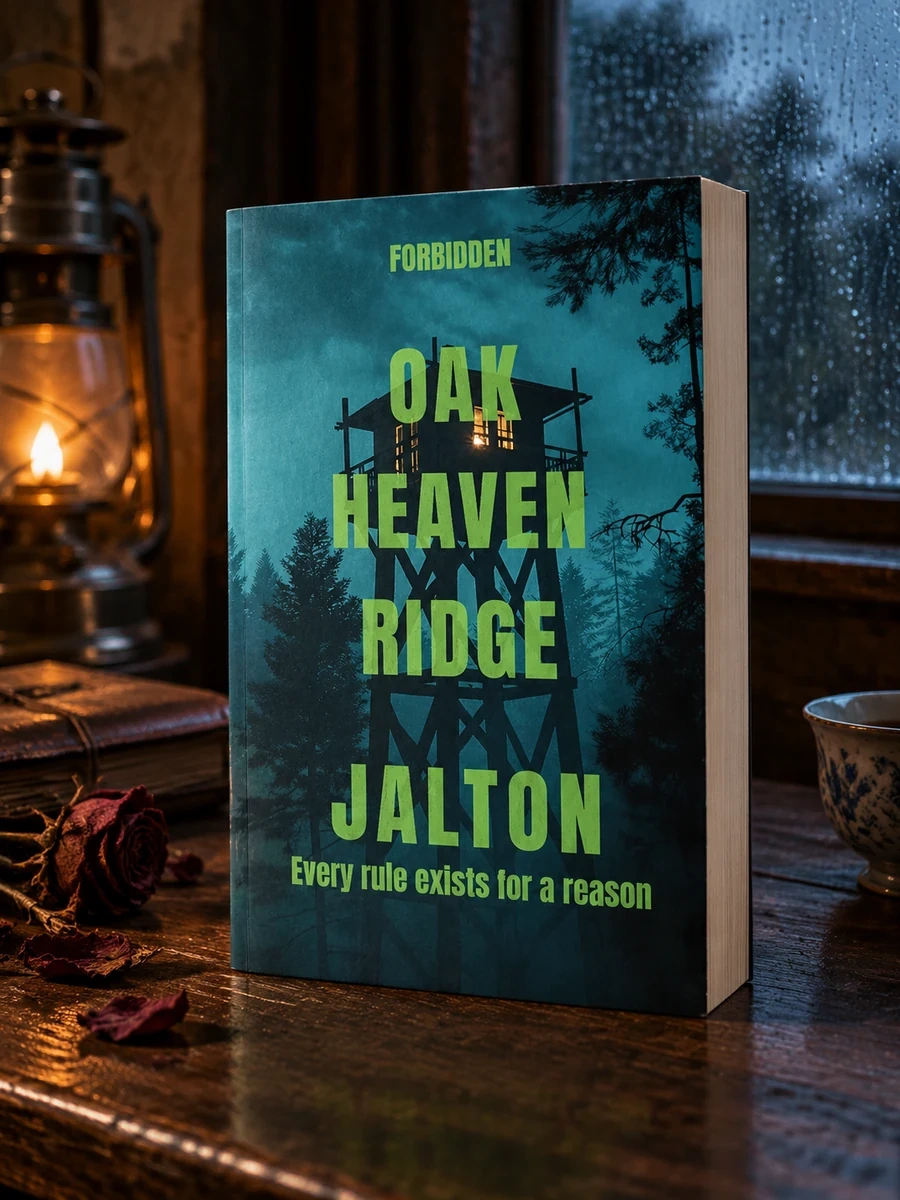
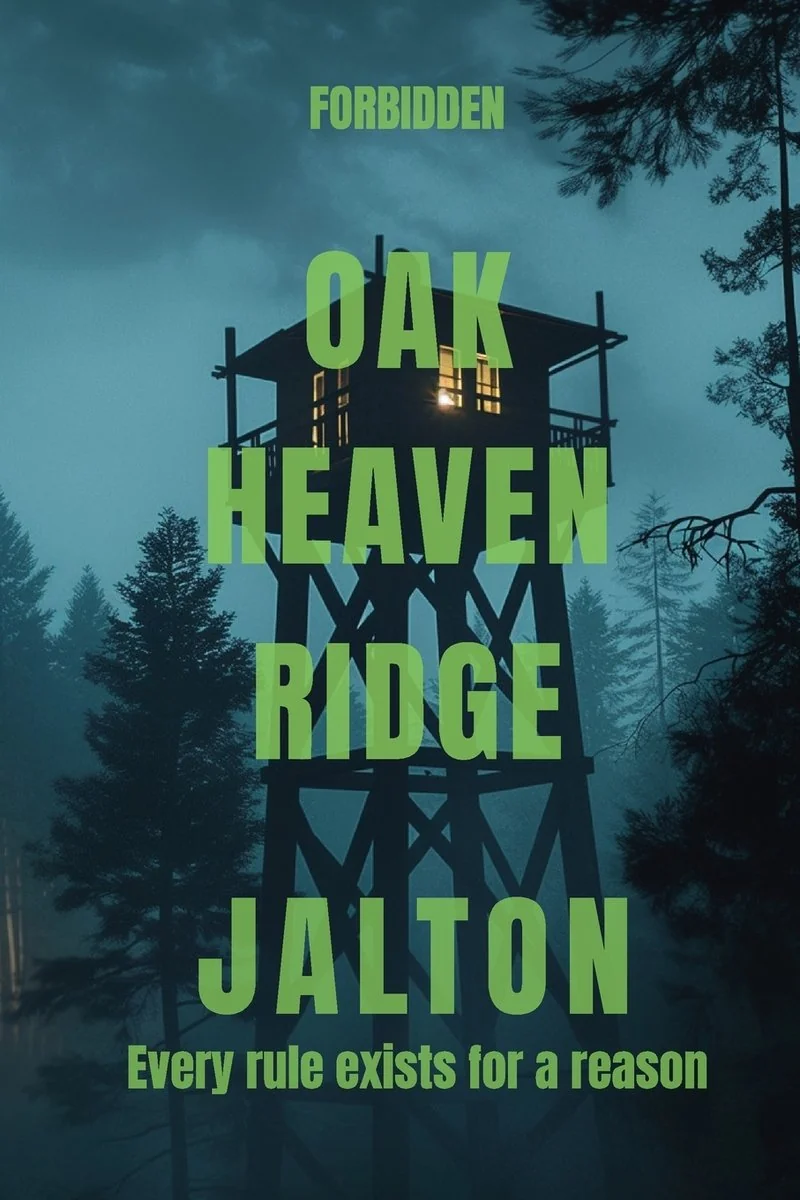
Oak Heaven Ridge: Forbidden, Book 2
A horror novel about a fire lookout trapped by forest rules.
The plot focuses on a man losing his mind while isolated in a supernatural setting. Elliot Carr reaches Oak Heaven Ridge in 1999 hoping for peace. Instead, he encounters a forest that ignores natural laws. The text uses witch burning traditions and village myths to build historical weight. A figure at the edge of the trees reveals the main conflict: an unpaid debt lasting twenty-three years. Elliot's arrival breaks this equilibrium. He serves as a trigger rather than a watcher. The tale explores how guilt and escape meet ancient curses. It rejects modern horror clichés for gradual tension. The environment functions as a living entity, imposing its will on the main character.
The book is set in 1999 at Oak Heaven Ridge, a fictional location with roots in a vanished village. It draws on American gothic traditions of isolated fire lookouts and local legends of women burned alive. The narrative reflects late twentieth-century anxieties about escaping personal failure through physical removal.


📝 Description: Oak Heaven Ridge: Forbidden, Book 2
💎 Our verdict on Oak Heaven Ridge: Forbidden, Book 2
📖 Why choose it
Why this book is worth reading
Readers who appreciate slow-burning psychological horror and atmospheric dread will find this title compelling. It offers a unique exploration of isolation where the environment itself becomes an antagonist, imposing its will upon the protagonist. Those interested in folklore, witch burning traditions, and the weight of historical guilt will appreciate the narrative's depth. It is ideal for those who prefer gradual tension over rapid action or neat resolutions. The book provides a stark look at how escape can lead to entrapment, making it suitable for audiences seeking immersive, unsettling tales rooted in supernatural consequences rather than jump scares.
⭐ Reader reviews
Reader rating
Jalton crafts a tense narrative where the forest functions as a living entity, rejecting modern horror clichés for gradual psychological erosion. The story effectively uses historical weight and village myths to build an oppressive atmosphere around Elliot Carr’s isolation. By positioning the protagonist as a trigger rather than a watcher, the text explores complex themes of guilt and ancient curses with precision. The tone is consistently unsettling, relying on creeping dread rather than sudden surprises. This approach suits readers who enjoy supernatural tales rooted in folklore and isolation. It is a well-executed entry for fans of dark fantasy and psychological horror who value atmospheric depth over conventional plot structures.
📖 Read on the blog
🏛 Books from this publisher Independently Published








You might also like
See more →


Have a question about this item?
Ask about the edition, condition, delivery or anything else — we reply by email or phone, usually within a day.
