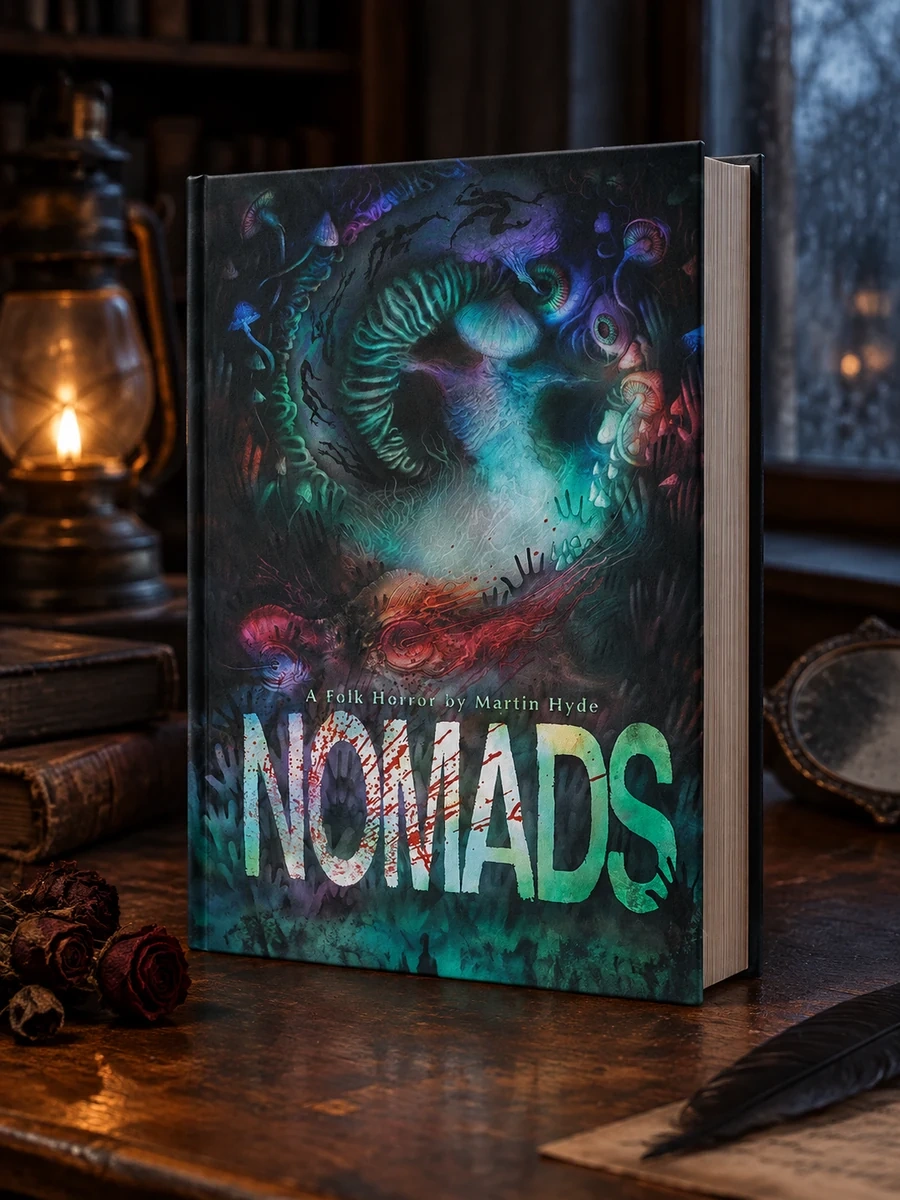
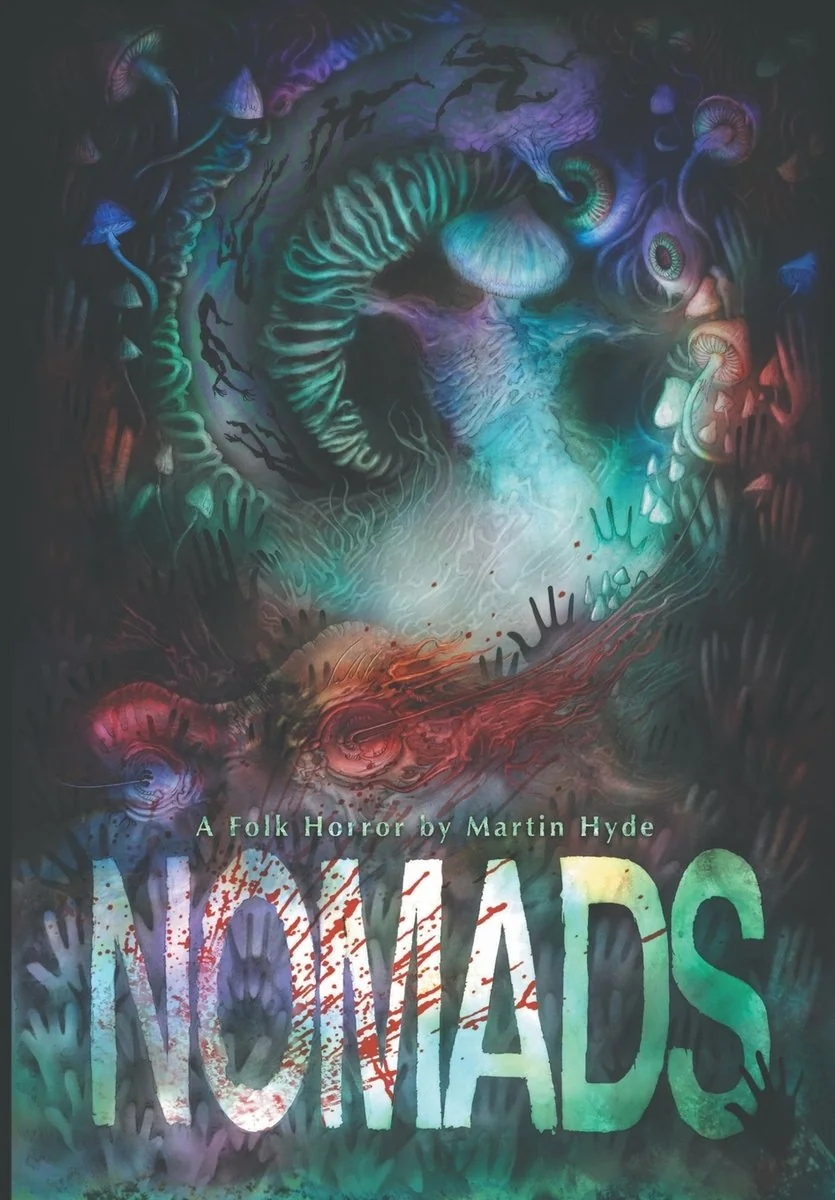
Nomads: a Folk Horror
A folk horror tracing human evolution from African savannahs to modern nightmares.
This work examines the long arc of human displacement and survival. Hyde connects the African savannah, early slavery, and Shakespearean London to a contemporary setting. The book argues that the drive for food has always led to suffering. It presents horror not as an external force but as an inherent part of our history. The narrative style is direct and unflinching. It avoids romanticizing the past or offering easy solutions for the present. Readers will encounter a cast of nomads who are perpetually on the run. This approach makes the supernatural elements feel grounded in biological and social reality.
Published by Martin Hyde Books in 2026, this title sits within the folk horror genre. It draws on historical periods ranging from prehistoric times to Shakespearean London and the present day.


📝 Description: Nomads: a Folk Horror
💎 Our verdict on Nomads: a Folk Horror
📖 Why choose it
Why this book is worth reading
Readers seeking a grim, unflinching examination of human suffering will find value in this text. It appeals to those interested in the intersection of anthropology and supernatural fiction, offering a cohesive view of displacement as a historical constant. Those who appreciate horror grounded in biological and social reality rather than external forces will gain insight here. The book is ideal for individuals willing to engage with a bleak tone that avoids romanticizing the past or providing easy solutions. It serves readers who want to understand how ancient instincts for survival shape contemporary fears, providing a chilling look at the origins of our deepest anxieties through a direct and relentless narrative style.
⭐ Reader reviews
Reader rating
Hyde delivers a stark, uncompromising folk horror that traces human desperation across millennia. The text excels in its structural ambition, connecting the African savannah to Shakespearean London and present-day nightmares without romanticizing history. By grounding supernatural elements in tangible social reality, Hyde creates a chilling examination of survival instincts. This approach makes the horror feel inherent rather than external. While the tone is undeniably bleak and unsuitable for those seeking light entertainment, it offers significant value for readers interested in the anthropology of fear. The direct narrative style ensures the horror remains visceral and intellectually engaging.
You might also like
See more →







Have a question about this item?
Ask about the edition, condition, delivery or anything else — we reply by email or phone, usually within a day.
