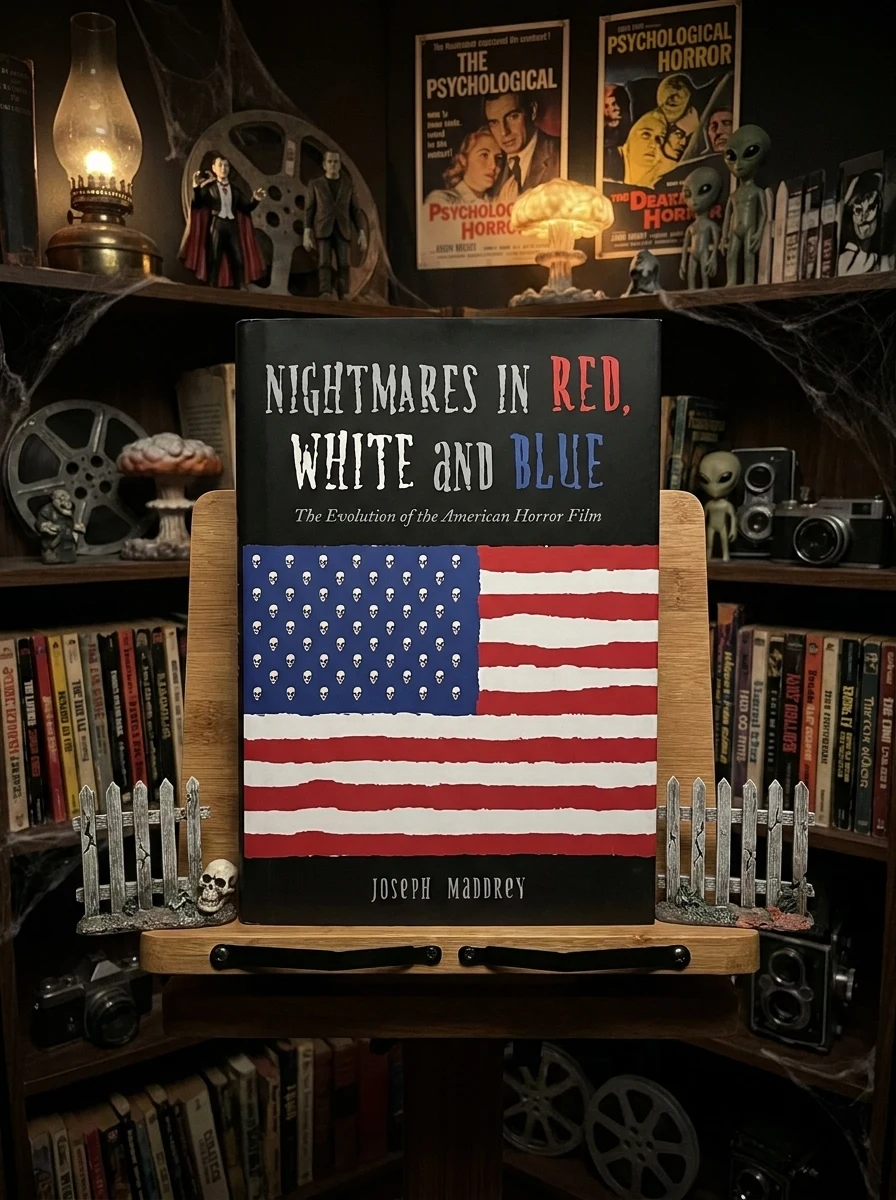
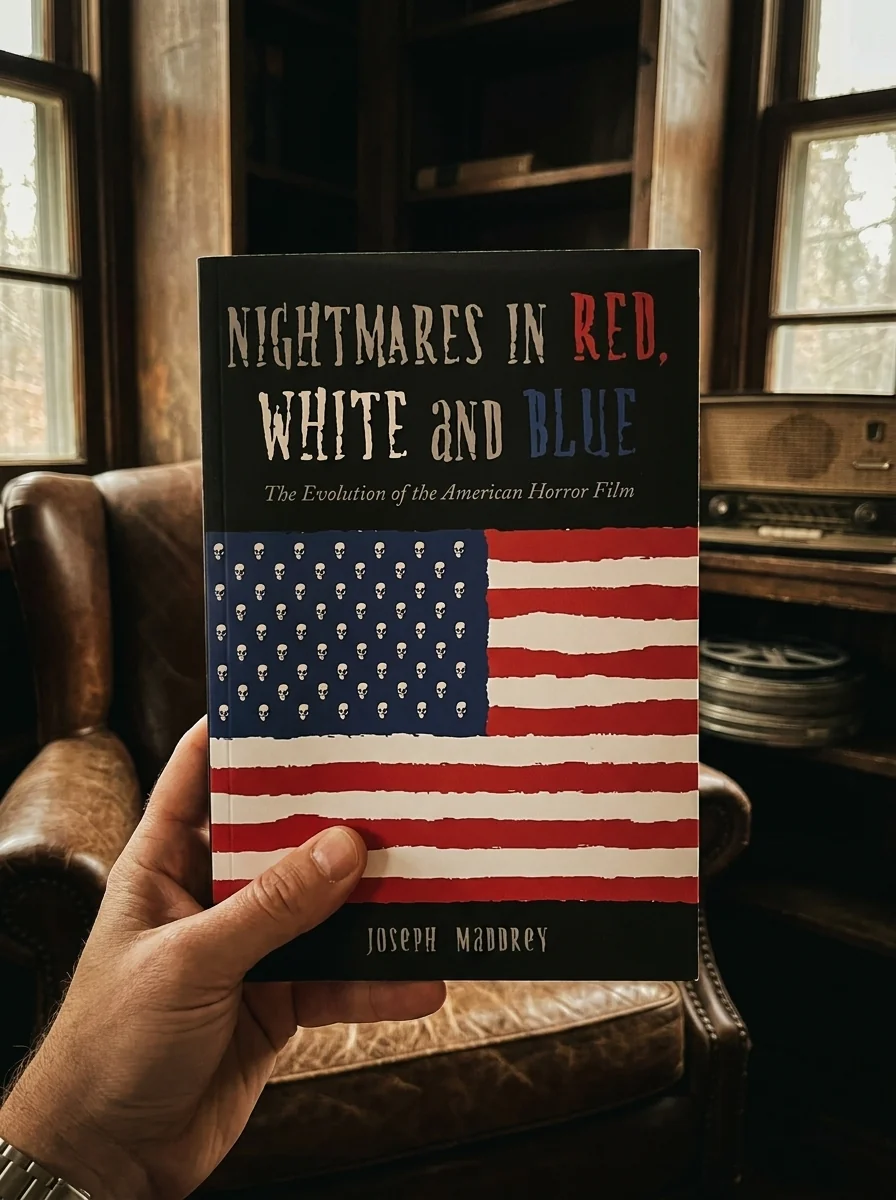
Nightmares in Red, White and Blue: The Evolution of the American Horror Film
A study of how American horror films reflect national fears through key directors and eras.
Maddrey argues that horror movies measure the American consciousness by revealing what weighs on the public mind. He connects specific cinematic periods to historical contexts, such as Cold War tensions and post-war atomic anxiety. By linking film content to cultural values, he shows how the genre adapts to reflect contemporary worries. The analysis moves beyond simple plot description to examine why certain monsters and themes resonate at specific times in history.
Published by McFarland & Company in 2004, this work situates American horror cinema within its historical context. It traces the genre's development from early Gothic roots through the Cold War era to modern psychological fears, reflecting changing US cultural attitudes.


📝 Description: Nightmares in Red, White and Blue: The Evolution of the American Horror Film
💎 Our verdict on Nightmares in Red, White and Blue: The Evolution of the American Horror Film
📖 Why choose it
Why this book is worth reading
Readers interested in the intersection of cinema and cultural studies will find this book particularly valuable for understanding how American horror films reflect national fears. Maddrey argues that these movies measure the American consciousness by revealing what weighs on the public mind, connecting specific cinematic periods to historical contexts like Cold War tensions and post-war atomic anxiety. The work is ideal for those who want to understand the connection between societal worries and genre evolution. It moves beyond simple plot description to examine why certain monsters resonate at specific times in history. However, viewers seeking pure plot summaries or technical acting critiques may find the focus on broader cultural significance less engaging than they prefer.
⭐ Reader reviews
Reader rating
Maddrey offers a compelling survey of how American horror cinema mirrors shifting national anxieties, tracing the genre from early Gothic fascination through mutant horrors and alien threats. The book is organized effectively, with the first part surveying key films that reflect changing attitudes and the second focusing on eight influential directors who shaped the field. By profiling pioneers like Tod Browning alongside modern masters such as John Carpenter and Wes Craven, the text highlights how personal visions contributed to the development of American horror. This approach provides deep insight into why specific themes resonate culturally. It suits readers eager to grasp the link between cinema and societal fears rather than those looking for technical film criticism or simple plot recaps.
📖 Read on the blog
✍️ More books by this author Joseph Maddrey



🏛 Books from this publisher McFarland & Company




You might also like
See more →


Have a question about this item?
Ask about the edition, condition, delivery or anything else — we reply by email or phone, usually within a day.
