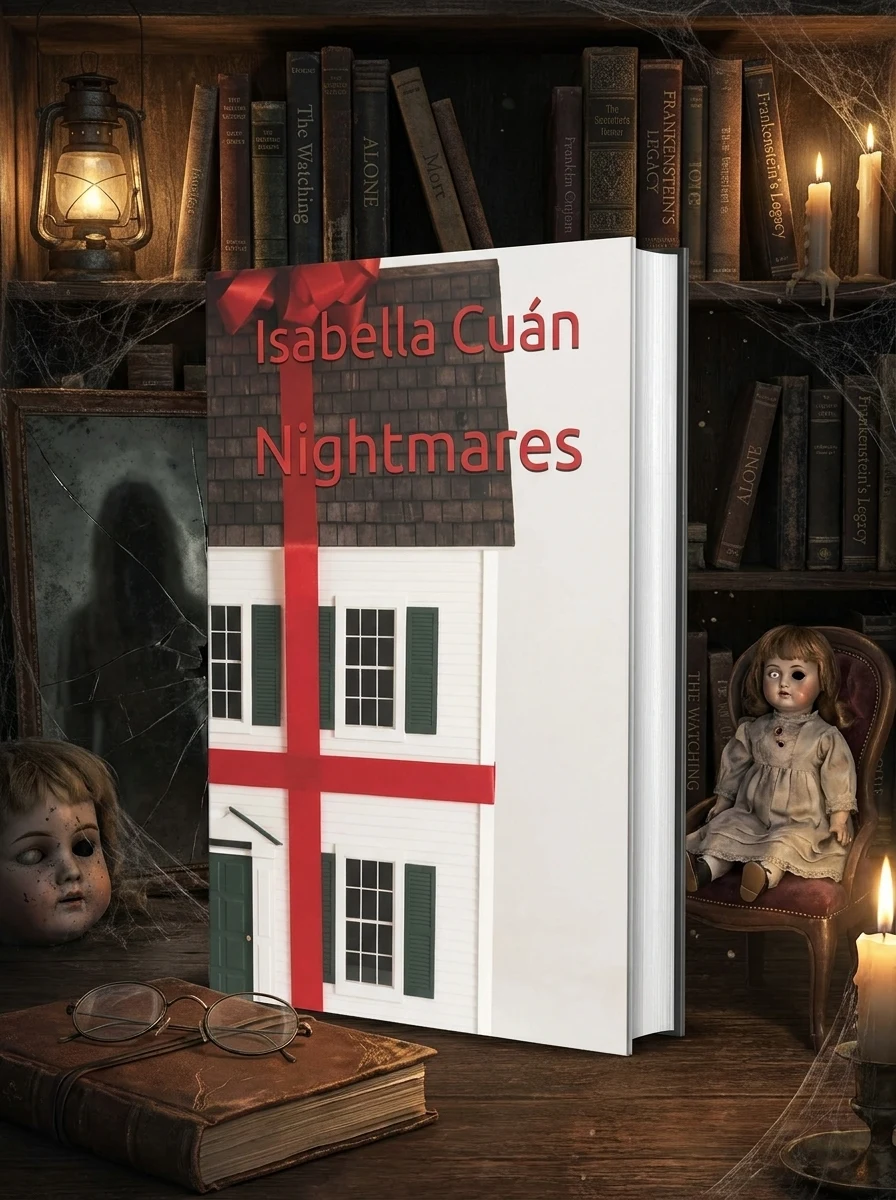

Nightmares
A direct warning from Lizzy Frankenstein about an unseen watcher in her solitude.
Lizzy Frankenstein narrates a tale of paranoia and supernatural dread. She claims that reading this account invites the same fate she suffers, where an entity knows her every move when she is isolated. The narrative style mimics a desperate journal entry meant to save the reader from becoming its next victim. Cuan uses this frame to create immediate intimacy and terror. The story does not explain the origin of the watcher, focusing instead on the psychological impact of constant surveillance. This approach appeals to readers who prefer horror that feels personal and intrusive. It avoids traditional exposition in favor of raw, immediate fear.
Published independently in 2019, this work sits within the modern wave of self-published horror fiction. It engages with the Frankenstein mythos, reimagining the classic monster narrative through a contemporary lens of psychological terror and direct reader engagement.


📝 Description: Nightmares
💎 Our verdict on Nightmares
📖 Why choose it
Why this book is worth reading
Readers who crave immediate, intrusive terror will find value in this narrative’s desperate intimacy. It appeals to those who prefer horror that feels personal rather than distant, offering a direct plea for survival that blurs the line between the protagonist and the audience. Fans of psychological dread and meta-fictional structures will appreciate how Cuan avoids traditional exposition to focus on raw fear. Those seeking conventional character arcs or historical accuracy may feel unsettled by the lack of resolution, but others will find the persistent sense of unease compelling. This book is ideal for readers who enjoy having their fourth wall broken, providing a chilling experience that lingers long after the final word without offering comfort or escape.
⭐ Reader reviews
Reader rating
Cuan effectively utilizes a frame narrative to create immediate dread, positioning Lizzy Frankenstein’s account as a warning rather than a standard plot. The strength lies in its focus on the psychological impact of constant surveillance, avoiding traditional exposition for raw, unsettling tension. This approach suits readers who enjoy meta-fictional elements and psychological horror that feels personal and intrusive. While those seeking historical accuracy or clear resolution may find it lacking, the book succeeds in generating persistent unease. It is a bold choice for fans of gothic traditions and cosmic horror who appreciate narratives that challenge the reader directly. The work does not offer escape but rather a shared sense of paranoia, making it a distinctive addition to the genre.
📖 Read on the blog
🏛 Books from this publisher Independently Published








You might also like
See more →


Have a question about this item?
Ask about the edition, condition, delivery or anything else — we reply by email or phone, usually within a day.
