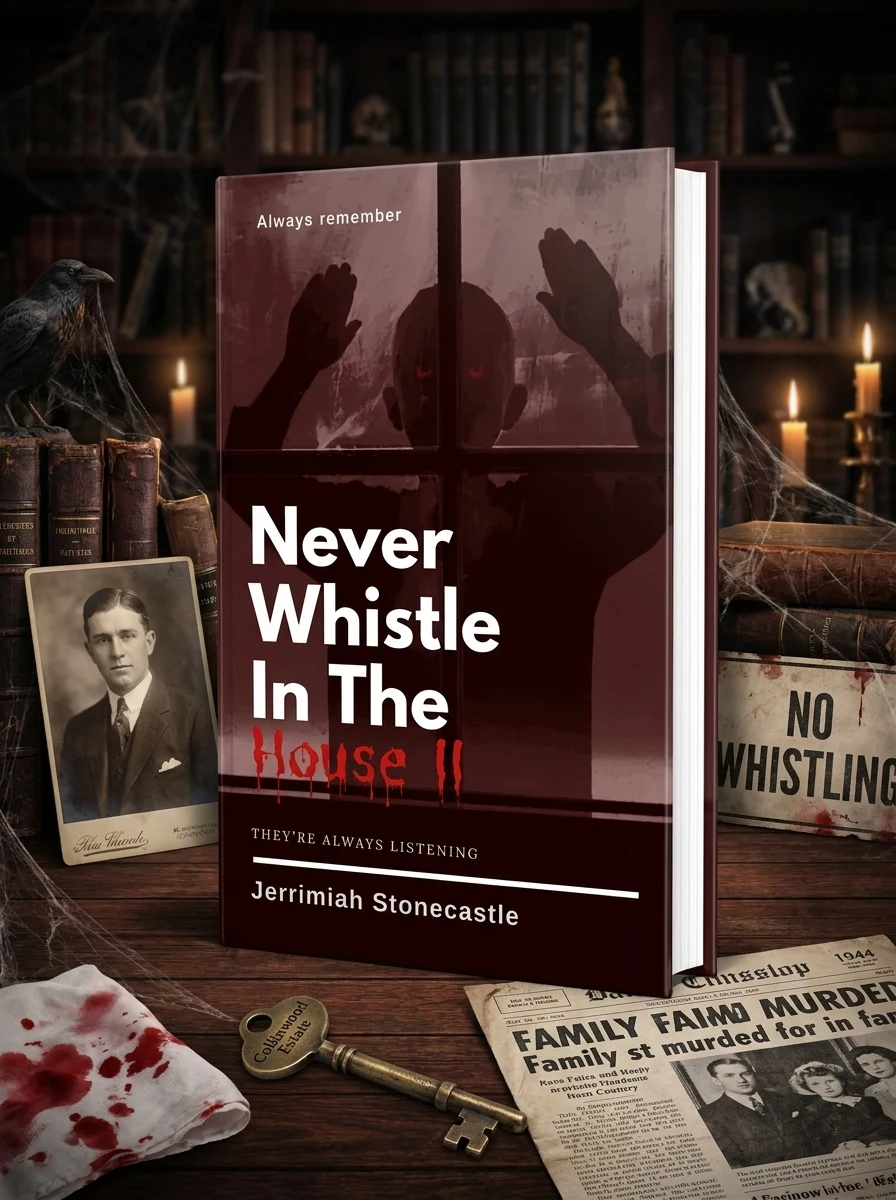
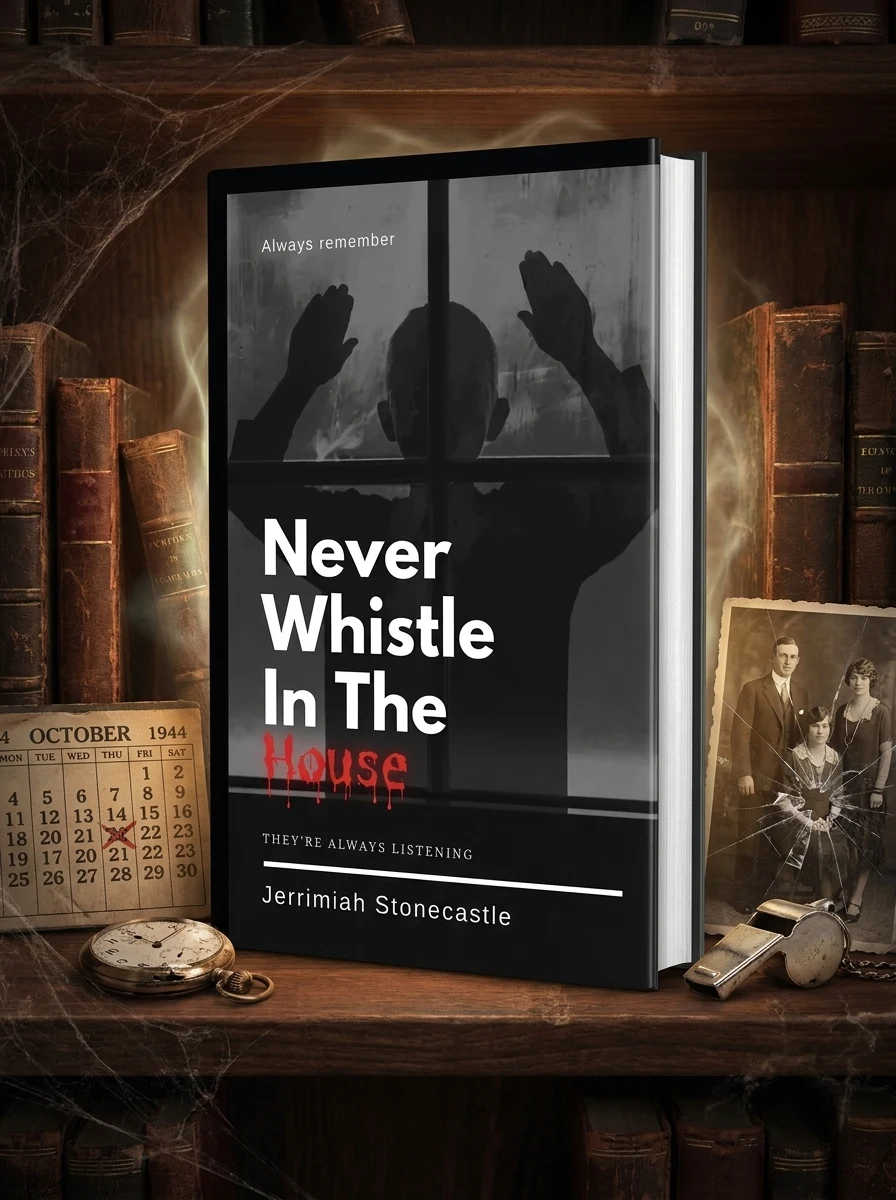
Never Whistle in The House II
A cursed estate demands obedience to a strange rule or face death.
McCarthy explores the legacy of Faustus Sala and the Collinwood Estate through a timeline spanning four decades. The narrative focuses on the inheritance passed to the last surviving child in 1964. This heir attempts to monetize the property by converting it into a country club. The plan fails when visitors disregard the prohibition against whistling inside. The resulting deaths are described as horrible, emphasizing the danger of the curse. The story draws on gothic traditions where ancestral sins haunt the present. It does not provide background on how the curse originated beyond Sala’s actions in 1944. The plot remains tight, focusing on the immediate consequences of violating the house’s rules. This approach creates a sense of inevitability for anyone who enters the building.
The narrative is set in the United States during the twentieth century. It references specific years including 1925, 1944, and 1964. The setting involves the Collinwood Estate and its later use as a country club. The story reflects gothic fiction traditions where old houses hold dark secrets.


📝 Description: Never Whistle in The House II
💎 Our verdict on Never Whistle in The House II
📖 Why choose it
Why this book is worth reading
Readers who enjoy atmospheric, slow-burn horror will find this narrative compelling due to its tight focus on the immediate consequences of violating a house’s strange regulations. The book appeals to those interested in the burden of legacy and how wealth can become a curse rather than a blessing. By tracing the tragic arc from 1925 through 1964, it offers a tense exploration of inevitability where survival depends on strict adherence to rules. It is ideal for fans of gothic fiction who appreciate historical baggage and the lingering presence of past sins driving the horror elements forward, rather than those seeking contemporary settings or lighthearted tales.
⭐ Reader reviews
Reader rating
McCarthy delivers a tightly plotted gothic horror that emphasizes the danger of disregarding ancestral prohibitions. The narrative successfully creates a sense of inevitability for anyone entering the Collinwood Estate, focusing on the gruesome deaths resulting from violating the whistling ban. While it lacks background on the curse's origin beyond 1944, this omission strengthens the immediate tension and keeps the plot focused on present consequences. The work excels in exploring themes of inheritance and retribution through a timeline spanning forty years. It suits readers who prefer atmospheric dread over exposition, offering a chilling look at how history weighs upon the living. Those who enjoy supernatural fiction with strong historical roots will find this a satisfying, if somber, experience.
📖 Read on the blog
✍️ More books by this author Elaine McCarthy


🏛 Books from this publisher Independently Published






You might also like
See more →


Have a question about this item?
Ask about the edition, condition, delivery or anything else — we reply by email or phone, usually within a day.
