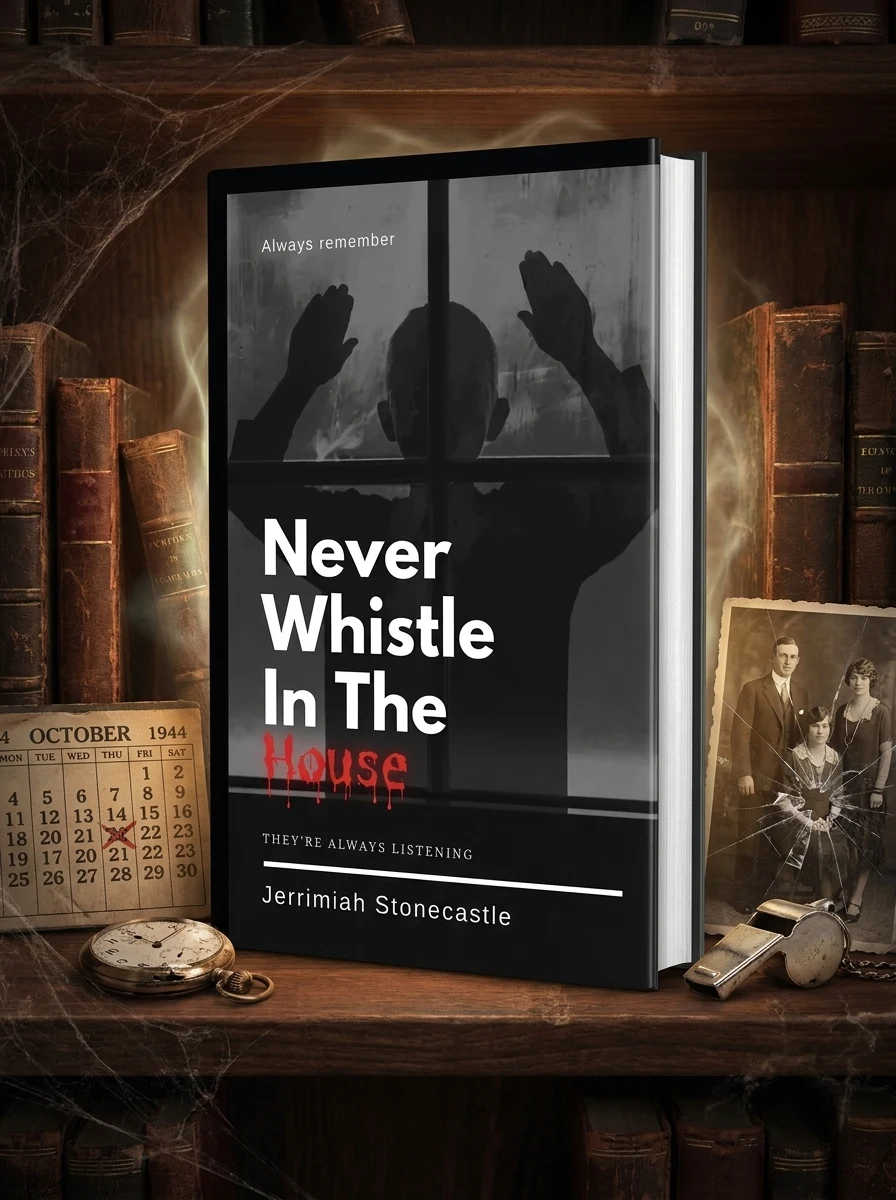
Never Whistle in The House
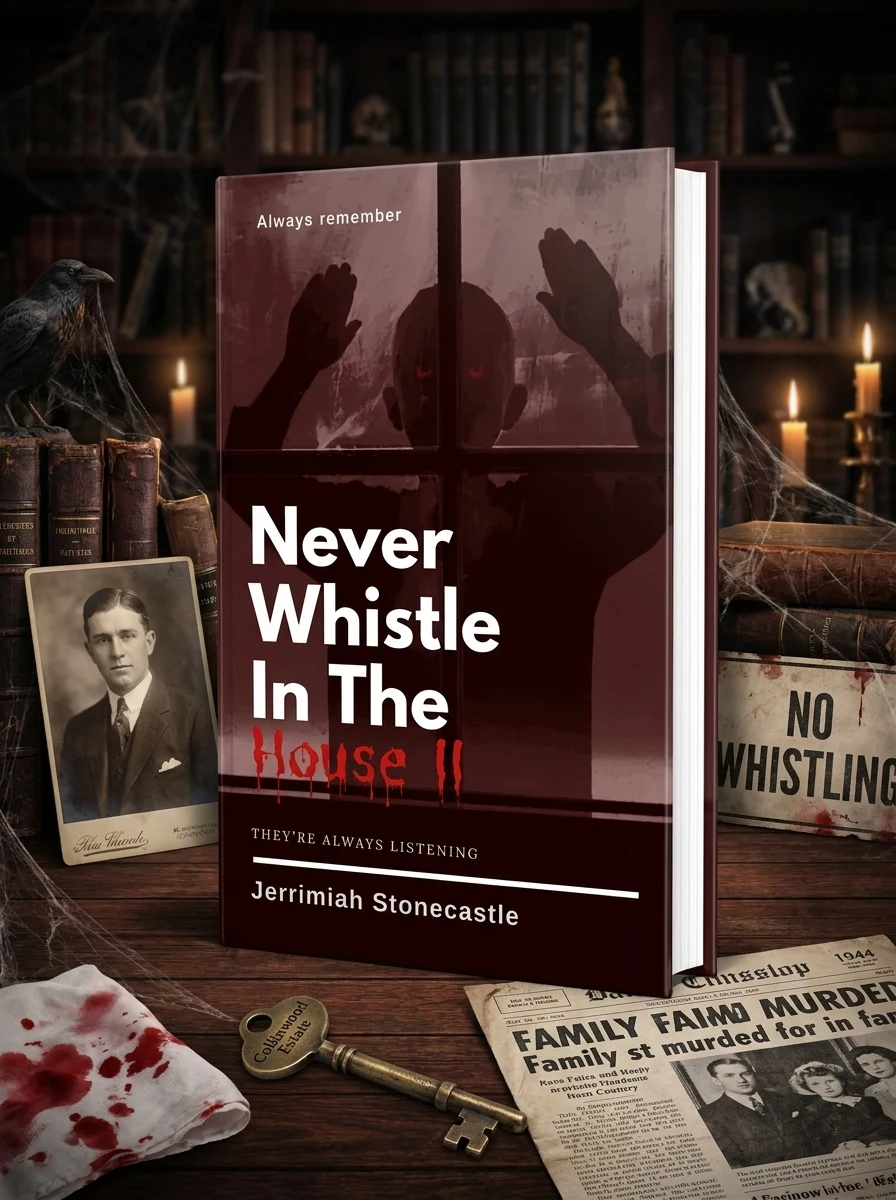
A cursed house demands payment for a family's past sins.
The narrative traces Faustus Sala from his romantic beginnings in 1925 through the economic devastation of 1929 and his violent actions in 1944. The story hinges on the aftermath of his suicide and the subsequent curse placed on his home. Any person who whistles inside the building triggers a supernatural response. An evil entity emerges to collect an unpayable debt. The text explores themes of love betrayed and the permanence of past mistakes. It does not offer redemption but rather focuses on the inescapable nature of the curse. The structure relies on historical milestones to build tension toward the supernatural climax.
The text is set against the backdrop of early twentieth century America. It references the 1925 romantic era, the 1929 stock market crash, and the 1944 wartime period. These historical markers ground the supernatural elements in a specific temporal context.


📝 Description: Never Whistle in The House
💎 Our verdict on Never Whistle in The House
📖 Why choose it
Why this book is worth reading
Readers who appreciate historical horror with clear causal chains will find this narrative compelling. The book offers a structured exploration of how past sins echo through generations, focusing on the consequences of betrayal and the weight of inherited curses. It appeals to those who enjoy gothic traditions involving haunted domestic spaces and familial tragedy. The specific prohibition against whistling creates a unique tension that drives the supernatural climax. Those seeking a story without redemption but rather with an inescapable curse will find satisfaction in its uncompromising tone. It is ideal for fans of dark fantasy and psychological horror who value historical milestones as narrative devices.
⭐ Reader reviews
Reader rating
This title effectively merges early twentieth-century American history with gothic horror conventions. The narrative structure relies on significant historical events to build tension, culminating in a supernatural climax that feels earned through its detailed progression. McCarthy excels at establishing the atmosphere of a cursed domestic space where sound triggers dire consequences. The focus remains on the permanence of past mistakes rather than offering hope or resolution. While it may not suit readers preferring modern psychological thrillers devoid of supernatural elements, it stands strong for those interested in the mechanics of curses and inherited guilt. The work is a solid entry for collectors of traditional haunted house tales.
📖 Read on the blog
✍️ More books by this author Elaine McCarthy


🏛 Books from this publisher Independently Published






You might also like
See more →

Have a question about this item?
Ask about the edition, condition, delivery or anything else — we reply by email or phone, usually within a day.
