

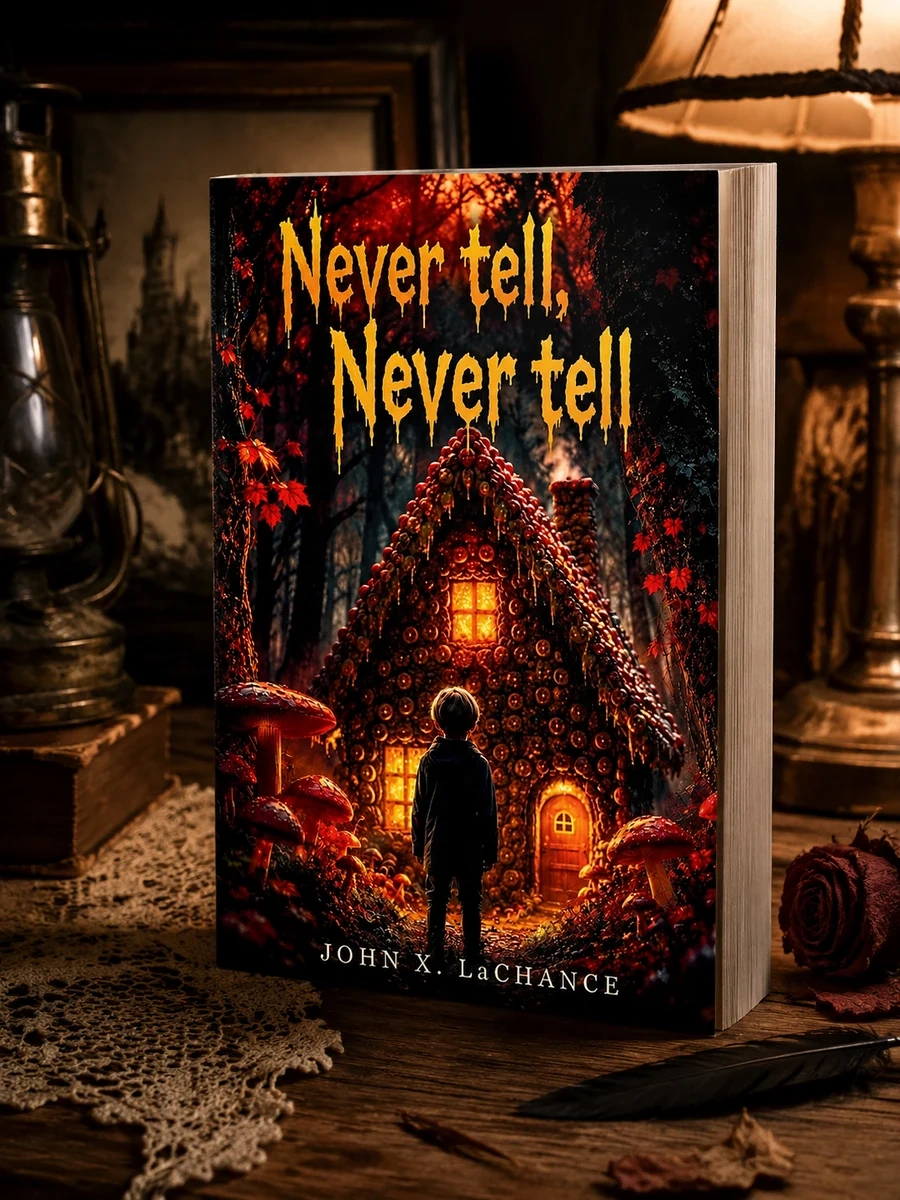
Never Tell, Never Tell
A multi-timeline horror novel about a child's secret becoming a monster.
LaChance presents a study of spiritual ruin where silence creates monstrosity. Beaulyn deFaux evolves from a wounded boy into a revered priest, then a dying man facing his past. The narrative structure links these stages to show how trauma persists. Religious authority and social corruption enable the initial horror. The setting in colonial Africa provides a backdrop for sacred and profane conflicts. The book focuses on memory refusing to stay buried. It asks what happens when a child's wound defines their existence. The result is a tale where the greatest monster is created rather than born. Readers find a examination of how evil gains language through denial.
The novel is set in a mythic colonial landscape in Africa. It draws on traditions of sacred and profane collision. The story examines the intersection of innocence and corruption within that specific historical and spiritual context.


📝 Description: Never Tell, Never Tell
💎 Our verdict on Never Tell, Never Tell
📖 Why choose it
Why this book is worth reading
Readers seeking literary psychological horror with deep thematic weight will find this novel compelling. It appeals to those interested in gothic fiction that deals with faith, corruption, and the consequences of denial. The book offers a rigorous examination of how trauma persists and how evil gains language through silence. It is ideal for audiences who prefer stories where the greatest monster is created rather than born. Those who enjoy narratives exploring spiritual ruin and the intersection of innocence and corruption will appreciate its complex structure. It suits readers who value atmospheric tension over straightforward supernatural thrills. The multi-timeline approach reveals how a child's secret defines existence, offering a profound look at memory refusing to stay buried.
⭐ Reader reviews
Reader rating
LaChance crafts a compelling study of spiritual ruin where silence creates monstrosity. The narrative structure effectively links the stages of Beaulyn deFaux’s life, showing how trauma persists across decades. The setting in colonial Africa provides a rich backdrop for sacred and profane conflicts. LaChance draws on traditions of horror to show how innocence and corruption interact. The work excels in examining how evil hides behind religious language. It suits readers interested in gothic fiction with deep psychological weight. Those seeking straightforward supernatural thrills may find it too dense. However, fans of authors who explore the cost of silence will appreciate this tale of memory and ruin.
📖 Read on the blog
✍️ More books by this author John LaChance


🏛 Books from this publisher Writers Apex
You might also like
See more →



Have a question about this item?
Ask about the edition, condition, delivery or anything else — we reply by email or phone, usually within a day.
