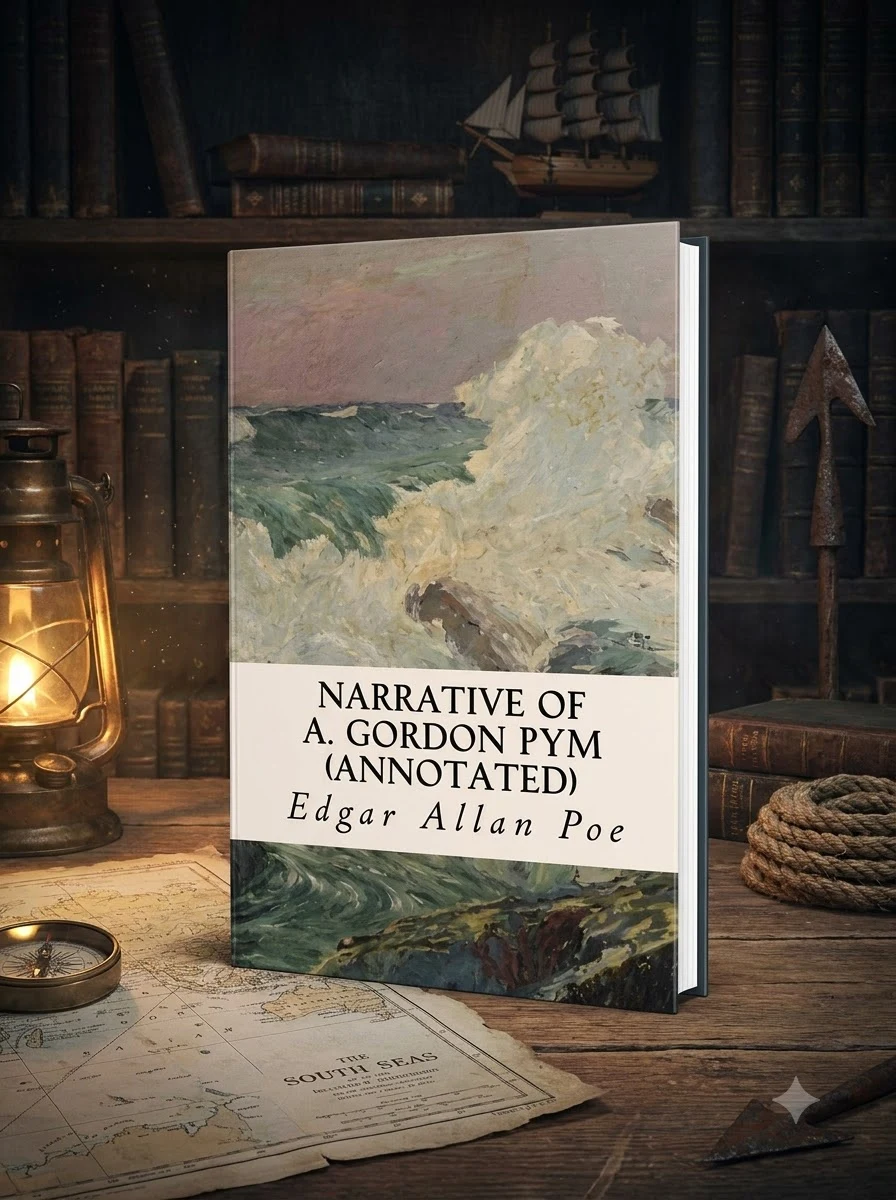
Narrative of A. Gordon Pym (annotated)
An annotated sea adventure by Poe featuring mutiny and supernatural elements.
This volume examines the descent of Arthur Gordon Pym from a stowaway to a survivor of extreme violence. The text traces his journey on the Grampus, highlighting the transition from realistic maritime peril to abstract horror. Key elements include the brutal treatment of crew members and the introduction of mystical concepts like the Hollow Earth. The annotations provide context for these shifts in tone. The work stands as a bridge between traditional adventure tales and modern supernatural fiction. It offers insight into Poe's early exploration of psychological terror and existential dread through a nautical lens.
Published in 2015 by Createspace, this edition revives Poe's 1838 novel for modern readers. It sits within the tradition of American gothic fiction and supernatural horror. The work reflects early nineteenth-century maritime culture and the era's fascination with exploration and the unknown.


📝 Description: Narrative of A. Gordon Pym (annotated)
💎 Our verdict on Narrative of A. Gordon Pym (annotated)
📖 Why choose it
Why this book is worth reading
Readers interested in the origins of cosmic and psychological horror will find this annotated edition essential for understanding Poe's development as a master of the macabre. The text appeals to those analyzing the shift from conventional sea adventures to speculative fiction, offering deep insight into existential dread through a nautical lens. Fans of gothic traditions will appreciate the exploration of human desperation and religious symbolism amidst extreme violence. It is ideal for scholars examining the evolution of horror genres, providing context through annotations that clarify the transition from realistic disaster reporting to mystical concepts like the Hollow Earth.
⭐ Reader reviews
Reader rating
Poe crafts a narrative that begins with conventional maritime realism before descending into abstract supernatural horror. The annotated edition effectively highlights this tonal shift, tracing Pym's journey from stowaway to survivor of brutal mutiny and butchery. While the realistic disaster reporting grounds the early chapters, the later inclusion of religious symbolism and the Hollow Earth concept challenges classification as straightforward fiction. This volume is best suited for readers analyzing the evolution of horror literature or those who enjoy gothic fiction blended with speculative elements. It offers a compelling look at human desperation, though it may frustrate those seeking strictly factual accounts or unadorned adventure stories without literary context.