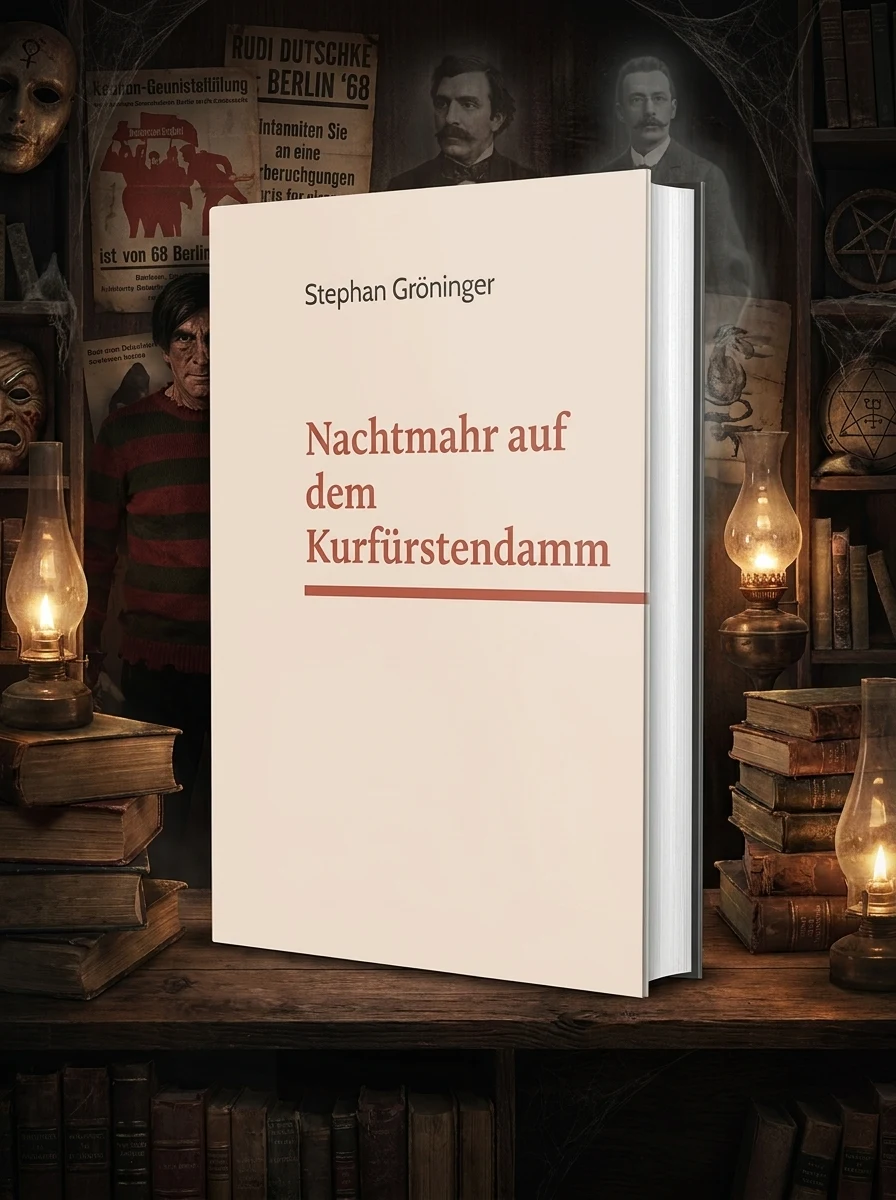
Nachtmahr auf dem Kurfurstendamm
A horror screenplay script merging 1968 Berlin politics with Freddy Krueger mythology.
Groninger constructs a narrative where the intellectual legacy of the RAF intertwines with supernatural dread. By transforming Rudi Dutschke into Kurti, the author bridges the gap between political activism and horror tropes. The text examines how figures like Ulrike Meinhof influenced the spiritual landscape of the time. This approach allows for a critical look at the German student movement through the eyes of a slasher film protagonist. The work challenges readers to confront the eerie realities of post-war Germany while engaging with familiar horror imagery.
The book situates itself in the aftermath of World War II, focusing on the German student revolt of 1968. It draws on the intellectual history of the Red Army Faction and the cultural impact of figures like Rudi Dutschke and Ulrike Meinhof within the context of post-war Germany.


📝 Description: Nachtmahr auf dem Kurfurstendamm
💎 Our verdict on Nachtmahr auf dem Kurfurstendamm
📖 Why choose it
Why this book is worth reading
Readers interested in the convergence of political history and genre fiction will find this title uniquely compelling. It offers a critical examination of the German student movement by blending historical figures with iconic horror archetypes, specifically Freddy Krueger. The narrative challenges audiences to confront the eerie realities of post-war Germany while engaging with familiar slasher tropes. By transforming Rudi Dutschke into Kurti, the author bridges activism and supernatural dread, appealing to those who wish to see how cultural archetypes evolve into monstrous forms within specific historical contexts. It is ideal for intellectuals examining their past positions or students seeking thrills beyond standard historical accounts.
⭐ Reader reviews
Reader rating
Groninger constructs a bold narrative where the intellectual legacy of the RAF intertwines with supernatural dread, creating a hybrid of academic critique and horror fiction. The text effectively utilizes typewriter-style letters to warn readers against sleeping, adding a meta-fictional layer to the story. By merging the political unrest of the late sixties with Wes Craven-esque imagery, the book explores ideological roots through a mystical lens. This approach allows for a unique fusion of historical analysis and genre entertainment. The work is best suited for readers who appreciate dark fantasy and psychological horror that demands engagement with complex political themes rather than simple scares.
📖 Read on the blog
✍️ More books by this author Stephan Groninger


🏛 Books from this publisher Bod - Books on Demand



You might also like
See more →

Have a question about this item?
Ask about the edition, condition, delivery or anything else — we reply by email or phone, usually within a day.
