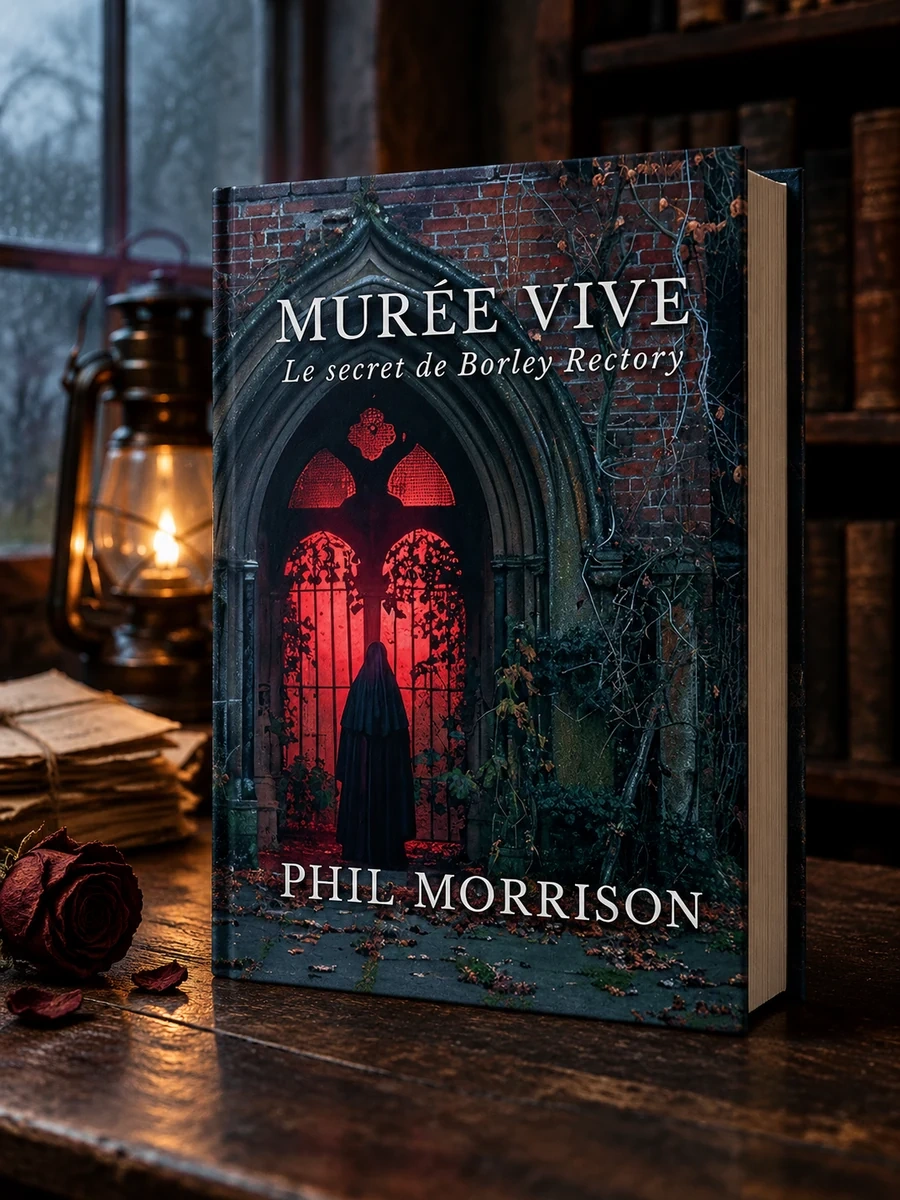
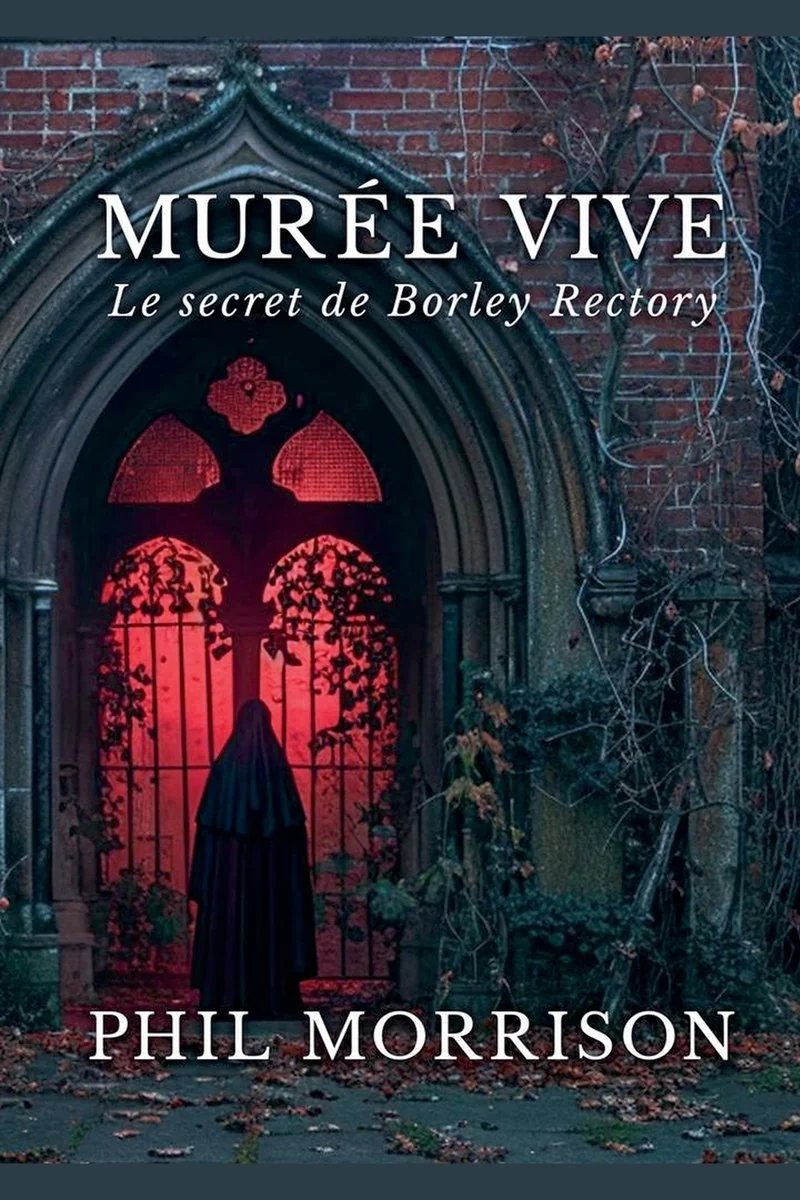
Muree Vive
A gothic novel tracing a haunting across three women and three eras at Borley Rectory.
The narrative connects Marianne Foyster’s 1930 experiences with Harry Price’s 1937 investigation and Camille Lacroix’s 2024 research. Each timeline focuses on a different woman encountering the legacy of Marie Lairre. The text uses archival findings to bridge the gap between the 1679 disappearance and the modern discovery of a cervical fracture in the foundations. Morrison organizes these elements to show how the past persists in the physical landscape.
The story is set in Essex, Paris, and London. It spans from 1679 through 1930 and 1937 to 2024. The work draws on the tradition of documenting hauntings at Borley Rectory using historical records and physical evidence found in the foundations.


📝 Description: Muree Vive
💎 Our verdict on Muree Vive
📖 Why choose it
Why this book is worth reading
Readers drawn to atmospheric gothic fiction and historical mysteries will find Phil Morrison’s narrative compelling for its meticulous layering of timelines. The book appeals to those who enjoy tracing the persistence of the past through physical evidence rather than speculative theory. It offers a slow-burn experience where the convergence of archival findings creates a chilling sense of inevitability. Fans of stories centered on specific locations and the psychological toll of haunting will appreciate how Morrison structures the superimposition of three women across eras. This title is ideal for readers who prefer nuanced, evidence-based supernatural encounters over fast-paced action or clear resolutions, valuing the eerie atmosphere of cold stone and buried truths.
⭐ Reader reviews
Reader rating
Morrison excels at weaving disparate timelines into a cohesive tapestry of dread. By anchoring the narrative in specific archival details and physical remnants like cervical fractures, the book achieves a unique verisimilitude that grounds its supernatural elements. The superimposition of three distinct female perspectives across centuries creates a resonant echo of trauma, suggesting that the past is not merely remembered but actively waiting. This approach suits readers who appreciate historical mystery and psychological horror rooted in tangible evidence. While it lacks immediate thrills, the slow accumulation of dread provides a profound sense of unease. The narrative’s strength lies in its refusal to offer easy answers, instead presenting a haunting that persists through the landscape itself.
📖 Read on the blog
✍️ More books by this author Phil Morrison



🏛 Books from this publisher Phil Morrison
You might also like
See more →


Have a question about this item?
Ask about the edition, condition, delivery or anything else — we reply by email or phone, usually within a day.
