Moon Crossing: A Jax Thriller
A thriller about a woman with no memory fighting for freedom in a supernatural hotel.
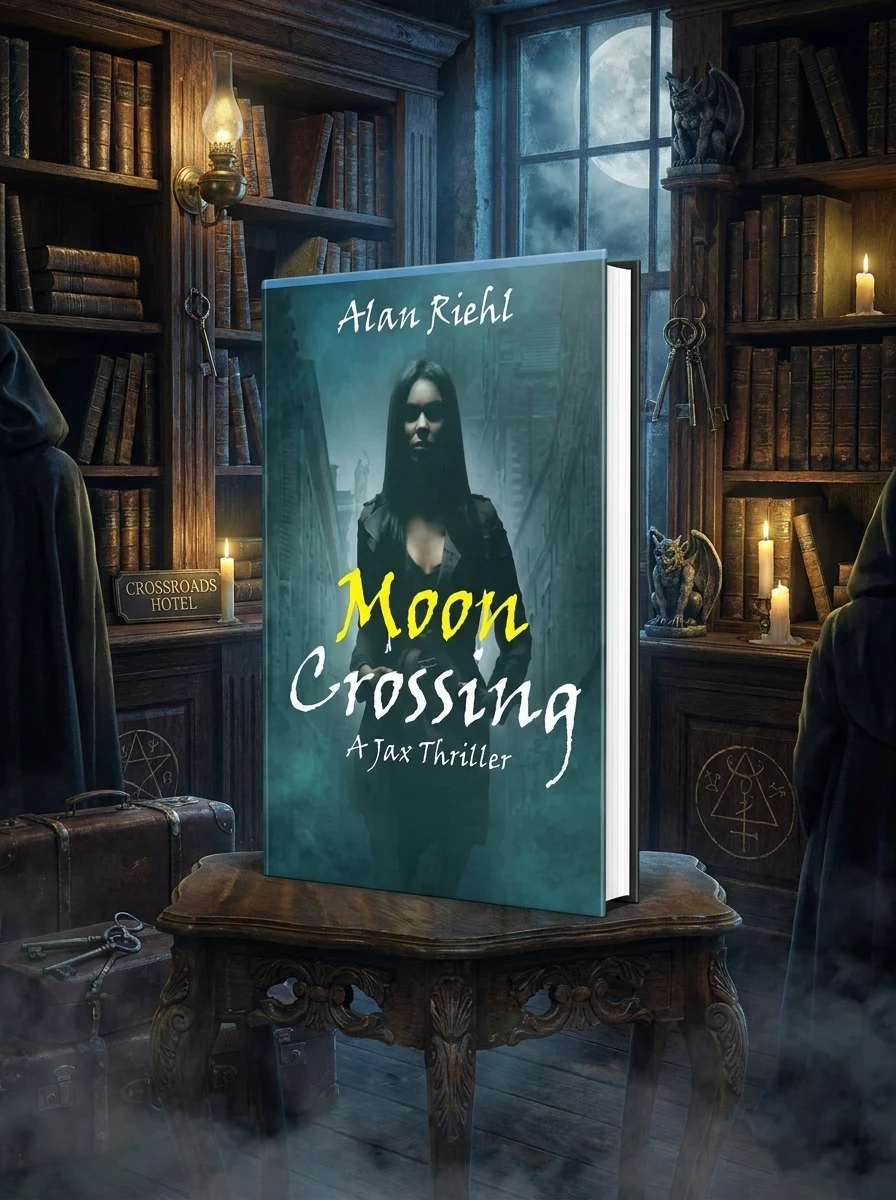
Cassandra Jacksson wakes at The Crossroads Hotel with no memory of her life. She discovers she is more than vampire, werewolf, or human. Everyone wants a piece of her. All she wants is her freedom. Her past is hidden, and her son is the key to finding it. Riehl writes a tight narrative focused on survival. The story avoids extensive exposition about the hotel’s history. It focuses instead on Cassandra’s immediate reactions to danger. The tension comes from her lack of knowledge and the threats surrounding her. This approach keeps the reader aligned with her confusion and fear. The plot moves forward through action rather than reflection.
The book sits within the modern independent horror thriller genre. It draws on gothic traditions of cursed hotels and shapeshifting monsters. The narrative reflects contemporary interests in identity fragmentation and survival against predatory forces. It targets readers seeking immediate supernatural stakes without historical depth.


📝 Description: Moon Crossing: A Jax Thriller
💎 Our verdict on Moon Crossing: A Jax Thriller
📖 Why choose it
Why this book is worth reading
Readers who crave immediate, high-stakes action will find this book particularly engaging. The narrative prioritizes survival and physical escape over slow-burn literary reflection, making it ideal for those who enjoy amnesiac protagonists navigating dangerous supernatural worlds. Fans of tight, plot-driven thrillers that focus on personal stakes rather than extensive exposition will appreciate the relentless pace. It suits audiences looking for a quick, intense read where tension arises from confusion and threat rather than academic analysis or folklore deep-dives. The story appeals to those who prefer dynamic movement and clear objectives over complex world-building.
⭐ Reader reviews
Reader rating
Riehl delivers a focused supernatural thriller that eschews heavy exposition for immediate danger and character-driven action. By aligning the reader with Cassandra’s amnesia, the narrative effectively generates tension through confusion and fear rather than omniscient knowledge. The book excels in maintaining momentum through physical escape and identity recovery, avoiding the trap of static reflection. It is best suited for readers who enjoy fast-paced mysteries with supernatural elements and clear, urgent stakes. Those preferring slow-burn literary fiction or detailed folklore analysis may find the approach too direct. However, fans of tight narratives and agency-focused plots will likely appreciate the relentless drive toward freedom.