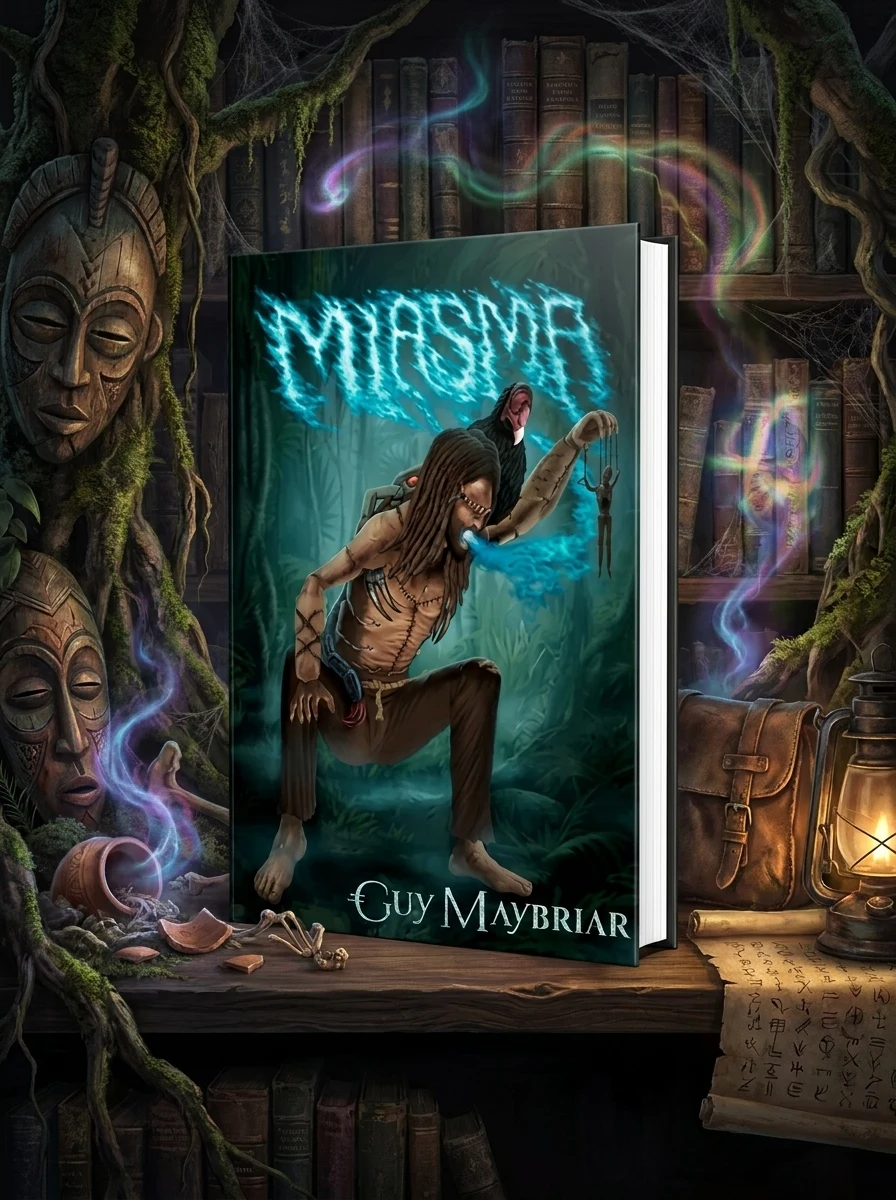

Miasma
A trio of archaeologists faces reality-bending horrors during an African excavation.
Maybriar’s story follows three archaeologists working with an overseas company in Africa. They encounter animosity from untold history and lost names that expose taboo rituals. These rituals distort the realms of reality. The narrative includes lost songs and creatures demanding the expulsion of muscle and sinew. Vivid colors and pestilence fumes map a path to distortion. Dreams invade the minds of struggling characters. Harmful actions from the unrequited contest for control. Readers are urged to scour maps and sift through red soil. The goal is to embody oneself in the Mountain. This approach creates a dense, sensory experience focused on the consequences of digging up the past.
The book sits within the tradition of supernatural and gothic fiction. It draws on themes of archaeology and ancient history. The setting is Africa, focusing on a new discovery. The narrative explores the animosity of untold history and lost names. It connects these elements to rituals that contort reality. The work reflects a style where the past actively impacts the present through physical and psychological means.


📝 Description: Miasma
💎 Our verdict on Miasma
📖 Why choose it
Why this book is worth reading
Readers who enjoy dense, immersive supernatural fiction will find this book rewarding for its sensory intensity and atmospheric depth. It is ideal for those interested in archaeological horror and reality-bending rituals that distort the realms of existence. The narrative appeals to individuals seeking a visceral experience through vivid colors and pestilence fumes rather than straightforward historical accounts. Fans of psychological horror who appreciate the consequences of digging up taboo rituals will gain from the story’s exploration of lost names and dreams invading the mind. It offers a unique path for those willing to sift through red soil and scour maps to understand the distortion caused by untold history.
⭐ Reader reviews
Reader rating
Guy Maybriar delivers a terrifying exploration of archaeology gone wrong, where reality bends under the weight of ancient animosity. The narrative excels in creating a dense, sensory experience, using vivid colors and fumes to map a path toward psychological distortion. By focusing on lost songs and creatures demanding the expulsion of muscle and sinew, the book creates an unsettling atmosphere that permeates the reader's mind through invasive dreams. It suits those who appreciate atmospheric tales where the past actively harms the present. However, readers seeking light comfort or straightforward historical accuracy may find the intensity overwhelming. The work effectively captures the horror of disturbing the unknown.
You might also like
See more →







Have a question about this item?
Ask about the edition, condition, delivery or anything else — we reply by email or phone, usually within a day.
