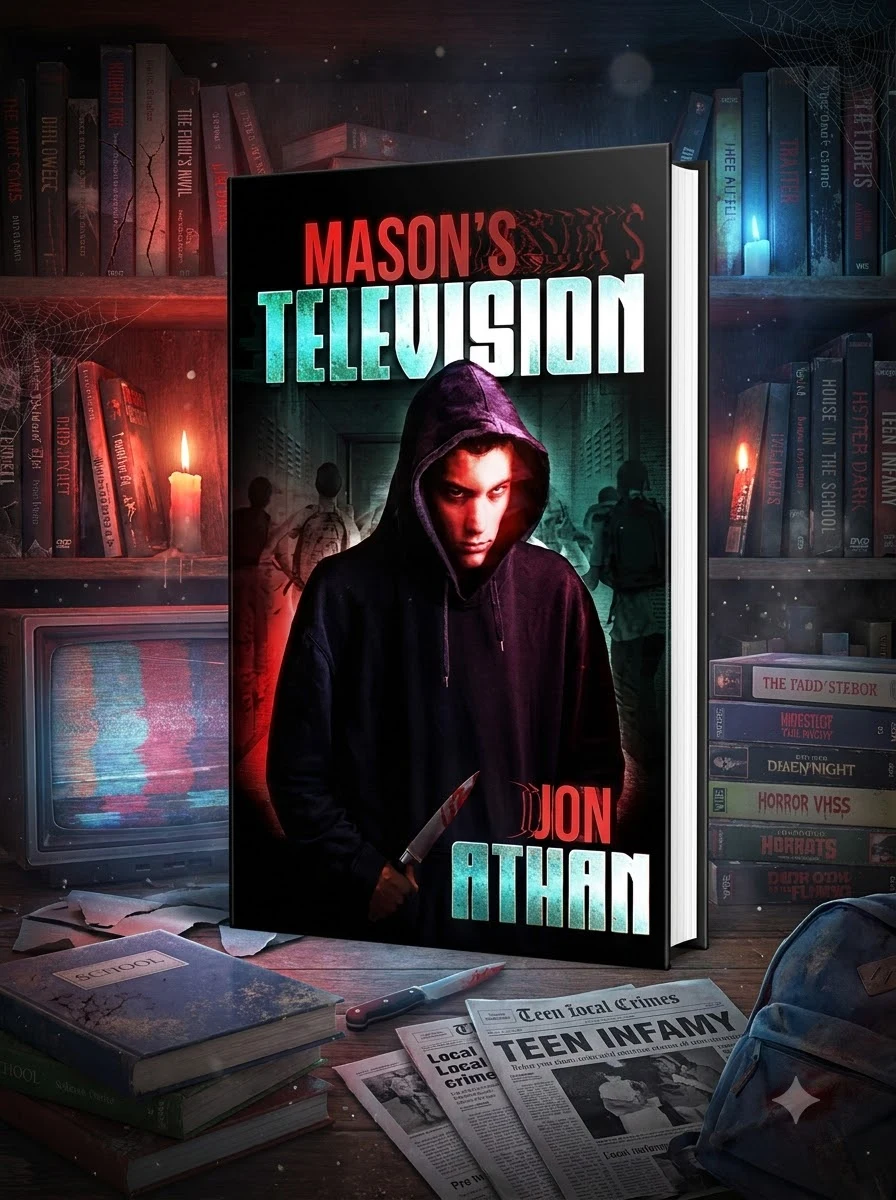
Mason's Television
A thirteen-year-old boy commits crimes guided by his talking television set.
Jon Athan explores the psychological breakdown of a young protagonist who finds direction through a malevolent electronic device. The narrative focuses on Mason’s rejection of normal social norms and his embrace of violence as a path to recognition. His interactions with the television serve as the catalyst for his actions against peers. This work draws on traditions of supernatural fiction that blur the line between mental illness and paranormal influence. It presents a bleak view of youth culture and familial neglect. The story is organized around Mason’s escalating crimes, driven by the voices in his home.
Published in 2017 by Createspace Independent Publishing Platform, this work sits within the contemporary independent horror market. It appeals to readers of gothic and supernatural fiction who enjoy uncompromising visions of human horror. The book targets an adult audience comfortable with graphic content and disturbing themes involving minors.


📝 Description: Mason's Television
💎 Our verdict on Mason's Television
📖 Why choose it
Why this book is worth reading
This book is designed exclusively for readers who actively seek extreme content and are prepared to confront the darker aspects of human nature through a specific, uncompromising lens. It offers an unflinching look at psychological breakdown and the rejection of social norms, appealing to those interested in the intersection of supernatural influence and criminal behavior. The narrative provides a disturbing examination of how familial neglect and abuse can catalyze a descent into violence, making it suitable for audiences who appreciate horror that does not shy away from graphic depictions or disturbing themes involving minors.
⭐ Reader reviews
Reader rating
Athens delivers an uncompromising vision of human horror through the story of thirteen-year-old Mason Williams. The text excels in its portrayal of a protagonist’s rejection of normalcy, using the supernatural dialogue with his television set as a compelling catalyst for escalating violence. While the narrative structure effectively tracks Mason’s descent into madness, it is undeniably graphic and intense. This work best suits mature readers who are not easily offended by material depicting violence committed by and against minors, sexual references, and psychological distress. It serves as a stark exploration of youth culture and infamy, challenging the reader to engage with uncomfortable truths about human nature without offering redemption or softening the blow.