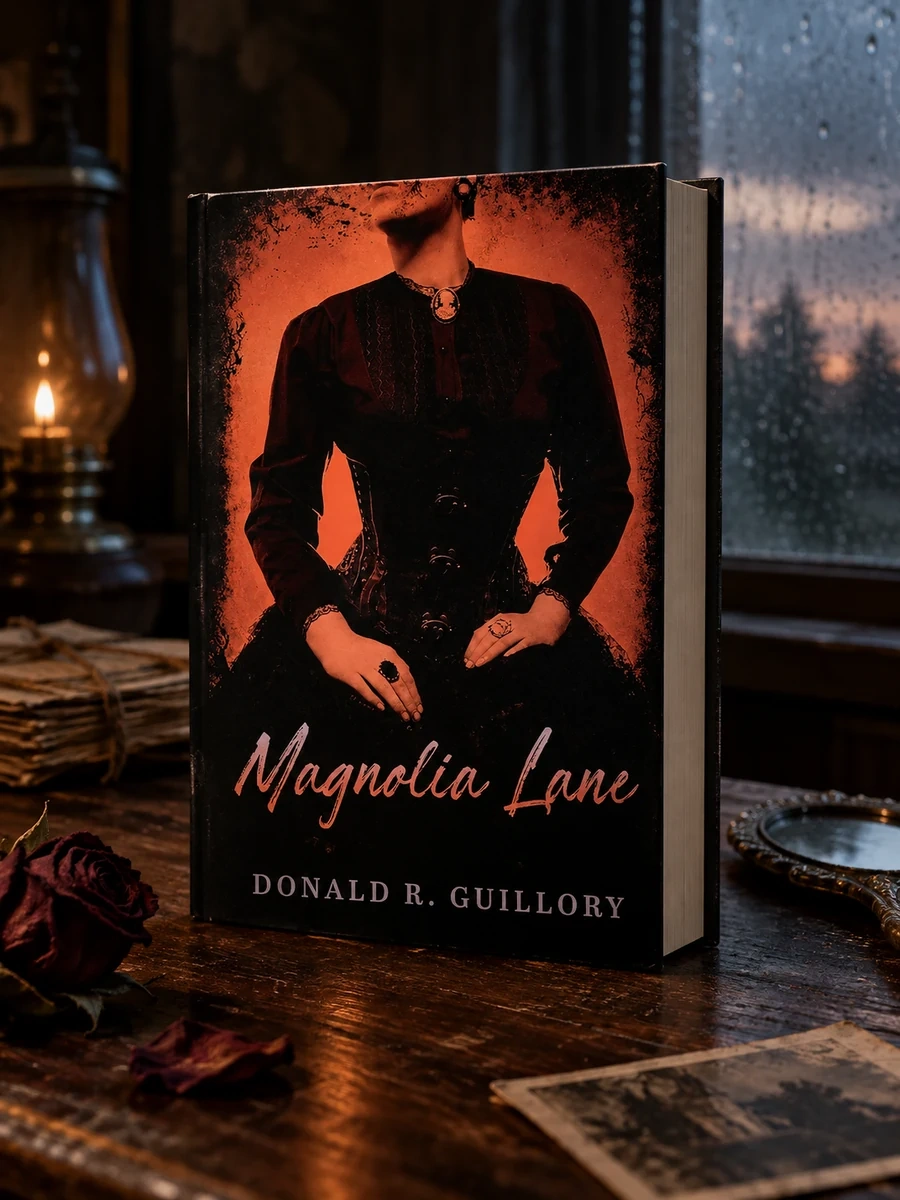
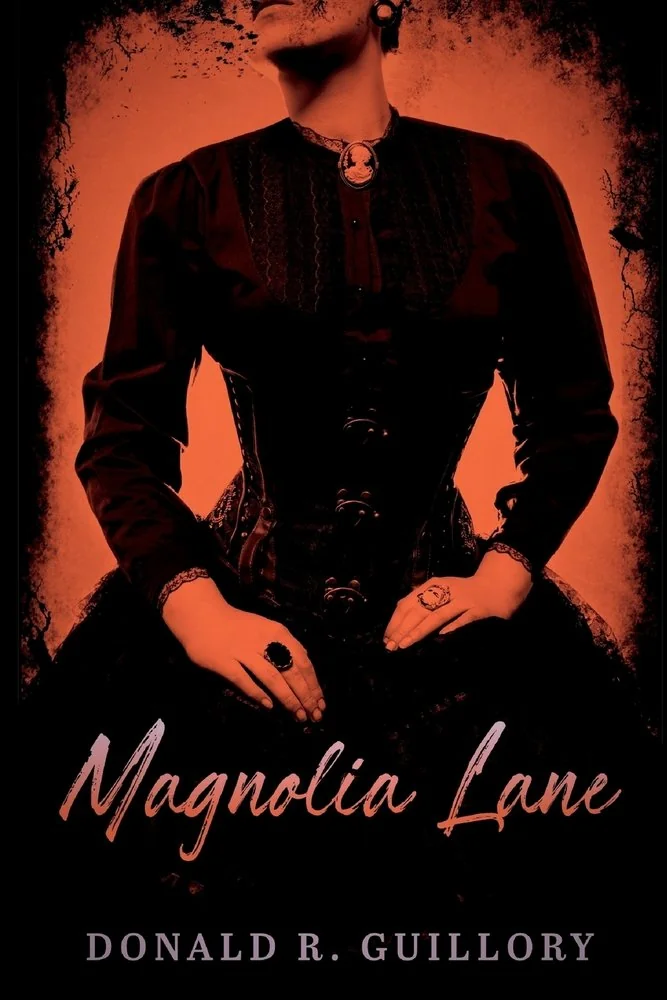
Magnolia Lane
A widow's violent death haunts a Louisiana plantation for over a century.
Guillory constructs a narrative around Victoria Blanc, who transformed a struggling estate into a wealthy Southern enterprise. Her defiance of male-imposed norms made her a target, resulting in bloodshed that ended her reign but began her spectral legacy. The plot shifts to the present day when tour groups are stranded at the property due to severe weather. The house, once forbidden for overnight stays, becomes a site of confrontation between the living and the past. The story examines how privilege protected Victoria during life but failed to save her from murder. It explores the long wait for justice and the return of a spirit determined to reclaim what was taken.
The narrative is set in Louisiana, focusing on the cultural clash between Victoria Blanc’s ambitions and the social mores imposed by men in the region. It engages with the history of Southern plantations and the specific traditions of Gothic fiction that utilize ancestral hauntings to explore unresolved historical violence.


📝 Description: Magnolia Lane
💎 Our verdict on Magnolia Lane
📖 Why choose it
Why this book is worth reading
Readers drawn to atmospheric horror and complex female protagonists will find this narrative compelling. It offers a deep dive into the psychological weight of legacy and the visceral impact of unresolved injustice. Those interested in how societal norms constrain individuals, particularly women in historical contexts, will appreciate the thematic depth regarding privilege and gender. The book provides a chilling exploration of isolation and survival, making it ideal for those who enjoy stories where the setting itself acts as a character. It appeals to fans of supernatural revenge tales that ground their terror in real-world social dynamics rather than abstract evil.
⭐ Reader reviews
Reader rating
Guillory effectively blends Southern Gothic atmosphere with psychological horror, creating a tense environment where the house serves as a vessel for historical trauma. The narrative structure, spanning nearly a century, allows for a rich exploration of how Victoria Blanc’s defiance resonates through time. The present-day framing device, involving stranded tourists, heightens the sense of claustrophobia and inevitable confrontation. This approach suits readers who prefer horror rooted in social critique and character-driven dread over simple jump scares. The text successfully balances historical reflection with immediate supernatural threat, offering a satisfying experience for enthusiasts of haunted house fiction and stories about spectral justice.
You might also like
See more →







Have a question about this item?
Ask about the edition, condition, delivery or anything else — we reply by email or phone, usually within a day.
