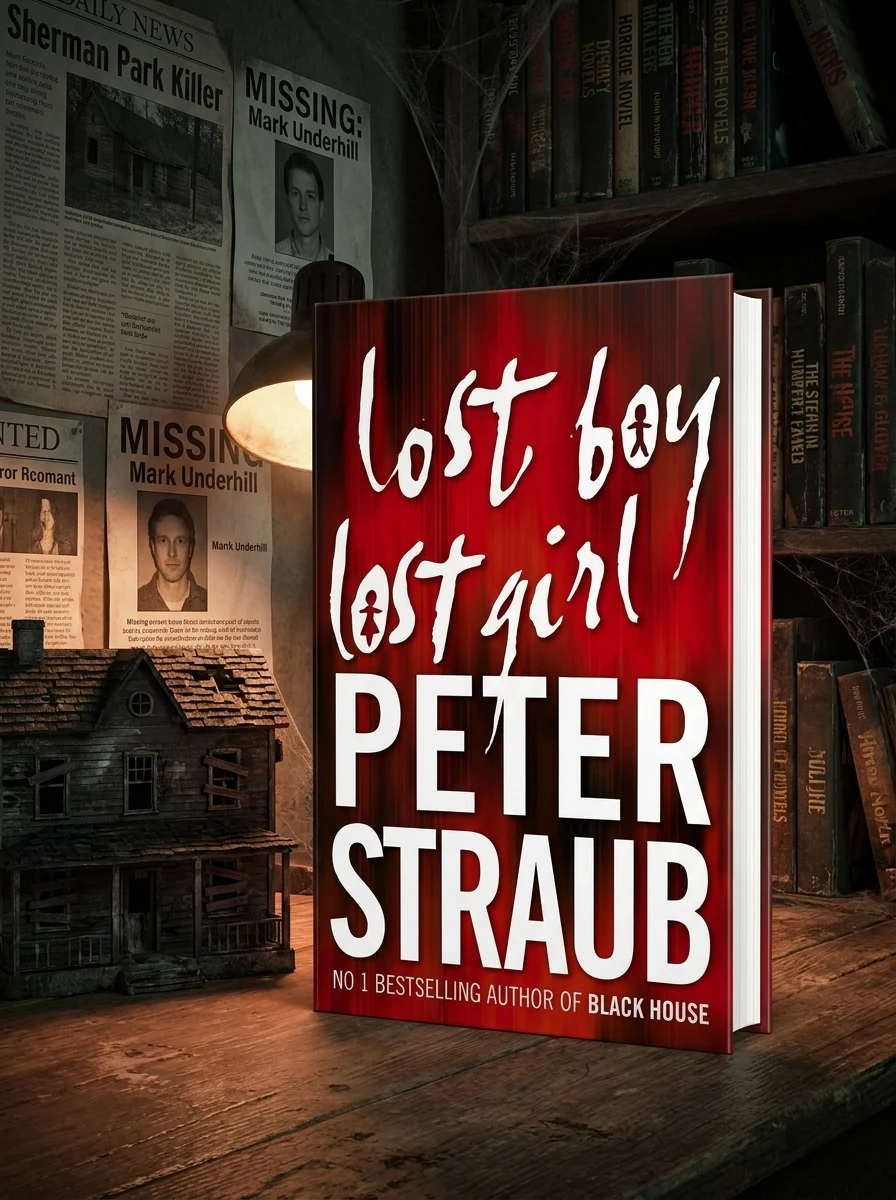

Lost Boy Lost Girl
Currently unavailable
This book is sold out right now. Leave your email — we'll let you know if it comes back, and you'll get 10% off any book today.
In stock now — readers of this book also loved:


A man searches for his nephew in a town haunted by a killer and a lost girl.
Tim Underhill travels to Millhaven after his niece dies and her son disappears. He investigates the connection between the boy’s interest in an abandoned house and the local legend of the Sherman Park Killer. The narrative focuses on the uncle’s descent into the mystery surrounding the lost girl who lured Mark away. Straub uses the setting of a haunted home to explore themes of obsession and familial duty. The story does not rely on jump scares but on the creeping dread of the unknown. It examines how a community deals with unresolved trauma and the lingering presence of past sins.
Published in 2004 by HarperCollins, this work sits within the tradition of American gothic fiction. It follows the legacy of Peter Straub’s previous collaborations in horror and supernatural mystery genres.


📝 Description: Lost Boy Lost Girl
💎 Our verdict on Lost Boy Lost Girl
📖 Why choose it
Why this book is worth reading
Readers who appreciate slow-burn psychological tension and atmospheric dread will find this novel rewarding. It is ideal for those interested in how ordinary settings conceal enduring evil and how communities grapple with past sins. The book appeals to fans of gothic traditions where the focus remains on obsession and the lingering presence of unresolved trauma rather than immediate thrills. It offers a focused study on the persistence of evil within family dynamics, providing a deep dive into the mind of an uncle investigating a disappearance. Those who enjoy ambiguity and do not require clear resolutions will gain from its exploration of the unknown and the mysterious domain of a lost girl.
⭐ Reader reviews
Reader rating
Straub delivers a masterclass in creeping dread, utilizing the abandoned house as a vessel for exploring obsession and familial duty. The narrative effectively shifts from a personal mystery to a broader commentary on community trauma and the endurance of evil. By eschewing jump scares for psychological intensity, the book creates a heavy, immersive atmosphere that lingers long after reading. It suits readers who enjoy gothic mysteries and slow-burn revelations over fast-paced action. While the ambiguity may frustrate those seeking definitive answers, it serves the thematic depth perfectly. The work stands as a testament to Straub’s ability to weave traditional horror elements with modern psychological insights, resulting in a compelling and unsettling experience for fans of the genre.
📖 Read on the blog
✍️ More books by this author Peter Straub
🏛 Books from this publisher HarperCollins
You might also like
See more →



Have a question about this item?
Ask about the edition, condition, delivery or anything else — we reply by email or phone, usually within a day.
