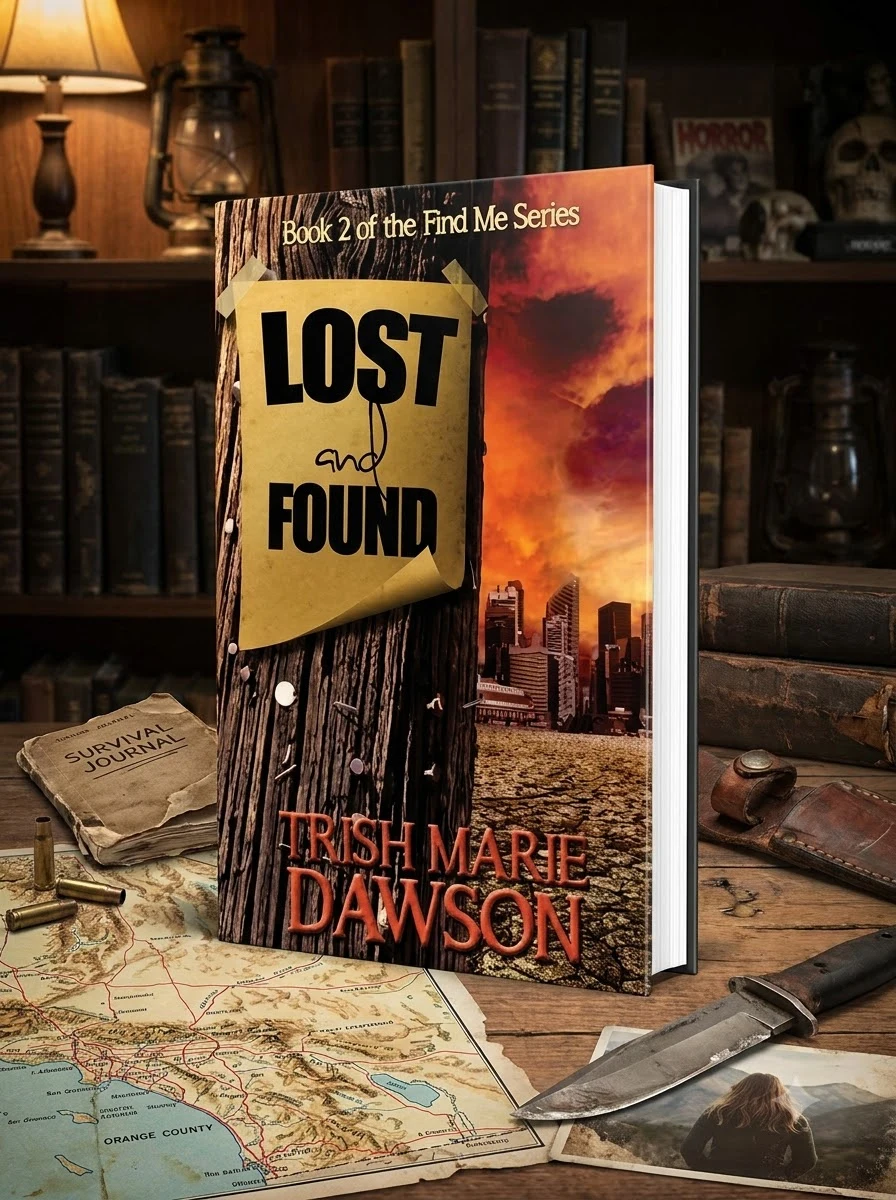
Lost and Found
A survivor returns to Orange County after pandemic isolation, facing internal and external threats.
Riley escapes the city's roaming dead for mountain solitude but cannot ignore her guilt. She travels to Orange County, where she must strike down living enemies who seek her harm. Her actions risk destroying everything she has saved. The story focuses on her internal struggle with duty and survival. Dawson writes about the weight of choices made in desperate times. The narrative does not shy away from the pain of losing loved ones or safety. It explores how one person copes when the world ends. Riley's journey is not about saving the world but saving herself. This requires confronting the living as well as the dead. The book examines the cost of survival on the human mind. It offers a stark view of post-pandemic life in Southern California. Readers will see how guilt can drive even the strongest survivors to make dangerous decisions. The story ends with questions rather than answers, leaving the reader to ponder what was truly lost.
This work sits in the horror and supernatural fiction traditions. It draws on the post-apocalyptic period, specifically focusing on a global pandemic scenario. The setting is rooted in Southern California, particularly Orange County and its mountains. Published by Pretty Little Weeds Publishing, it reflects contemporary anxieties about societal collapse.


📝 Description: Lost and Found
💎 Our verdict on Lost and Found
📖 Why choose it
Why this book is worth reading
Readers who appreciate character-driven horror will find value in this exploration of guilt and redemption. It suits those interested in the psychological toll of survival rather than mere action. The narrative offers a stark view of post-pandemic life, focusing on how trauma reshapes identity. Those seeking emotional depth over fast-paced plots will engage with Riley's internal struggle. The book examines the cost of survival on the human mind through a lens of dark realism. It is ideal for audiences who enjoy ambiguous endings that provoke thought about what is truly lost.
⭐ Reader reviews
Reader rating
Dawson crafts a compelling tale balancing physical survival with mental endurance. The narrative excels in depicting Riley's internal battles against guilt and duty. By contrasting mountain solitude with urban danger, the story highlights trauma's impact on identity. Readers seeking emotional depth will appreciate the focus on psychological horror over external monsters. However, those expecting fast-paced action may find the pacing slow. The book does not offer easy answers, reflecting the ambiguity of post-apocalyptic life. It is a thoughtful examination of how one person copes when the world ends, making it suitable for fans of literary horror.
You might also like
See more →







Have a question about this item?
Ask about the edition, condition, delivery or anything else — we reply by email or phone, usually within a day.
