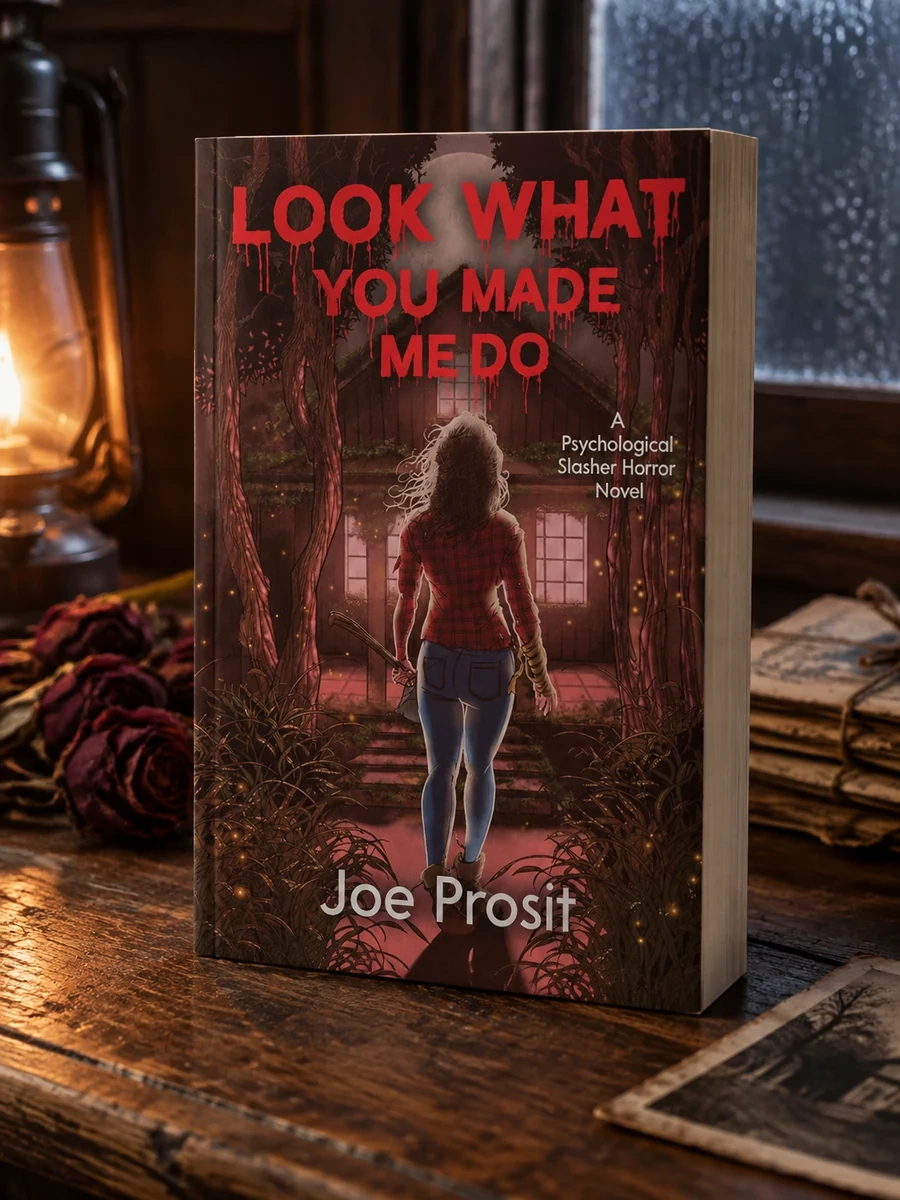

Look What You Made Me Do
A survivor confronts a stalker in suburban America twenty years after a massacre.
This novel examines the long-term impact of surviving a violent event. It tracks Taylor Mosley as she attempts to function in daily life while haunted by memories of 1999. The narrative focuses on her internal struggle with anger and fear rather than external action sequences. Prosit explores how past trauma influences present behavior, particularly through her interactions at work and with partners. The story does not rely on supernatural elements but stays grounded in psychological realism and the tension of potential danger.
The book is set in contemporary America, referencing events from 1999. It reflects modern discussions about workplace mental health mandates and the difficulty of reintegrating after trauma. The setting emphasizes suburban isolation as a backdrop for suspense.


📝 Description: Look What You Made Me Do
💎 Our verdict on Look What You Made Me Do
📖 Why choose it
Why this book is worth reading
Readers who prefer character-driven suspense over supernatural spectacle will find this novel compelling. It offers a deep dive into the psychological realism of survival, tracking Taylor Mosley’s internal struggle with anger and fear two decades after a massacre. The book is ideal for those interested in how past violence influences present behavior, particularly within corporate and romantic spheres. By focusing on immediate psychological pressure rather than complex world-building, it provides an intense, grounded examination of stalking and the thirst for revenge. It appeals to audiences seeking stories about individuals confronting past trauma without relying on external action sequences or historical research.
⭐ Reader reviews
Reader rating
Joe Prosit delivers a tense exploration of survivor’s guilt and paranoia in suburban America. The narrative effectively balances professional obligations with personal chaos, highlighting Taylor Mosley’s struggle to maintain stability while unmasking a potential stalker. The strength lies in its focus on internal psychological pressure rather than external thrills. This approach suits readers who enjoy character-driven suspense and stories about confronting past violence. However, those seeking complex world-building or extensive historical context may find the narrow focus limiting. Prosit structures the tale around survival and trauma’s lingering effects, creating a grounded atmosphere of potential danger. It is a solid choice for fans of psychological realism who appreciate nuanced examinations of fear and anger in modern settings.