
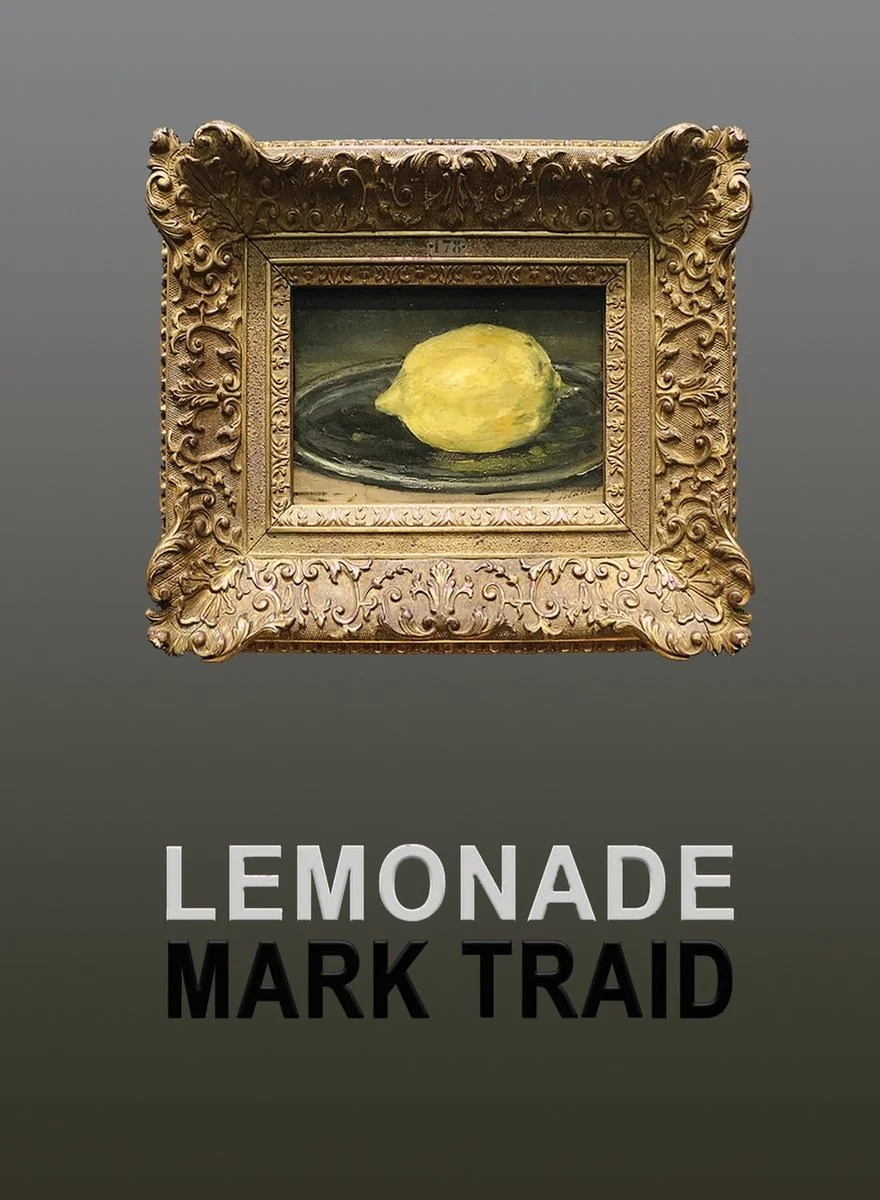
Lemonade
A minimalist book tracing a lemon's journey from orchard to table.
This work examines the hidden labor behind ordinary objects. It uses a single lemon to explore how value is assigned and transferred. The narrative avoids traditional conflict, focusing instead on observation. Each vignette reveals how systems overlook care and effort. The text asks readers to reflect on their own perceptions of worth. It challenges the assumption that significance comes from complexity. Simplicity becomes the primary tool for understanding human behavior. The author strips away excess to reveal underlying structures. Readers find meaning in the gaps between actions. The book does not provide answers but encourages deeper looking.
Published by Disruptive Texts in 2026, this work sits at the intersection of literary fiction and philosophical inquiry. It reflects a contemporary interest in examining the mundane through a minimalist lens. The text draws on traditions of quiet realism to highlight the ordinary.


📝 Description: Lemonade
💎 Our verdict on Lemonade
📖 Why choose it
Why this book is worth reading
Readers who appreciate sparse, economical prose and philosophical depth will find value in this contemplative exploration of value and labor. The book suits those willing to engage in close reading rather than seeking fast-paced plots or traditional horror elements. It rewards patience by inviting readers into a space where attention drives the narrative, revealing how significance is created or lost within everyday systems. Those interested in how small objects structure the human search for meaning will gain insight into the unseen hands that handle our world. This work challenges the assumption that complexity equals significance, offering a distinct choice for those prepared to look closely at the unremarkable aspects of existence.
⭐ Reader reviews
Reader rating
Mark Traid’s Lemonade succeeds as a minimalist examination of how perception shapes desire and how work remains hidden in plain sight. The text avoids conventional plotting, instead using spare prose to trace a single lemon’s journey from orchard to table. This approach highlights the ordinary reality of growth and discard without relying on supernatural events or gothic tropes. It is best suited for readers interested in literary fiction that intersects with philosophical inquiry. Those seeking immediate gratification may find the slow, reflective pace unengaging. However, for those who value understated precision over dramatic flair, the book offers a rewarding experience that encourages deeper looking at the structures underlying human behavior and worth.
You might also like
See more →







Have a question about this item?
Ask about the edition, condition, delivery or anything else — we reply by email or phone, usually within a day.
