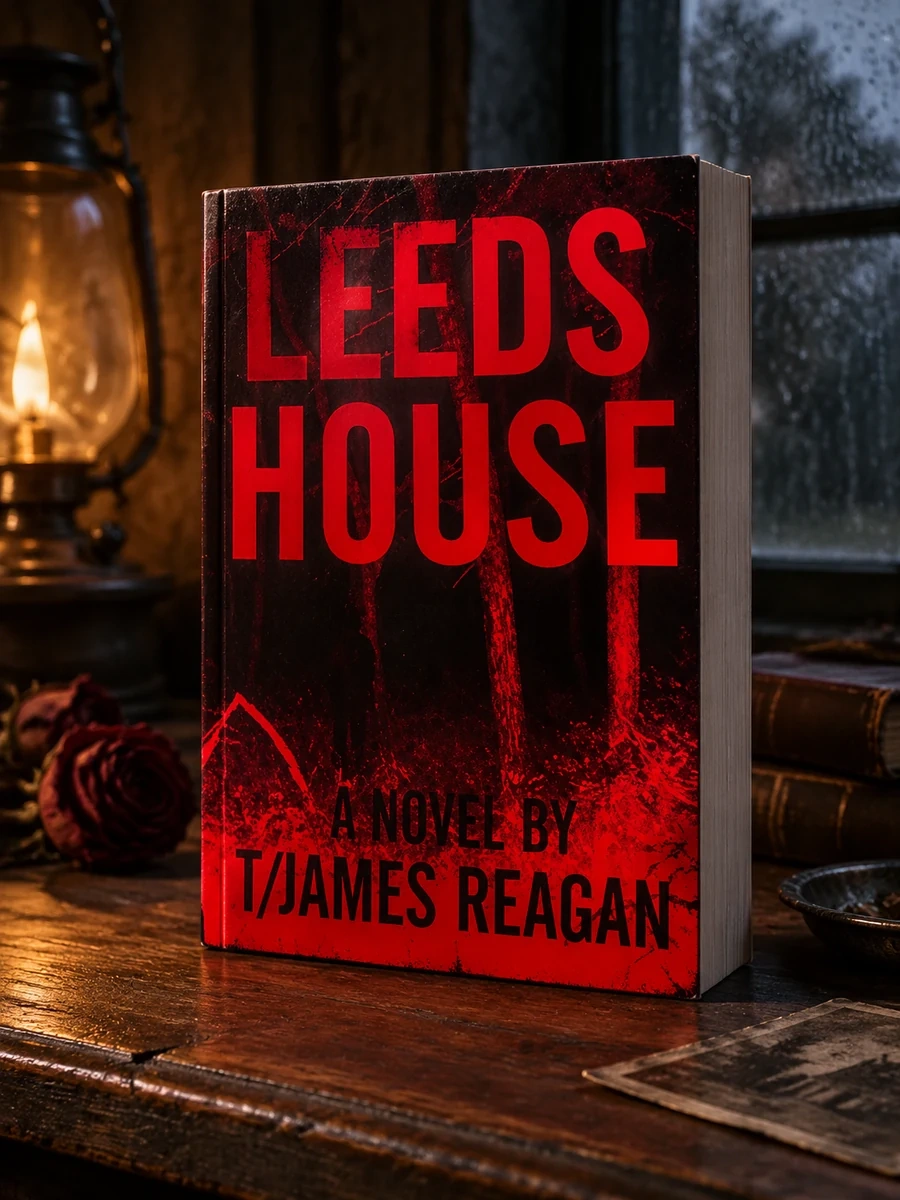

Leeds House
A metalcore band faces accountability in New Jersey's Pine Barrens.
Reagan shifts from satire to horror by trapping Lies As Language in the Pine Barrens. The narrative forces each member to confront the consequences of their narcissism. There is no external villain, only internal debt and moral reckoning. The story integrates Christian theology with gay identity within a decaying music scene. Reagan employs the aesthetic of VHS horror films to heighten the tension. The structure requires active engagement from the reader rather than passive consumption. This method aligns with influences like Eastbound & Down. The result is a harsh examination of millennial responsibility and cultural decay.
This novel sits within the post-Empire horror tradition, addressing the specific anxieties of the millennial generation. It bridges the gap between satirical commentary on celebrity culture and aggressive supernatural fiction, reflecting a shift in how modern audiences process fear and responsibility.


📝 Description: Leeds House
💎 Our verdict on Leeds House
📖 Why choose it
Why this book is worth reading
Readers seeking an aggressive thematic exploration will find this book rewarding. It offers a twisted experience for those willing to engage with genre-blending narratives that demand active participation rather than passive consumption. The novel suits audiences interested in how accountability manifests when external villains are absent, forcing characters to confront internal debt and moral reckoning. Those who appreciate the aesthetic of VHS horror films alongside satirical takes on cultural decay will find value here. However, individuals seeking traditional comfort or light entertainment should look elsewhere, as this work is intentionally harsh in its examination of millennial responsibility and personal narcissism within a crumbling subculture.
⭐ Reader reviews
Reader rating
Reagan delivers a harrowing examination of accountability by trapping a metalcore band in the Pine Barrens, stripping away any external scapegoats to reveal internal rot. The narrative effectively utilizes VHS horror aesthetics to heighten tension while exploring complex intersections of Christianity and gay identity. By forcing characters to pay debts accrued through selfish choices, the book creates a unique post-Empire horror experience that challenges desensitized modern audiences. It succeeds in its goal to frighten those numb to internet content by targeting their deepest dread: personal accountability. This is a demanding read for those prepared to face cultural decay and moral reckoning without comfort or easy answers.
You might also like
See more →







Have a question about this item?
Ask about the edition, condition, delivery or anything else — we reply by email or phone, usually within a day.
